
NOTE: The Grooming Journal does not recommend products simply for the sake of recommending them. We create buying guides to help you understand your options and make a more informed decision based on your specific grooming concern, needs, and preferences.
The products we feature are not sponsored placements. We select and assess products based on relevant product information, such as ingredients, formulation, materials, specifications, stated purpose, and how well they fit the specific concern or need discussed in the guide.
We do not physically purchase or test the products featured in our guides. Our assessments are based on publicly available product information, manufacturer details, ingredients or materials, specifications, and other relevant evidence.
Some links in our articles may be affiliate links, which means TGJ may earn a commission if you make a purchase through them. This does not influence which products we include or how we assess them.
If we ever feature a sponsored product or sponsored placement, it will be clearly identified as sponsored. Sponsored content will not be presented as an independent, non-sponsored recommendation.
Our goal is simple: we don’t tell you what to buy. We help you understand what you’re buying.
Quick Summary
Oily skin does not always need the same type of face wash. The right choice depends on whether your main concern is acne, clogged pores, sensitivity, dehydration, or simply excess oil. This guide explains which ingredients may make sense for each concern, what to be careful with, and which five face washes are worth considering based on their current formulas.
People search for the “best face washes for oily skin for men” as if there is one product that everyone with oily skin should use.
That is not the right way to choose a face wash.
Oily skin is not always the same problem. You may be dealing with acne, clogged pores, sensitivity, dehydration, or a combination of these concerns. The ingredients that make sense for one problem may not be the right choice for another.
That is what this guide focuses on.
Instead of simply listing products labelled “for oily skin,” we look at the different concerns that can come with oily skin and the ingredients that may be useful for each one.
So read carefully before you buy. A face wash can be marketed for oily skin and still be a poor fit for your particular concern. At the same time, a cleanser does not need to leave your face extremely dry or tight to be effective. Dermatologists generally recommend gentle cleansing rather than trying to strip oily skin completely.
Not sure what your skin type is? Start with our How to Find Your Skin Type guide before choosing a cleanser.
Table Of Contents
What is the best facewash for oily skin?
There is no single best face wash for everyone with oily skin.
Look for a cleanser that removes excess oil without unnecessarily irritating or drying the skin. Salicylic acid can be useful when clogged pores and acne are the main concerns, while a simpler cleanser may make more sense when oily skin is also sensitive or dehydrated.
For acne-prone skin, ingredients such as salicylic acid and benzoyl peroxide have established roles in acne care. But stronger does not automatically mean better. The right cleanser is the one that fits your actual skin concern without creating unnecessary irritation.
Choose Based on Your Oily-Skin Concern
| Oily-Skin Concern | Look For | Avoid / Be Careful With |
|---|---|---|
| Oily + Acne | Salicylic acid or benzoyl peroxide when appropriate; gentle cleansing base; non-comedogenic formula | Very harsh cleansers, aggressive scrubbing, excessive washing, products that leave skin irritated |
| Oily + Clogged Pores | Salicylic acid (BHA); gentle cleanser; non-comedogenic formula | Physical scrubs, overly drying cleansers, frequent exfoliation that causes irritation |
| Oily + Sensitive | Gentle, non-abrasive cleanser; simple formula; fragrance-free or low-fragrance options if needed | Heavy fragrance, irritating alcohol-heavy formulas, strong actives when skin is already irritated |
| Oily + Dehydrated | Gentle cleanser; humectants such as hyaluronic acid or glycerin; barrier-supportive ingredients | Strong oil-stripping cleansers, repeated washing, products that consistently leave skin tight |
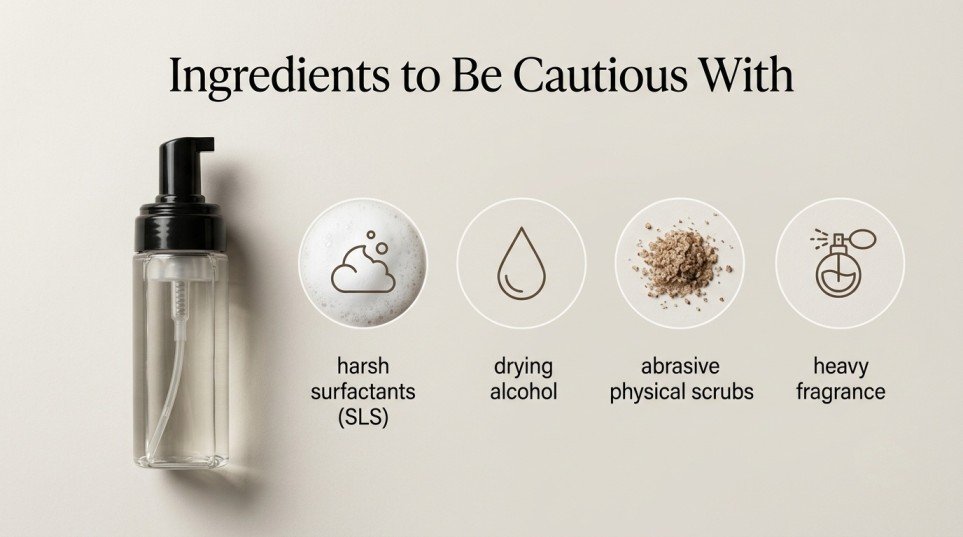
Dermatologists recommend limiting face washing to twice a day and after heavy sweating, using a gentle cleanser rather than scrubbing aggressively. Ingredients such as salicylic acid can help with oiliness and acne but may be irritating for some people.
Products You Can Consider
These cleansers are included for different oily-skin concerns rather than as one universal “best” choice. The right option depends on what you are actually dealing with, whether that is excess oil, clogged pores, acne, sensitivity, or dehydration.
1. Bioderma Sébium Gel Moussant
| Key Ingredients | Lactic Acid, Zinc Sulfate, Copper Sulfate, Xylitol, Ginkgo Biloba Leaf Extract |
| Best For | Oily or combination skin where excess oil and shine are the main concerns |
| Avoid If | Your skin is very sensitive to fragranced or stronger cleansing formulas |
| Full Ingredient List → | Official ingredient list |
Bioderma positions Sébium Gel Moussant as a cleanser for combination-to-oily skin. Its current formula includes zinc sulfate, copper sulfate and lactic acid alongside a cleansing base. The formula also contains fragrance, so that is worth considering if your skin tends to react to fragranced products.
Check Price & Latest Deal
2. The Ordinary Glucoside Foaming Cleanser
| Key Ingredients | Decyl Glucoside, Coco-Glucoside, Tocopherol, Phytic Acid |
| Best For | Oily skin needing straightforward daily cleansing without a dedicated acne active |
| Avoid If | You specifically need a cleanser with an acne-focused active ingredient |
| Full Ingredient List → | Official ingredient list |
The Ordinary’s Glucoside Foaming Cleanser uses glucoside-based cleansing agents and is positioned by the brand as a gentle foaming cleanser that helps maintain the skin’s moisture barrier. Its current listed formula does not contain salicylic acid or benzoyl peroxide, so its role here is straightforward cleansing rather than acne treatment.
Check Price & Latest Deal
3. Cetaphil Oily Skin Cleanser
| Key Ingredients | Niacinamide, Panthenol, Glycerin |
| Best For | Combination-to-oily skin that also needs a gentler everyday cleanser |
| Avoid If | You specifically want an acne-treatment active in your cleanser |
| Full Ingredient List → | Official ingredient list |
Cetaphil’s current Oily Skin Cleanser is described as a low-lather gel for combination-to-oily and sensitive skin. Its formula contains niacinamide, panthenol and glycerin, and the current ingredient list also includes fragrance components. That makes it a more relevant option for someone who wants daily cleansing without making acne treatment the main job of the cleanser.
Check Price & Latest Deal
4. Paula’s Choice CLEAR Pore Normalizing Cleanser
| Key Ingredients | Salicylic Acid 0.5%, Glycerin, Panthenol, Arginine |
| Best For | Oily skin with clogged pores, blackheads, whiteheads or breakouts |
| Avoid If | Your skin is already irritated or you are sensitive to exfoliating ingredients |
| Full Ingredient List → | Official ingredient list |
This cleanser contains 0.5% salicylic acid. Salicylic acid is particularly relevant when clogged pores and acne are the main concern because it helps unclog pores and exfoliate the skin. Paula’s Choice also notes that salicylic acid generally has more time to work in leave-on products, so this cleanser should not be treated as a replacement for a complete acne treatment plan.
Check Price & Latest Deal
5. The Derma Co 2.5% Benzoyl Peroxide Gel Face Wash
| Key Ingredients | Benzoyl Peroxide 2.5%, Glycerin, Allantoin, Ceramide Complex |
| Best For | Oily, acne-prone skin with active breakouts |
| Avoid If | Your skin is dry, irritated, or does not tolerate benzoyl peroxide well |
| Full Ingredient List → | Official ingredient list |
The current formula contains 2.5% benzoyl peroxide alongside glycerin, allantoin and a ceramide complex. Benzoyl peroxide has an established role in acne treatment, particularly for inflammatory acne, but it can also cause dryness and irritation. That makes this a more targeted option rather than a default cleanser for every oily-skinned man.
Check Price & Latest Deal
A Note About Using Cleansers With Other Actives
If you already use active ingredients such as retinoids, salicylic acid, or benzoyl peroxide elsewhere in your routine, avoid adding several potentially irritating products at the same time.
A gentle cleanser may be the better choice when your other skincare products are already doing the heavy lifting.
This matters because acne treatments such as benzoyl peroxide, salicylic acid and topical retinoids can cause dryness or irritation. Dermatology guidance supports using evidence-based acne treatments according to the individual concern rather than simply piling multiple active products together.
You do not need an aggressive cleanser just because the rest of your routine contains active ingredients.
Disclaimer: Product formulas can change or be updated by the manufacturer over time. Our product assessments are based on the formulation and product information available to us at the time of writing or updating this guide.
Always check the current ingredient list and product details on the product packaging or the manufacturer’s official website before purchasing. Do not assume that an older formula is identical to the current one.
If a product’s formula changes and the change comes to our attention, we will make reasonable efforts to review and update our assessment and product list where appropriate.
However, we cannot guarantee that every formulation change will come to our attention immediately—or at all. Our assessment therefore reflects the information available to us at the time of the latest update.
Conclusion
Choosing a face wash for oily skin becomes easier when you focus on the problem behind the oiliness.
For acne, look at acne-focused ingredients. For clogged pores, salicylic acid can be particularly relevant. For sensitive or dehydrated oily skin, a gentler cleanser may be the better choice.
The basic rule is simple: clean your skin without unnecessarily irritating it.
If you already use stronger active ingredients elsewhere in your routine, your cleanser does not necessarily need to do more. Sometimes a straightforward cleanser is the better choice because it lets the rest of your routine do its job without adding unnecessary irritation.
If you want to build the rest of your routine around your cleanser, see our Oily Skincare Routine for Men guide. And if your skin feels dry or tight despite being oily, our Moisturizer Buying Guide for Oily Skin can help you choose the next step.
Frequently Asked Questions
What is the best face wash for oily skin for men?
There is no single best face wash for every man with oily skin. The right choice depends on the main concern. Salicylic acid is particularly relevant to clogged pores and acne, while a gentler cleanser may be more suitable when oily skin is also sensitive or dehydrated.
How often should men with oily skin wash their face?
For most people, cleansing twice a day—morning and night—is sufficient, with an additional cleanse after heavy sweating when needed. Excessive washing and aggressive scrubbing can irritate the skin.
Is salicylic acid good for oily skin?
It can be particularly useful when oily skin is accompanied by clogged pores, blackheads, or acne. It is not necessary simply because your skin is oily, and overuse can cause irritation.
Is benzoyl peroxide the same as salicylic acid?
No. They are different acne ingredients. Benzoyl peroxide is commonly used for acne-focused treatment, while salicylic acid is particularly useful for comedonal congestion and exfoliation.
Can oily skin be dehydrated?
Yes. Oil and water are different aspects of the skin. You can have excess sebum while your skin still feels tight, rough, or uncomfortable.
Should oily skin feel tight after washing?
No. A clean feeling is normal, but persistent tightness, burning, or discomfort can indicate that your cleanser is too irritating or drying for your skin.
Should I use moisturizer if I have oily skin?
Yes. Oily skin can still become dry or irritated. A lightweight, oil-free, or non-comedogenic moisturizer can help maintain comfortable skin without necessarily making it feel greasier.
Should I avoid fragrance if I have oily skin?
Not automatically. Fragrance is not inherently unsuitable for oily skin. However, if your skin is sensitive or reacts easily, a fragrance-free option may be a better starting point.
When should I see a dermatologist?
Consider professional advice if you have persistent or painful acne, deep breakouts, scarring, significant irritation, or a skin problem that does not improve with a simple and consistent routine.
Authoritative Sources
American Academy of Dermatology — How to Control Oily Skin
American Academy of Dermatology — face-washing-101
American Academy of Dermatology — Acne: Tips for Managing
American Academy of Dermatology — Acne and Moisturizer
American Academy of Dermatology — Guidelines of Care for the Management of Acne Vulgaris