
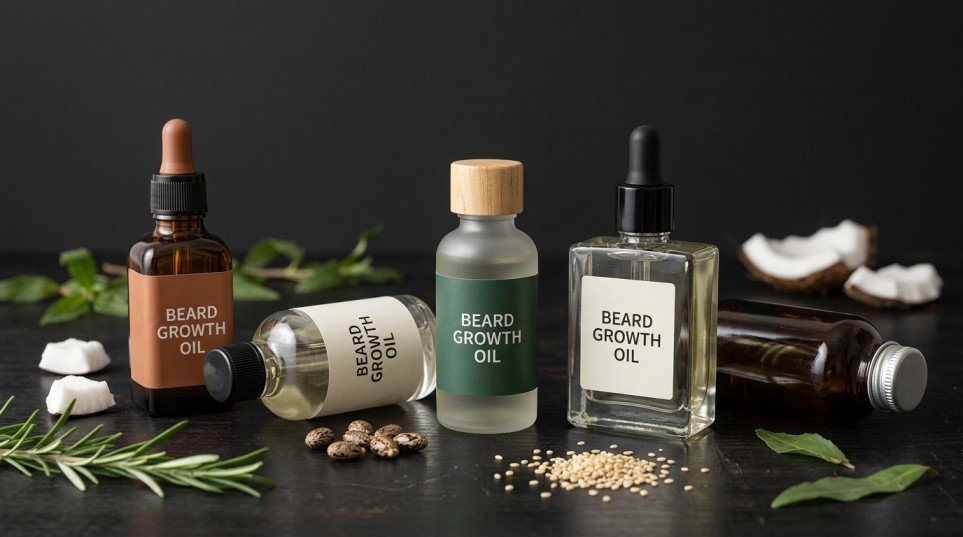
TGJ NOTE: The Grooming Journal does not recommend products simply for the sake of recommending them. We create buying guides to help you understand your options and make a more informed decision based on your specific grooming concern, needs, and preferences.The products we feature are not sponsored placements. We select and assess products based on relevant product information, such as ingredients, formulation, materials, specifications, stated purpose, and how well they fit the specific concern or need discussed in the guide.
We do not physically purchase or test the products featured in our guides. Our assessments are based on publicly available product information, manufacturer details, ingredients or materials, specifications, and other relevant evidence.
Some links in our articles may be affiliate links, which means TGJ may earn a commission if you make a purchase through them. This does not influence which products we include or how we assess them.
If we ever feature a sponsored product or sponsored placement, it will be clearly identified as sponsored. Sponsored content will not be presented as an independent, non-sponsored recommendation.
Our goal is simple: we don’t tell you what to buy. We help you understand what you’re buying.
Quick Summary
Beard growth oil can condition facial hair, reduce dryness and improve the appearance of an existing beard. But it should not be assumed to create new follicles or permanently fill naturally sparse areas.
When choosing a beard growth oil, focus on the formula, your beard and skin concern, and the evidence behind its claims—not just the word “growth” on the label.
Most importantly, treat Instagram and YouTube transformations, testimonials and rapid-growth promises as marketing claims rather than clinical evidence. This guide separates what beard oils can realistically do from what they cannot.
Search for beard growth oil, and you will quickly find products promising thicker facial hair, faster growth and help with patchy areas.
The problem is that “growth” can mean very different things.
A beard oil may moisturise the skin, soften coarse facial hair, reduce dryness and make an existing beard look healthier. Those are legitimate cosmetic benefits.
But beard conditioning is not the same as changing how many follicles grow terminal hairs.
Beard density is influenced by factors including genetics, androgen signalling, age and individual follicle characteristics. An oil applied to the surface of the skin should therefore not be treated as a guaranteed way to create new follicles or permanently fill naturally sparse areas.
If you are looking for the best beard oil for growth, the more useful question is not simply which bottle makes the biggest claim. It is:
What does the formula actually contain, what is it intended to do, and what evidence supports the growth claim?
Table Of Contents
What Is the Best Beard Growth Oil in 2026?
There is no scientifically established basis for declaring one ordinary cosmetic beard oil the universal “best” option for beard growth.
Different products use different combinations of carrier oils, essential oils, botanical extracts and cosmetic ingredients. Their suitability can also depend on whether your main concern is dry skin, coarse hair, a patchy-looking beard, sensitivity or simply beard conditioning.
For that reason, this guide does not rank products.
Instead, it focuses on how to evaluate a beard growth oil for men based on formulation, intended use, ingredient evidence and realistic expectations.
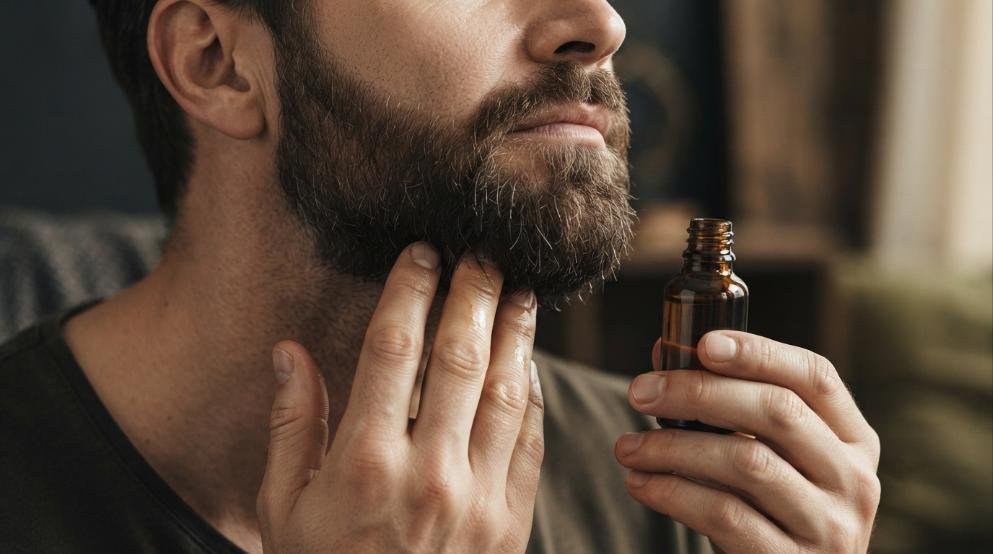
If your main concern is growing a beard naturally, remember that no oil can guarantee a particular density or growth pattern. For broader lifestyle and grooming factors, see our guide on How to grow a beard faster naturally.
Choose Based on Your Beard & Skin Concern
The right beard growth oil depends less on the word “growth” on the label and more on your beard, skin, and what you actually want to improve.
| Concern | What to Look For | Limit / Avoid |
|---|---|---|
| Patchy-looking beard | Conditioning and grooming support | Claims that oil will fill naturally empty areas |
| Thin-looking beard | Ingredients that improve softness and overall appearance | Guaranteed “thicker beard” claims |
| Dry or rough beard | Emollient and moisturising oils | Heavy fragrance if your skin is sensitive |
| Sensitive skin | Simple formulation with a lower fragrance load | Strong fragrance or potentially irritating essential oils |
| Beard + dry skin | Skin-conditioning properties | Products focused mainly on dramatic growth claims |
| Low-concern beard | A simple formula suited to regular conditioning | Paying more purely for the word “growth” |
A patchy beard can often be made to look more even through proper grooming and styling. That is different from increasing follicle density. If appearance is your main concern, our guide on How to style a patchy beard covers the grooming side separately.
Key Ingredients: What Actually Matters?
Not every ingredient marketed for “growth” has strong evidence for increasing beard growth. Look at what the ingredient is actually intended to do—and whether the evidence applies to beard hair, not just scalp hair.
- Conditioning oils: Coconut, castor, sesame and similar oils can help soften beard hair and reduce dryness, but that does not mean they create new beard growth.
- Rosemary oil: Has some evidence in scalp hair, but that evidence should not automatically be treated as proof of beard-growth benefits.
- Growth-focused cosmetic actives: Ingredients such as peptides or botanical complexes may be marketed for hair growth, but evidence can be limited, scalp-specific, or based on manufacturer studies.
- Fragrance and essential oils: These may improve the sensory experience but are not growth ingredients. They can also irritate sensitive skin.

The point is judge a beard growth oil by its formulation and the quality of evidence behind its claims—not by how aggressively “growth” is marketed.
Beard Growth Oil: Reality vs Marketing Hype
The word “growth” can make an ordinary beard oil sound like a treatment for a biological problem. That is where marketing gets ahead of evidence.
“Growth” Does Not Mean New Beard
A beard oil can condition the hair, reduce dryness, soften coarse hair and make an existing beard look healthier.
That does not automatically mean it can create new follicles, permanently fill naturally sparse areas or override genetic and androgen-related differences in beard density.
If a product claims otherwise, ask a simple question:
“Where is the human clinical evidence in men’s beards?“
“Fills Patchy Beard” Is a Much Bigger Claim
A patchy beard can look better when existing hairs are conditioned, moisturised and styled properly.
But making a sparse area look fuller is not the same as increasing the number of beard follicles growing there.
So when you see phrases such as “fills patches,” “activates follicles” or “grows beard in empty areas,” do not treat them as established facts without beard-specific evidence.
“Dramatic Growth in 7–30 Days”
This is one of the easiest ways to turn a cosmetic product into a pseudo-treatment.
A specific timeline can make a claim sound clinical even when the underlying evidence does not support that timeline.
Before-and-after photos, testimonials and “my beard grew this much” videos are personal experiences, not controlled clinical trials.
Instagram and YouTube Are Not Your Dermatologist
This is where beard-growth marketing becomes particularly misleading.

Instagram and YouTube are full of creators showing their beard transformation, recommending oils, combining multiple products and promising visible growth within weeks. Some may genuinely believe what they are saying. Others may have sponsorships, affiliate links, free products or other commercial relationships.
The problem is not that every influencer is lying. The problem is that popularity is not evidence.
A creator with millions of views does not automatically have medical expertise. A viral before-and-after does not tell you whether lighting, grooming, beard length, genetics, time or other products contributed to the result.
Research on online hair-loss information has identified social media as an important source of misinformation.
Sponsored Advice Can Look Like Personal Advice
This is the part many viewers miss.
A video can feel like a friend giving you honest advice while still functioning as advertising.
Look for:
- Sponsored or paid partnerships
- Affiliate links or discount codes
- “Use my code” offers
- Free-product disclosures
- Brand collaborations
- Links directing viewers straight to a product page
None of these automatically makes a claim false. But they mean you should separate the creator’s commercial content from independent medical evidence.
And Then There Is Minoxidil
Do not start using minoxidil for beard growth simply because an Instagram or YouTube creator says it worked for them.
Minoxidil is a medication, not an ordinary beard oil, and it can cause adverse effects. A recent case report described peripheral edema after topical minoxidil was used for beard growth.
If you are considering minoxidil for your beard, speak to a dermatologist first rather than copying an influencer’s routine.
“100% Natural” Does Not Mean “Proven”
Castor oil, coconut oil, rosemary oil and other plant oils can have useful cosmetic properties.
But natural is not a synonym for clinically proven beard growth.
An ingredient can be safe, traditional or cosmetically useful without having strong evidence that it increases beard density.
“Clinically Proven” — Proven Where?
This phrase deserves scrutiny.
Ask:
What was studied?
Was it the finished beard oil or just one ingredient?
Was the research conducted on beard follicles in humans, or on scalp hair, cells or animals?
How many people were studied?
Was there a control group?
How long did the study last?
Who funded it?
A study on scalp hair does not automatically prove the same effect on facial hair.
The Brutal Reality
If your beard naturally grows sparsely in a particular area, an ordinary beard oil is not a magic switch that suddenly creates a thick beard there.
Oil can improve the condition and appearance of the beard you already have.
That is useful.
But conditioning is not the same thing as follicle-level growth.
And when an influencer, brand or product page promises dramatic beard growth in a few weeks, the right response is not excitement.
“Show me the evidence.”
How to Choose a Beard Growth Oil
If you think applying a beard growth oil to a patchy area—or to a part of your face where your beard naturally does not grow—will suddenly make a thick beard appear there, that expectation is simply not supported by the evidence.
Instead, evaluate the product in this order.
1. Start With Your Actual Concern
Are you dealing with dry skin, rough facial hair, a patchy-looking beard, sensitivity or simply wanting better conditioning?
Your answer should determine what you look for in the formula.
2. Read the Ingredient List
Do not judge a product only by the large words printed on the front of the bottle.
Look at the actual ingredients.
A product marketed as a beard growth oil may primarily be a blend of conventional carrier oils and fragrance ingredients.
That can still make it a useful grooming product. It simply does not make it a clinically proven beard-growth treatment.
3. Separate Ingredient Evidence From Product Claims
An ingredient may have some evidence for a particular hair-related outcome without the finished product being clinically proven for beard growth.
This distinction matters.
For example, research involving rosemary oil and scalp hair should not automatically be presented as evidence that a rosemary-containing beard oil will increase facial-hair density.
4. Consider Your Skin
Essential oils and fragrance ingredients can irritate some people, particularly when applied repeatedly.
If your skin is sensitive, a simpler formulation may make more sense than choosing a product simply because it contains a long list of botanical extracts.
5. Check the Manufacturer’s Claims
Look at what the manufacturer actually promises.
A claim such as “conditions and softens beard hair” is very different from “activates dormant follicles and fills bald patches.”
The larger the biological claim, the stronger the evidence you should expect.
6. Don’t Confuse Appearance With Growth
A well-conditioned beard can appear darker, healthier, fuller and more uniform.
That visual improvement can be valuable.
But it should not automatically be interpreted as increased follicle density.
For a separate guide focused specifically on patchiness, see How to fix a patchy beard.
Products You Can Consider
The following products are included as examples of beard-growth oils currently marketed in the Indian market. They are not ranked, and inclusion does not mean The Grooming Journal recommends any of them.
1. Ustraa Beard Growth Oil
| Key Ingredient ➞ | Coconut oil, castor oil and other oils/extracts listed by the manufacturer |
| Best For ➞ | Men looking for a beard-conditioning oil marketed around beard growth |
| Avoid If ➞ | You expect guaranteed new growth or permanent filling of naturally sparse areas |
| Full ingredients list ➞ | Official Ustraa product page |
Ustraa markets this product as a beard-growth oil and positions its formula around nourishing and supporting beard growth. Check the current manufacturer page for the latest size and formulation. Its marketing claims should not be treated as independent clinical evidence that the finished oil increases beard density.
Check price and latest deals ➞
2. The Man Company Beard Growth Oil
| Key Ingredient ➞ | Carrier oils and botanical ingredients listed by the manufacturer |
| Best For ➞ | Men looking for a grooming oil marketed for beard growth and conditioning |
| Avoid If ➞ | You have fragrance sensitivity or expect a cosmetic oil to create new beard follicles |
| Full ingredients list ➞ | Official The Man Company product page |
The Man Company markets this product specifically for beard growth and grooming. Check the current product page for the latest size and ingredient information. Its marketing claims should remain separate from independent evidence for beard-specific growth.
Check price and latest deals ➞
3. Beardo Beard & Hair Growth Oil
| Key Ingredient ➞ | Multiple oils and ingredients listed in the manufacturer’s current formulation |
| Best For ➞ | Men looking for a combined beard and hair oil marketed around growth and conditioning |
| Avoid If ➞ | You are specifically looking for strong clinical evidence of increased beard density |
| Full ingredients list ➞ | Official Beardo product page |
Beardo positions this product as a beard and hair growth oil and lists its formulation on the current product page. Because it is marketed for both beard and scalp hair, evidence from one application site should not automatically be assumed to apply to the other.
Check price and latest deals ➞
4. Sheopal’s Beard Oil-Pro+
| Key Ingredient ➞ | Herbal and oil-based ingredients listed by the manufacturer |
| Best For ➞ | Men looking for an oil-based beard-grooming formula marketed around beard growth |
| Avoid If ➞ | You expect it to fill naturally sparse or genetically determined areas |
| Full ingredients list ➞ | Official Sheopal’s product page |
Sheopal’s markets Beard Oil-Pro+ as a herbal beard oil with growth-focused positioning. Check the manufacturer’s current page for the latest ingredients and product size. Herbal or natural positioning does not by itself establish that the finished product increases beard density.
Check price and latest deals ➞
5. Man Arden 7X Beard Oil
| Key Ingredient ➞ | A blend of oils and botanical ingredients listed by the manufacturer |
| Best For ➞ | Men looking for a multi-ingredient beard oil marketed for grooming and growth support |
| Avoid If ➞ | You expect a guaranteed treatment for patchy beard growth |
| Full ingredients list ➞ | Official Man Arden product page |
Man Arden markets 7X Beard Oil as a multi-ingredient beard-care oil with growth-related positioning. Check the current manufacturer page for the latest formulation, size and ingredient list. Multiple botanical or cosmetic ingredients do not by themselves establish clinical effectiveness for increasing beard density.
Check price and latest deals ➞
Disclaimer: Product formulas can change or be updated by the manufacturer over time. Our product assessments are based on the formulation and product information available to us at the time of writing or updating this guide.Always check the current ingredient list and product details on the product packaging or the manufacturer’s official website before purchasing. Do not assume that an older formula is identical to the current one.
If a product’s formula changes and the change comes to our attention, we will make reasonable efforts to review and update our assessment and product list where appropriate.
However, we cannot guarantee that every formulation change will come to our attention immediately—or at all.
Our assessment therefore reflects the information available to us at the time of the latest update.
Conclusion
A beard growth oil can have a legitimate place in a grooming routine—but its realistic role is often conditioning rather than creating new beard follicles.
If your beard is dry, rough or difficult to manage, an appropriate oil can help improve its feel and appearance. If your concern is naturally sparse growth, however, an oil should not be treated as a guaranteed solution for creating density where your beard does not naturally grow.
When comparing beard growth oils for men, focus on the formulation, your skin and beard needs, ingredient evidence and the manufacturer’s actual claims. Be particularly cautious when a product promises rapid growth, dormant-follicle activation or dramatic results within a few weeks.
And before following a viral Instagram or YouTube beard-growth routine, ask the most important question:
Is this evidence—or is it marketing?
The Grooming Journal does not recommend products. We help you understand what you are buying.
Frequently Asked Questions
Does beard growth oil actually work?
It can work as a grooming and conditioning product by helping soften facial hair and reduce dryness. Strong evidence that ordinary cosmetic beard oils create new beard follicles or substantially increase beard density is much more limited.
For a deeper breakdown, read Does beard growth oil actually work?
Can beard oil fill patchy areas?
A beard oil can make existing facial hair look healthier, softer and potentially more uniform. It cannot be assumed to create new follicles in naturally sparse areas.
Which oil is best for beard growth?
There is no established universal “best” beard oil for growth. Evaluate the formula according to your concern rather than choosing solely from a growth claim.
Is castor oil good for beard growth?
Castor oil is widely used in hair-care products and can provide conditioning benefits. However, strong human evidence that topical castor oil increases beard density is lacking.
Does rosemary oil increase beard growth?
Rosemary oil has been investigated in human scalp-hair research, but that evidence should not automatically be transferred to beard growth. Beard-specific evidence remains limited.
How long does beard growth oil take to work?
There is no reliable universal timeline for beard-growth effects from ordinary cosmetic oils. Claims promising dramatic beard growth in 7, 30 or 60 days should be treated cautiously unless supported by appropriate clinical evidence.
Can beard oil grow hair where there is no beard?
An ordinary beard oil should not be expected to create follicles in an area where beard hair does not naturally grow. Beard density is influenced by biological factors including genetics and androgen signalling.
Should I use minoxidil for beard growth?
Do not start minoxidil simply because an influencer recommends it. Minoxidil is a medication and can cause adverse effects. If you are considering it for beard growth, discuss it with a dermatologist first.
Authoritative Sources
- PubMed — Beard biology and androgen-dependent hair growth
- PubMed — Androgens and hair follicle biology
- PubMed — Human hair follicle biology
- PubMed — Coconut oil and hair protein loss
- PubMed — Rosemary oil and scalp hair growth
- PMC — Redensyl-related hair research
- PubMed — Hair-growth peptide research
- PubMed — Online hair-loss misinformation
- PubMed — Social media and direct-to-consumer hair-loss misinformation
- PubMed — Topical minoxidil and beard growth adverse event case report