Quick summery
“Growing a beard faster naturally isn’t about finding the perfect oil or supplement. This guide explains how genetics, hormones, nutrition, sleep, exercise, stress management, and skin health relate to beard growth, while separating evidence-backed approaches from methods with limited or indirect evidence.”
The question of how to grow a beard faster naturally tends to hit around week three — not because the beard isn’t coming in, but because what’s visible looks worse than nothing at all. Patchy cheeks, uneven density, and the persistent itch of short stubble make it tempting to grab a razor and start over.
Most men in that situation assume it’s genetics and quit. It usually isn’t. The more likely culprits are fixable habits quietly working against them: sleep debt, nutritional gaps, poor facial circulation, chronically elevated cortisol—things that have nothing to do with the follicles themselves.
This guide covers how to grow a beard faster naturally by addressing the root causes of slow growth, not just the surface symptoms. You’ll learn which hormones actually drive facial hair (it’s not just testosterone), what your diet is likely missing, and why your phone before bed might be more relevant to your beard than any oil or supplement you’re considering.
Table Of Contents
How to Grow a Beard Faster Naturally?
You cannot significantly change your genetically determined beard growth rate, but you can support healthy growth by getting adequate protein and essential nutrients, sleeping 7–9 hours, exercising regularly, managing chronic stress, and maintaining healthy facial skin. Beard oils can improve hair and skin condition, but they do not reliably accelerate follicle growth.
What Is Beard Growth and What Controls Its Speed?
Beard growth is driven by androgens—primarily dihydrotestosterone (DHT) and testosterone—that bind to follicle receptors on the face and trigger the growth cycle. Genetics set the ceiling for follicle density, but hormonal balance, blood flow, nutrition, skin health, and sleep quality determine how close to that ceiling your beard actually reaches. The average beard growth rate is often estimated at around half an inch per month, although growth varies considerably between individuals.
How DHT Helps You Grow a Beard Faster Naturally
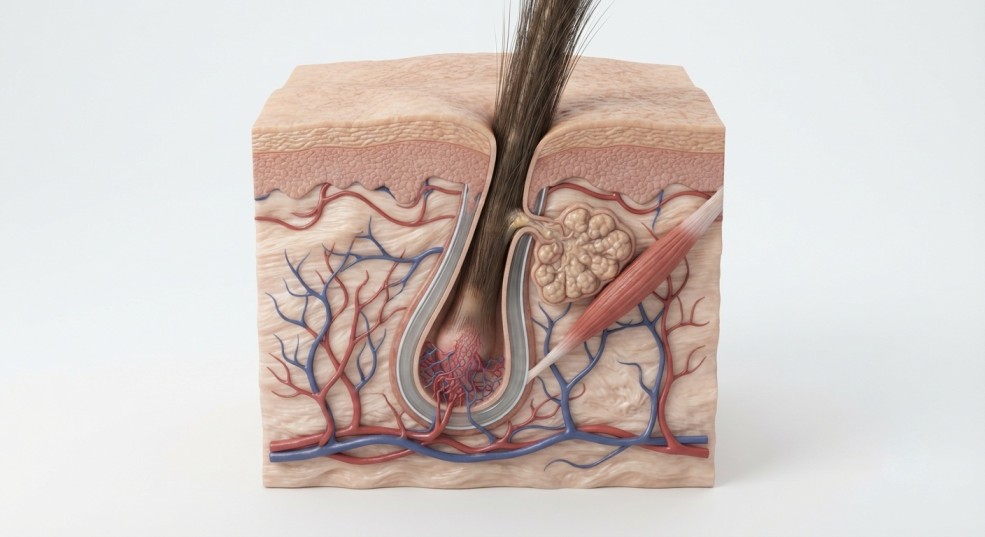
Dihydrotestosterone (DHT) is an androgen that plays an important role in the development of facial hair. It is produced when the enzyme 5-alpha reductase converts testosterone into DHT, and facial hair follicles are particularly responsive to androgen signaling.
DHT does not determine beard growth on its own. Genetics influence how many facial hair follicles you have and how strongly those follicles respond to androgens. This helps explain why two men with similar testosterone levels can have very different beard density, thickness, and growth patterns.
Testosterone and DHT are therefore important parts of the biological process, but increasing either hormone does not automatically mean you will grow a thicker or faster beard. If your androgen levels are already within a normal range, lifestyle changes aimed specifically at raising DHT are not a proven way to increase beard growth.
What you can control is the environment that supports normal hair growth. Adequate nutrition, sufficient sleep, regular physical activity, stress management, and healthy facial skin can help your body function normally, but they should be viewed as supportive habits rather than direct methods of increasing DHT or overriding your genetic beard potential.
Best Foods to Grow a Beard Faster Naturally

Your Beard Is Built From What You Eat — Literally
Beard hair is made of keratin, a fibrous protein assembled from amino acids. Every follicle on your face is competing for the same pool of nutrients your body uses for muscle repair, immune function, and dozens of other priorities. When dietary inputs are insufficient, hair production gets deprioritized first.
If your diet is lacking essential nutrients, correcting the deficiency can support normal hair growth and overall health. However, there is limited evidence that taking extra nutrients beyond what your body needs will make a healthy beard grow faster.
Zinc: Zinc is involved in many processes related to cell growth and normal tissue function. Severe or prolonged zinc deficiency can affect hair health, so getting enough from foods such as meat, seafood, eggs, dairy, legumes, nuts, and seeds is important. Supplementation is most useful when dietary intake is inadequate or a deficiency has been identified.
Vitamin D: Vitamin D receptors are present in hair follicles, and vitamin D deficiency has been associated with several types of hair loss. However, this does not establish that taking extra vitamin D will make a healthy beard grow faster. If you are concerned about deficiency, testing and appropriate supplementation should be discussed with a healthcare professional.
Biotin (B7): Biotin is involved in keratin production, but true biotin deficiency is uncommon. There is no good evidence that high-dose biotin supplements improve beard growth in people who are not deficient.
How Sleep Affects Beard Growth Speed

What Actually Happens to Your Testosterone Overnight
Yes, “get more sleep” is the advice you’ll get from every doctor for every problem. Bear with it here — the hormonal case is specific enough to be worth understanding, not just following blindly.
Testosterone levels follow a daily rhythm and are generally higher in the morning. Sleep quality and duration can influence testosterone levels, which is one reason consistent, adequate sleep matters for normal hormonal function. However, this does not mean that sleeping longer will directly make your beard grow faster.
A 2011 study published in the Journal of the American Medical Association found that one week of restricting healthy young men to five hours of sleep per night was associated with a reduction in daytime testosterone levels. The study illustrates that inadequate sleep can affect hormonal function, although it does not show that improving sleep directly increases beard growth.
Chronic sleep deprivation can affect hormonal balance, stress regulation, and normal tissue repair, all of which are relevant to overall health. However, there is not enough evidence to say that sleep deprivation directly slows beard growth through reduced DHT.
Practical Sleep Optimization
Aim for 7–9 hours of sleep in a cool, dark, comfortable room. Consistent sleep and wake times can also support healthy circadian rhythms and sleep quality. If screens make it harder for you to wind down, reducing screen use before bed may help you fall asleep more easily. These habits support overall health and normal hormonal function, but they should not be considered direct beard-growth treatments.
Exercise, Facial Massage, and Beard Growth
Why Beard Growth Can Be Uneven
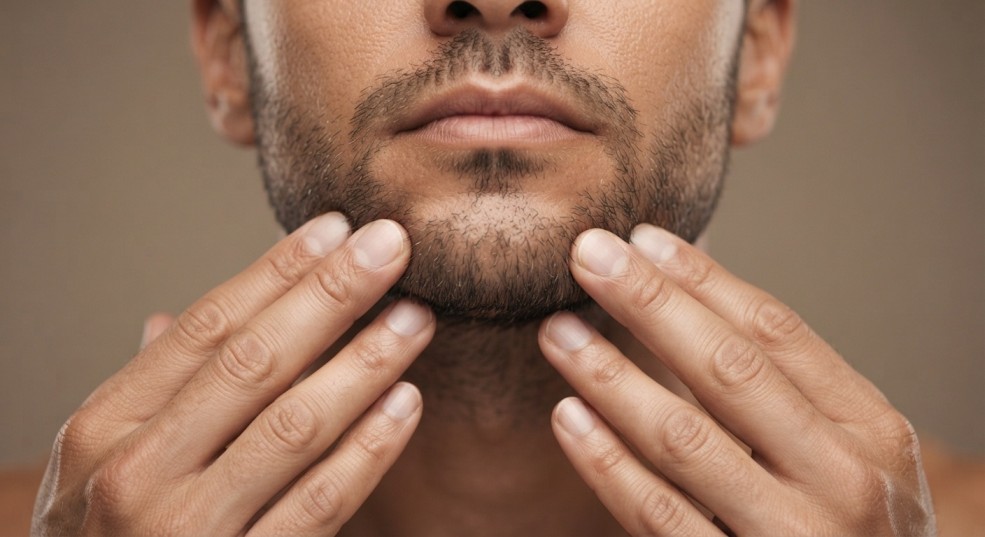
The cheek region is a common area for thinner beard coverage, but uneven growth is primarily influenced by genetics and the androgen sensitivity of individual follicles. Good circulation is important for healthy tissue function, but there is limited evidence that poor facial circulation is a major cause of patchy beard growth. Research on scalp massage has found some changes in hair-related measures after repeated mechanical stimulation, but those findings come from scalp hair rather than facial hair. It is therefore not established that facial massage can increase beard density or growth rate.
How to do it:
If you enjoy facial massage, use gentle circular motions with clean fingertips across the cheeks, jaw, and neck for a minute or two. Avoid pressing hard or rubbing irritated skin. Facial massage may feel relaxing and can temporarily increase local blood flow, but there is not enough evidence to show that it increases beard growth or density.
How Exercise Supports Overall Health and Hormonal Function
Regular exercise supports cardiovascular health, metabolic health, stress regulation, and overall hormonal function. Resistance training can cause temporary changes in testosterone and other hormones, but these short-term changes do not establish that lifting weights directly makes a beard grow faster or denser.
Aim for regular physical activity that you can maintain consistently. Resistance training is a useful option, but there is no specific number of weekly workouts or exercise type proven to increase beard growth.
If you’re new to growing facial hair, following a structured beard care routine can help reduce itch, dryness, and early-stage grooming mistakes. Read our Beginner Beard Grooming Routine guide for a step-by-step approach.
Keep Your Skin Healthy for Better Beard Growth

Why Skin Health Matters for Your Beard
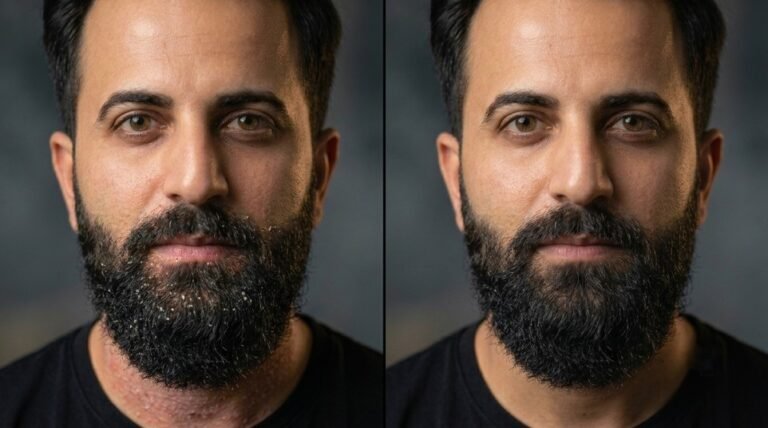
Healthy skin provides a better environment for normal beard growth, but clogged pores, dryness, or dead skin buildup are not established causes of slower beard growth. Conditions that cause persistent inflammation, such as seborrheic dermatitis, can affect the skin beneath the beard and may contribute to discomfort, flaking, or irritation. Treating these skin problems can improve the condition of the skin without necessarily increasing beard density or growth rate.
Seborrheic dermatitis is a common inflammatory skin condition associated with Malassezia yeast, which normally lives on the skin. It can cause redness, flaking, itching, and irritation beneath a beard. Treatment may include antifungal ingredients such as ketoconazole, depending on the severity and location of the condition. If you have persistent redness, scaling, or irritation, a dermatologist can help confirm the diagnosis and recommend an appropriate treatment.
A consistent skin routine can help keep the skin beneath your beard clean, comfortable, and less prone to irritation:
- Wash your face with a gentle cleanser according to your skin type and avoid overly aggressive cleansing.
- If you have persistent flaking, redness, or itching, use an appropriate treatment recommended by a dermatologist rather than assuming the problem is simply dry skin.
- Exfoliate sparingly if your skin tolerates it; over-exfoliation can cause irritation and damage the skin barrier.
- Apply a lightweight, non-comedogenic moisturizer after washing if your skin feels dry or tight.
- Keep the beard itself clean and conditioned to reduce itch, dryness, and buildup.
- Drink enough water to maintain normal hydration, but do not expect increased water intake alone to make your beard grow faster.
Beard Growth Oil: What It Does and Doesn’t Do
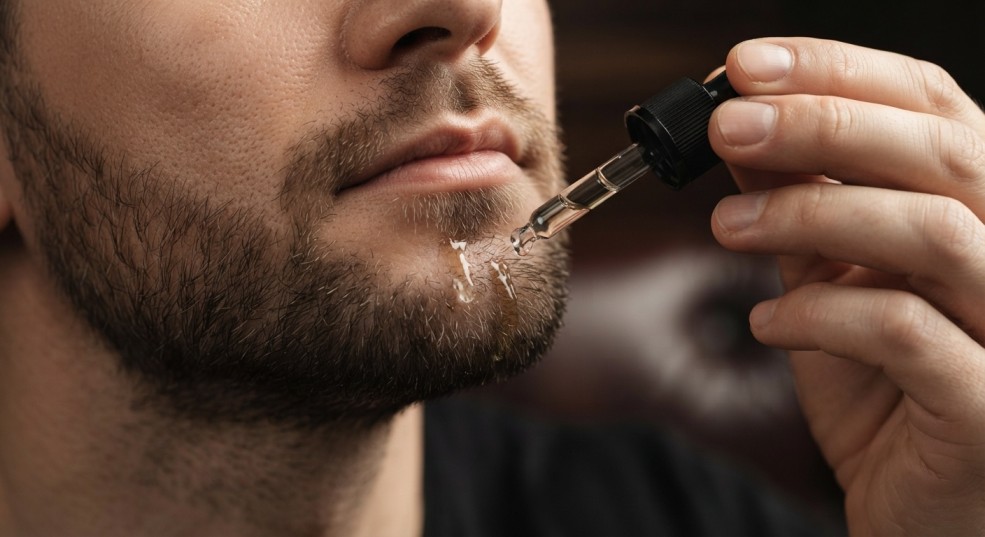
Beard oil is a skin conditioning product, not a growth accelerator. It moisturizes the skin beneath your beard, reduces itch during the early weeks, and makes existing hair more manageable and less prone to breakage.
Many men assume beard oil alone can significantly increase beard growth, but the reality is more nuanced. If you want a deeper breakdown of the evidence, read Does Beard Growth Oil Actually Work?
Minoxidil for Beard Growth: The Evidence, Honestly
Minoxidil is FDA-approved for certain types of scalp hair loss, but using it to promote facial hair growth is an off-label use. A small number of clinical studies suggest that topical minoxidil may increase beard hair density in some men, but the evidence is much more limited than it is for scalp hair loss. It should therefore not be presented as a guaranteed way to fill patchy areas or permanently increase beard density.
What to know before using it:
- Facial use is off-label. Minoxidil products are approved for certain types of scalp hair loss, not specifically for beard growth.
- Facial skin can become dry, irritated, red, or itchy with topical minoxidil. Stop using it and seek medical advice if you develop significant irritation or other concerning symptoms.
- More is not necessarily better. Follow the product instructions and do not apply more frequently than recommended.
- Results vary, and the evidence for beard growth is limited compared with the evidence for scalp hair loss.
- If you are considering minoxidil for facial hair, discuss it with a dermatologist, particularly if you have sensitive skin or other health concerns.
- Minoxidil is not a natural beard-growth method, so it belongs here as an evidence-based alternative rather than as part of the natural routine.
Important: Speak with a dermatologist before starting minoxidil, especially if you have sensitive skin, underlying medical conditions, or a history of allergic reactions. While many men use it successfully for beard growth, professional guidance can help reduce the risk of side effects.
Beard Growth Myths vs Facts
| Myth | Fact |
|---|---|
| Shaving makes your beard grow faster or thicker. | Shaving only cuts the hair shaft at the skin’s surface. It does not change the follicle, growth rate, or number of beard follicles. The blunt tip of freshly shaved hair can make the beard look and feel temporarily thicker. |
| Beard supplements automatically make your beard grow faster. | Supplements are unlikely to improve beard growth if you already get enough essential nutrients. Correcting a genuine nutritional deficiency can support normal hair growth, but more is not necessarily better. |
| Your beard is fully determined by your early twenties. | Beard development can continue through the twenties and sometimes beyond. The timing and extent of development vary considerably between individuals because genetics and androgen sensitivity differ. |
| Beard growth is purely genetic, so lifestyle does not matter. | Genetics and androgen sensitivity are major determinants of beard growth, but adequate nutrition, sleep, and overall health support normal hair and skin function. These habits cannot override your genetic potential, but they can help you avoid factors that impair normal growth. |
Quick Action Checklist
- Aim for 7–9 hours of sleep and keep your sleep schedule reasonably consistent.
- Eat a balanced diet with enough protein and essential nutrients such as zinc and vitamin D.
- Correct confirmed nutritional deficiencies rather than taking high-dose supplements unnecessarily.
- Exercise regularly to support overall health, fitness, and hormonal function.
- Keep the skin beneath your beard clean and moisturized, especially if you experience dryness or irritation.
- Use facial massage only if you enjoy it; it is not a proven method for increasing beard growth.
- Use beard oil for conditioning, softness, and skin comfort—not as a proven growth treatment.
- Give natural grooming and lifestyle changes enough time before judging your beard’s development.
- If you have persistent patchiness, redness, scaling, or unusual hair loss, consider speaking with a dermatologist.
Conclusion
Growing a beard faster naturally is less about finding a single product or shortcut and more about supporting the factors that influence normal hair growth. Genetics and androgen sensitivity play the biggest role in determining beard density and development, while adequate nutrition, sleep, exercise, and healthy skin can help support your overall health and hair-growth environment.
There is no natural method proven to dramatically override your genetic beard potential. Beard oil can condition the hair and skin, facial massage may feel relaxing but is not proven to increase growth, and supplements are unlikely to help unless you have a nutritional deficiency.
If you want to improve your beard naturally, start with the fundamentals: eat a balanced diet, sleep well, exercise regularly, and take care of the skin beneath your beard. Give your beard time to develop, and if you notice persistent patchiness, inflammation, or unusual hair loss, consider speaking with a dermatologist.
Frequently Asked Questions
Why does my beard grow faster on one side than the other?
Uneven beard growth is common. Differences in genetics, follicle distribution, and sensitivity to androgens can cause one side of the face to grow more densely or quickly than the other. Facial massage has not been proven to correct this difference, so patience and allowing the beard more time to develop are more realistic approaches.
How long does it take to see results from these natural methods?
There is no reliable timeline for natural methods to increase beard density because most lifestyle and grooming practices have not been shown to directly accelerate beard growth. Improvements in skin condition, dryness, or itchiness may appear sooner, while natural beard development can take much longer and varies considerably between individuals. If your beard is still developing, give it time rather than expecting measurable growth within a fixed number of weeks or months.
Do cold showers increase beard growth?
There is currently little evidence that cold showers directly increase beard growth. While they may improve alertness, recovery, and overall well-being, they should be viewed as a healthy habit rather than a proven beard-growth strategy.
Can beard growth oil alone make my beard grow faster?
No. Beard oil is mainly a conditioning product that moisturizes the skin, softens facial hair, and can reduce dryness and itch. There is not enough human evidence to show that ordinary beard oils significantly increase beard growth or density. If your goal is healthier-looking facial hair, beard oil can be useful; if your goal is faster growth, it should not be treated as a proven growth treatment.
Why does my beard grow in patches that never seem to fill?
Patchy beard growth is usually influenced by genetics, follicle distribution, and differences in how individual follicles respond to androgens. Beard development can also continue through the twenties, so some areas may become denser with time. Facial massage has not been proven to fill patchy areas. If patchiness is persistent, sudden, or accompanied by redness, scaling, or hair loss, a dermatologist can help determine whether an underlying skin or hair condition is involved.
Authoritative Sources
The information in this guide is based on peer-reviewed research and trusted medical organizations.
- American Academy of Dermatology (AAD) — Hair Loss: Diagnosis and Treatment
- National Institutes of Health (NIH) — Office of Dietary Supplements: Zinc Fact Sheet for Health Professionals
- National Institutes of Health (NIH) — Office of Dietary Supplements: Vitamin D Fact Sheet for Health Professionals
- National Institutes of Health (NIH) — Office of Dietary Supplements: Biotin Fact Sheet for Health Professionals
- Leproult R, Van Cauter E. Effect of 1 Week of Sleep Restriction on Testosterone Levels in Young Healthy Men. JAMA. 2011.
- Inui S, Itami S. Androgen Actions on the Human Hair Follicle: Perspectives. Experimental Dermatology. 2013.
- Mayo Clinic — Minoxidil (Topical Route): Proper Use and Side Effects
- Cleveland Clinic — Seborrheic Dermatitis: Symptoms, Causes & Treatment