Quick Summary
This guide is for men noticing early thinning, increased shedding, or a receding hairline who are considering a hair growth serum. It explains which ingredients have the strongest evidence behind them, what formulation details matter, and how to match a serum to your hair loss stage and scalp type. Recommendations are based on ingredient transparency, formulation quality, and suitability — not marketing claims.
Noticing more hair in the shower drain, or a parting that looks wider than it used to, is unsettling — and it often sends men searching for the best hair growth serums for men. The category is crowded, and most bottles look similar from the outside: a dropper, a confident label, and a promise of thicker hair.
The most common mistake is choosing a serum based on packaging or price rather than what’s actually inside it. Not every “growth” ingredient is backed by strong evidence, and not every formulation suits every scalp.
This guide focuses on what actually separates a well-formulated serum from a bottle of marketing, so you can choose one suited to your hair and use it consistently long enough to see whether it helps.
Table Of Contents
What Is the Best Hair Growth Serum for Men?
A hair growth serum is generally a leave-on scalp product designed to support hair density, reduce shedding, or improve the appearance of thinning hair. These products can contain cosmetic, non-drug actives or, in some cases, a medicated topical treatment such as minoxidil.
For men with pattern hair loss, topical minoxidil is the most clinically supported option. For general thinning or scalp-focused hair care, non-drug serums built around actives like redensyl, procapil, and caffeine have some supporting evidence, but that evidence is more limited than it is for minoxidil.
No evidence-based hair-loss treatment should be expected to produce meaningful regrowth within a few days. With minoxidil, visible improvement can take around six to 12 months. Give a treatment enough time to judge it fairly, and follow the directions for the specific product.
Buying Guide at a Glance
| Look For | Avoid / Approach With Caution |
|---|---|
| Clinically studied actives with human evidence | Vague “growth blends” without disclosed ingredients or concentrations |
| A formulation suited to your scalp type | High-alcohol formulas if your scalp is dry or sensitive |
| Clear, disclosed concentration of key active ingredients | Undisclosed or “proprietary” formulas hiding the actual actives |
| Realistic, time-bound claims | Promises of overnight or “guaranteed” regrowth |
| Products from reputable brands and legitimate sellers | Unregulated products with undisclosed steroids or drugs |
What to Look For
1. Clinically studied active ingredients
Look for active ingredients with at least some human evidence behind their use for hair density, shedding, or growth. Non-drug actives such as Redensyl, Procapil, Capixyl, Anagain, and caffeine are commonly used in hair-growth serums and have some supporting evidence, although it is more limited than the evidence for medical treatments.
Minoxidil has substantially stronger clinical evidence for male pattern hair loss, but it is a medication rather than a conventional cosmetic serum. If your thinning appears pattern-related, it’s important to distinguish between a cosmetic scalp serum and a proven medical treatment before choosing a product.
For a non-drug serum, prioritize clearly disclosed, studied active ingredients over products relying on an unnamed “growth complex.”
2. Scalp-friendly formulation
Many serums use alcohol as a carrier to help the liquid spread and dry quickly. For some people, higher concentrations can be drying or irritating, particularly on sensitive scalps. A formulation designed to sit comfortably on the scalp — not just deliver actives — matters more the longer you plan to use it, since irritation can make it harder to stay consistent.
“For a broader look at treatment options and what you can do about hair loss, see our Hairfall Solutions for men guide.”
3. Transparent concentration and labelling
A good product should clearly tell you which key actives it contains and, where possible, their concentrations. That makes it easier to compare different serums and know what you’re actually applying to your scalp. Be cautious with products that simply mention a proprietary “growth complex” without telling you what it contains.
4. Suitability for your scalp type
Lightweight, fast-absorbing liquids may feel more comfortable on oily scalps. Dry or sensitive scalps may do better with low-alcohol or alcohol-free formulas, particularly if they are prone to irritation. Not sure what’s actually driving your hair thinning in the first place? Our How to stop Hairfall guide breaks down the common triggers before you commit to a treatment.
5. Ease of consistent use
Since results depend on months of regular application, small details — dropper versus spray, drying time, how the product feels under styling products — determine whether you’ll actually keep using it. The best-formulated serum is the one you’ll use consistently as directed.
What to Avoid / Approach With Caution
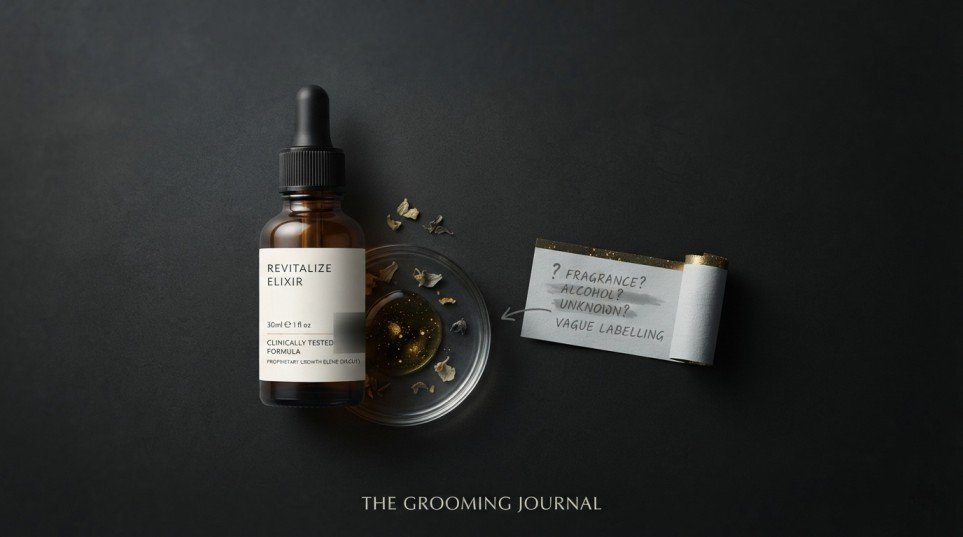
1. Overnight or “guaranteed” results“
Hair growth is a slow biological process. Any serum promising visible results in days is overstating what’s realistically possible.
Proprietary blends without clear ingredients
If a label doesn’t disclose which actives it contains or at what concentration, there’s no reliable way to judge the formula’s strength or compare it with alternatives.
3. Heavy alcohol or fragrance on a sensitive scalp
These can cause dryness, redness, or irritation that discourages consistent use — the opposite of what a long-term treatment requires.
4. Unregulated products with undisclosed drugs
Buy from reputable brands, pharmacies, or legitimate retailers. Products from unreliable sources may contain undeclared pharmaceutical ingredients, making it difficult to know what you’re actually applying.
5. Ignoring the product’s safety instructions
Before applying a new serum across your scalp, read the product’s directions and warnings, particularly if you have a sensitive or irritated scalp.
How to Choose the Right Product
- Identify your hair loss stage and likely cause. Early thinning, a receding hairline, and more advanced pattern hair loss can require different approaches. If hair loss is sudden, patchy, rapidly progressing, or you are unsure of the cause, a dermatologist consultation matters more than the serum itself.
- Decide between minoxidil and non-drug actives. Minoxidil has substantially stronger evidence for pattern hair loss, while non-drug serums may be a cosmetic option for men who prefer a non-medicated approach. Their evidence, however, is more limited.
- Match it to your routine. A serum only has a chance to help if you use it consistently as directed. Consider the texture, applicator, drying time, and how easily it fits into your existing hair-care routine.
- Budget for the long term. Hair-growth treatments generally require consistent use over months, so consider the ongoing cost rather than judging a product by the price of a single bottle.
When to See a Doctor
A hair growth serum isn’t the right first step for every type of hair loss. Consider seeing a dermatologist if you notice:
- Sudden or rapid hair loss
- Patchy bald spots
- Significant scalp redness, scaling, pain, or persistent itching
- Hair loss affecting your eyebrows, eyelashes, or other areas
- Persistent shedding without an obvious cause
- Hair thinning or recession that continues to progress despite consistent treatment
A dermatologist can help identify the underlying cause and determine whether a serum is appropriate or whether another treatment is more suitable. If you’re unsure what is causing your hair loss, getting a diagnosis before relying on a serum is the safer approach.
Our Top Recommendations
NOTE: Some links in this article may be affiliate links, which means The Grooming Journal (TGJ) may earn a small commission at no additional cost to you if you make a purchase. Our product recommendations are developed through an independent editorial process and are based on factors such as formulation quality, ingredient profile, safety, performance, overall value, and suitability for the intended concern. Affiliate partnerships never influence our recommendations, rankings, or editorial opinions. For more information, please read our Affiliate Disclosure and Product Disclaimer.
Choosing a hair growth serum is easier when you know what to look for and what to avoid. Based on those criteria, we’ve selected the following options for men with different hair-loss needs, scalp preferences, and treatment goals.
INDIA
1. L’Oréal Professionnel Serioxyl Advanced Hair Growth Serum
Why We Recommend It
L’Oréal Professionnel Serioxyl Advanced uses 5% Stemoxydine and Resveratrol in a lightweight scalp serum designed for thinning hair and reduced density. Its distinct active system and professional positioning make it a strong premium option for men looking for a non-drug scalp serum with a clearly defined formulation.
2. Kérastase Genesis Anti-Hair Fall Serum
Why We Recommend It
Kérastase Genesis combines Aminexil 1.5%, Ginger Root, and Caffeine in a daily scalp serum designed to help reduce hair fall and strengthen hair. It offers a different active approach from the Redensyl-based formulas commonly found in Indian hair-growth serums, making it a useful premium alternative.
3. ThriveCo Hair Growth Serum 2.0
Why We Recommend It
ThriveCo Hair Growth Serum 2.0 uses Regendil, a blend built around Redensyl, Anagain, Procapil, and Capilia Longa, along with Rosemary and other scalp-focused ingredients. The formulation has also been studied in humans, although the available evidence is still more limited than that for established medical treatments such as minoxidil. It is a reasonable non-drug option for men dealing with thinning and hair fall.
4. Minimalist Hair Growth Actives 18% Hair Serum
Why We Recommend It
Minimalist combines 3% Redensyl, 3% Anagain, 3% Procapil, 5% Capixyl, and 4% Baicapil in one formula. The clearly disclosed active concentrations make it easier to evaluate and compare with other non-drug hair-growth serums. It is a strong choice for men who prefer a straightforward, multi-active formulation.
5. WishCare Hair Growth Serum For Scalp
Why We Recommend It
WishCare Hair Growth Serum uses 3% Redensyl, 4% Anagain, and 2% Baicapil alongside Caffeine, Biotin, and other hair-focused ingredients. Its strong Amazon review base also makes it one of the more established consumer options in this category. The brand’s hair-growth claims should be viewed as product-specific claims rather than equivalent to the clinical evidence behind minoxidil.
USA
1. Nutrafol Men’s Hair Serum
Why We Recommend It
Nutrafol Men’s Hair Serum is a lightweight leave-on scalp treatment made specifically for men with thinning hair. Its formula combines peptides, caffeine, niacinamide, melatonin, and other scalp-focused ingredients, while the brand has also conducted clinical testing on the product. It is one of the better fits for men who want a dedicated non-drug serum rather than a general hair-care product.
2. Divi Scalp Serum
Why We Recommend It
Divi Scalp Serum combines peptides, amino acids, caffeine, and rosemary oil in a lightweight formula designed for thinning hair and a healthier-looking scalp. Its 12-week study reported improvements in hair fullness and density, although those results should not be treated as equivalent to the evidence behind medical hair-loss treatments. The product also has a substantial Amazon review base, making it a strong US-market option.
3. PURA D’OR Advanced Hair & Scalp Serum
Why We Recommend It
PURA D’OR Advanced Hair & Scalp Serum combines Copper Tri-Peptide, Caffeine, and a botanical extract blend in a lightweight scalp formula designed for thinning hair and a fuller-looking appearance. Its combination of peptide-based and botanical ingredients makes it a useful non-drug option for men who want to support the appearance of hair density without using minoxidil.
4. The Ordinary Multi-Peptide Serum for Hair Density
Why We Recommend It
The Ordinary combines several hair-density-focused technologies, including Redensyl, Procapil, Capixyl, Baicapil, Anagain, and caffeine. Its lightweight, alcohol-free formula and clearly disclosed active system make it particularly easy to evaluate compared with products built around unnamed blends. It is a practical option for men who want a straightforward non-drug scalp serum without moving into premium pricing.
5. Act+Acre Cold Processed Apple Stem Cell Scalp Serum
Why We Recommend It
Act+Acre takes a scalp-first approach, combining apple stem cells with ingredients such as aloe vera and bamboo extract to support scalp health and the appearance of fuller hair. Recent testing by Men’s Health found it useful for balancing the scalp, reducing oiliness, and improving overall scalp condition, while noting that it is better viewed as a maintenance option than a treatment expected to regrow lost hair.
Conclusion
A hair growth serum is most useful when it’s matched to your specific type and stage of hair loss, and used consistently — not when it’s chosen for its marketing claims. Minoxidil remains the most clinically supported topical option for pattern hair loss, while non-drug actives offer an alternative for men who want to explore cosmetic scalp-care options, although their evidence is more limited.
For a fuller routine that supports the results you’re working toward, see our Best Hair Care Routine for Men guide.
Frequently Asked Questions
Do hair growth serums actually work?
Some hair growth serums can help, but their effectiveness depends on the active ingredient and the type of hair loss. Minoxidil has strong clinical evidence for pattern hair loss, while ingredients such as caffeine, redensyl, and procapil have more limited supporting evidence. Results vary between individuals.
How long does it take to see results?
With minoxidil, noticeable improvement can take around six to 12 months, although individual responses vary. Some non-drug formulations have shown changes in smaller studies, but those findings do not mean every serum will produce visible results within that timeframe.
Can I use a hair growth serum with other hair fall treatments?
Sometimes, but it depends on the ingredients and the other treatment you’re using. Some hair-loss treatments can be used together, but combining multiple topical products or adding oral medication should be discussed with a dermatologist first, particularly if you’re already using prescription treatment.
Are natural or non-drug serums as effective as minoxidil?
Generally, no. Evidence for non-drug actives such as redensyl, procapil, and caffeine is more limited than the evidence for minoxidil. Some have shown promising results in clinical studies, but they should not be considered equivalent to minoxidil.
Can hair growth serums cause side effects?
Yes. Minoxidil can cause scalp irritation, dryness, itching, or unwanted hair growth on areas such as the face in some users. Non-drug serums can also cause irritation, particularly when they contain ingredients that do not suit your scalp. Stop using a product and seek medical advice if significant or persistent irritation develops.
Do I need a prescription for a hair growth serum?
It depends on the product and country. Topical minoxidil is available without a prescription in some markets, while prescription status and available strengths vary by location. Other hair-loss treatments, such as oral finasteride, require medical supervision. Check the local regulations and product labelling rather than assuming every minoxidil product is available over the counter.
Will a serum stop hair fall completely?
No serum can guarantee that hair fall will stop completely. Effective treatments can slow hair loss or support regrowth in some types of hair loss, but results depend on the underlying cause, how early treatment begins, consistency, and individual response.
Authoritative Sources
- American Academy of Dermatology (AAD) — What Is Male Pattern Hair Loss, and Can It Be Treated?
https://www.aad.org/public/diseases/hair-loss/treatment/male-pattern-hair-loss-treatment - American Academy of Dermatology (AAD) — Hair Loss: Diagnosis and Treatment
https://www.aad.org/public/diseases/hair-loss/treatment/diagnosis-treat - Mayo Clinic — Hair Loss: Diagnosis and Treatment
https://www.mayoclinic.org/diseases-conditions/hair-loss/diagnosis-treatment/drc-20372932 - PubMed / Journal of Drugs in Dermatology — Caffeine Supplementation and Hair: A Systematic Review
https://pubmed.ncbi.nlm.nih.gov/41187241/ - PubMed / Journal of Cosmetic Dermatology — Safety and Efficacy of REGENDIL™ Infused Hair Growth Promoting Product in Adult Human Subject Having Hair Fall Complaints (Alopecia)
https://pubmed.ncbi.nlm.nih.gov/38050644/