
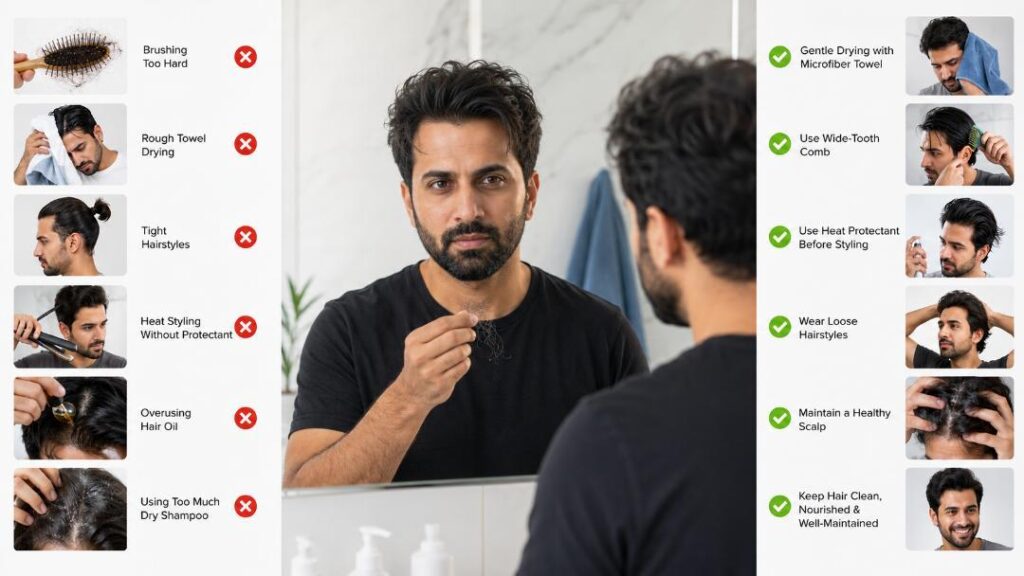
Quick Summary:
“Most hair fall is not driven by genetics alone. It is the small, daily habits inside your shower, your post-wash routine, and the days between washes that silently damage follicles and weaken strands. This guide breaks down the specific hair care mistakes that cause hair fall, organized by when they happen in your routine, with a direct fix for each one you can apply the same day.“
Before you blame stress or genetics, ask yourself one question: is the hair you are losing falling from the root, or is it snapping somewhere in the middle? The answer changes your entire approach. Hair fall is a scalp and follicle problem. Breakage is a mechanical damage problem. Most people are dealing with both and treating them identically, which is why nothing shifts.
The hair care mistakes that cause hair fall are almost never dramatic. They are small, habitual things: the water coming out of your shower, the way you dry your hair, a hairstyle you have worn for years, how long you leave oil in. Each one seems harmless on its own. Together, they compound into the kind of shedding that becomes impossible to ignore. This guide organizes the most common ones by the stage of your routine where they happen, so you can identify exactly what is going wrong and fix it the same day.
Table Of Contents
What Are Hair Care Mistakes That Cause Hair Fall?
1. Hard Water Is Silently Damaging Your Scalp and Hair With Every Wash
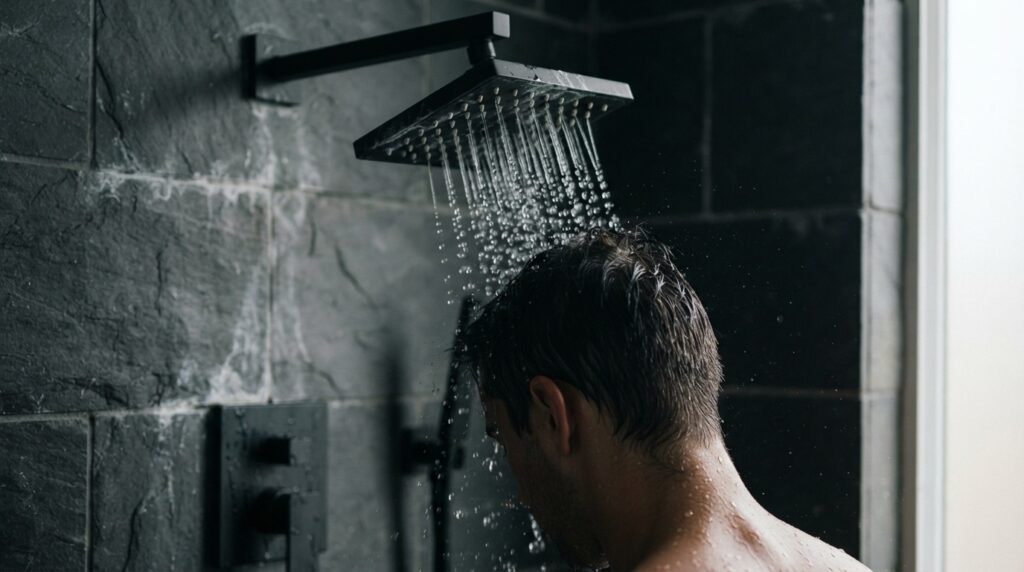
This is the one most people never think to check. If you live in an area with hard water, which covers the majority of urban and suburban water supplies, your tap water contains elevated calcium and magnesium minerals that deposit directly onto the hair shaft and scalp with every wash.
Mineral buildup coats the cuticle, making it rough and porous rather than smooth and sealed. A compromised cuticle absorbs water unevenly, causing the strand to swell inconsistently, which leads to chronic brittleness and breakage. On the scalp, these deposits may disrupt the skin barrier and contribute to irritation in some individuals. Over time, this can make the scalp feel dry, itchy, or more sensitive. Hard water also reduces shampoo lather, causing most people to scrub more aggressively, which strips the scalp further.
If your hair feels dry right after washing, or your scalp has become reactive despite no product changes, hard water is often the cause nobody thought to consider.
Fix:
Use a chelating or clarifying shampoo once every two to three weeks to clear mineral deposits. A shower filter designed to reduce mineral content is a longer-term solution that addresses the source rather than managing the aftermath.
2. Choosing Your Shampoo Based on Hair Type Instead of Scalp Type
Most people pick shampoo based on how their hair looks: frizzy, dry, or flat. But shampoo’s primary job is to clean the scalp, not condition the strands. A formula too harsh for your scalp strips its natural oils and triggers excess sebum production. One too rich for an oily scalp allows residue to accumulate over follicle openings. Both lead to hair fall.
Fix:
After your next wash, notice how your scalp feels 30 minutes after drying. Tightness or itching means the formula is stripping it. Oily roots within 12 hours suggest it is not cleansing enough. Adjust based on scalp feedback, not how the hair feels when you run your fingers through it.
The Post-Shower Stage: Where Most Mechanical Damage Happens
1. Rubbing Wet Hair With a Towel
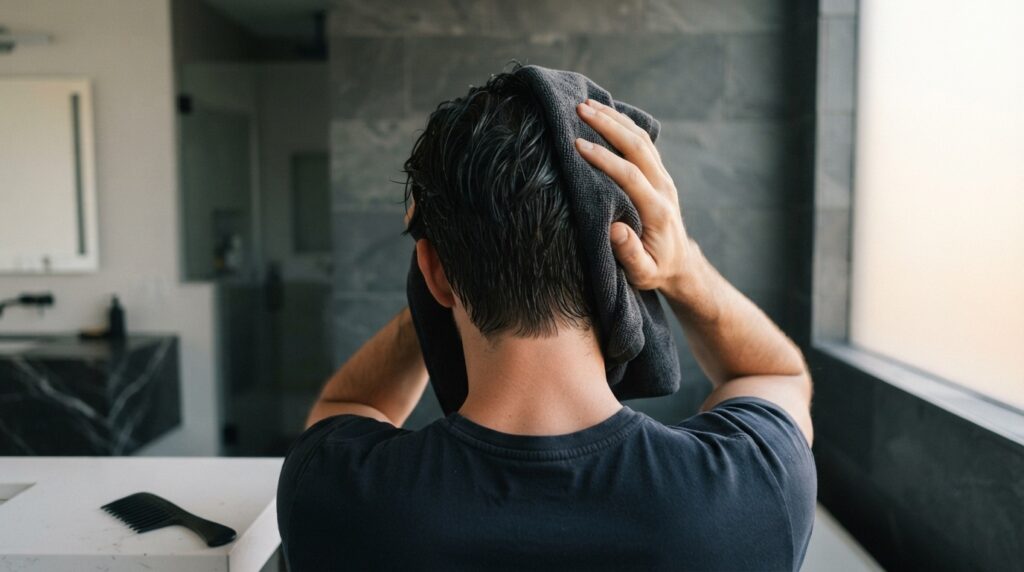
Most people do not think twice about this. The rough towel habit starts early and nobody questions it. Wet hair is structurally weaker than dry hair. The cuticle is open and swollen, and the internal protein bonds are temporarily more vulnerable to physical force. Rubbing vigorously snags and chips the cuticle scales, causing breakage that accumulates as shorter, thinner-looking strands and split ends that travel up the shaft over weeks.
Fix:
Switch to a microfiber towel or a smooth cotton t-shirt. Press and squeeze sections of hair gently rather than rubbing.
2. Sleeping With Wet Hair
Going to bed with wet hair does not directly cause hair loss, but it does make the hair more vulnerable to damage. Wet hair is weaker and stretches more easily than dry hair. As it rubs repeatedly against your pillow throughout the night, the friction can lift the cuticle, increase breakage, and leave hair looking thinner over time.
A damp scalp can also remain warm and humid for hours, which may worsen irritation in people who are already prone to dandruff or scalp sensitivity. While sleeping with wet hair occasionally is unlikely to cause significant problems, making it a regular habit increases the risk of cumulative damage.
fix:
Allow your hair to air-dry partially or use a blow dryer on a low heat setting before going to bed. If you have long hair, keep it in a loose braid rather than a tight ponytail to reduce friction while you sleep.
1. Detangling From the Root Downward
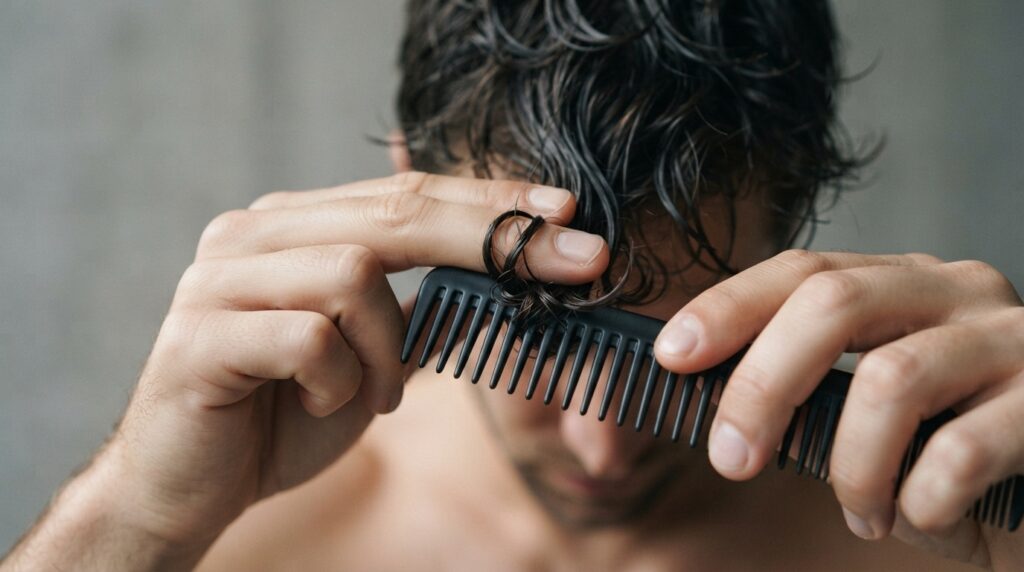
Running a brush or comb from root to tip through knotted wet hair forces each tangle to absorb the full tension of the stroke. The strand stretches until the weakest point, usually mid-shaft, gives way. Those broken pieces go unnoticed in the drain but show up over time as overall thinning and reduced length retention.
Fix:
Always start detangling at the ends and work upward in small sections. A wide-tooth comb causes less tension than a bristle brush on wet hair. For curlier or thicker textures, finger-detangling first removes most of the resistance before any tool is introduced.
The Styling Stage: Damage That Builds Over Months Before Anyone Notices
1. Tight Hairstyles Create a Type of Hair Loss That Can Become Permanent
Tight ponytails, buns, and braids apply continuous traction on the follicles along the hairline and crown. Over time, that repeated tension causes traction alopecia, a form of hair loss driven entirely by mechanical pulling rather than genetics or hormones.
The early signs are easy to dismiss: tenderness at the hairline after removing a tight style, baby hairs that do not grow past a certain length, or a subtle recession at the temples that appears gradually. If the habit continues long enough, follicle scarring can make the loss permanent. If you are already noticing changes at your hairline, Receding Hairline: Can You Actually Fix It? breaks down what is reversible and what is not before you commit to any treatment.
Fix:
Rotate between tight and loose styles. Use fabric scrunchies instead of elastic bands. Release the hair as soon as the reason for the tight style is over.
2. Using Heat Styling Without Heat Protectant
Hair straighteners, curling irons, and high-heat blow dryers gradually weaken the hair shaft by removing moisture and damaging the protective cuticle. Repeated exposure to high temperatures makes hair more brittle, increases split ends, and causes breakage that many people mistake for increased hair fall.
The damage builds slowly rather than appearing after a single styling session. Frequent heat styling without protection reduces the hair’s ability to retain moisture, making it more prone to snapping before it reaches its full length.
Fix:
Apply a heat protectant before using any heat styling tool. Whenever possible, use the lowest effective temperature, avoid holding the tool on one section for too long, and allow hair to air-dry partially before blow-drying.
Between Wash Days: The Mistakes Nobody Sees Coming
Most hair care advice stops at the shower. Wash it right, dry it right, style it carefully, and that is usually considered the full picture. But two of the most consistently damaging habits in this guide happen on the days you do not wash your hair at all, which for most people is the majority of the week.
1. Dry Shampoo Buildup Is a Surprisingly Common Cause of Scalp Problems
Dry shampoo absorbs surface oil and gives the appearance of freshness, but the actual sebum, dead skin cells, and product residue stay on the scalp underneath. Using it across multiple days without proper washing creates a dense residue layer on the scalp that may contribute to irritation and encourage the overgrowth of naturally occurring scalp yeast in susceptible individuals.
Fix:
Use dry shampoo as a one-day bridge between washes, not a multi-day routine. Follow any dry shampoo stretch with a clarifying shampoo that removes residue properly.
2. Applying Hair Oil the Wrong Way
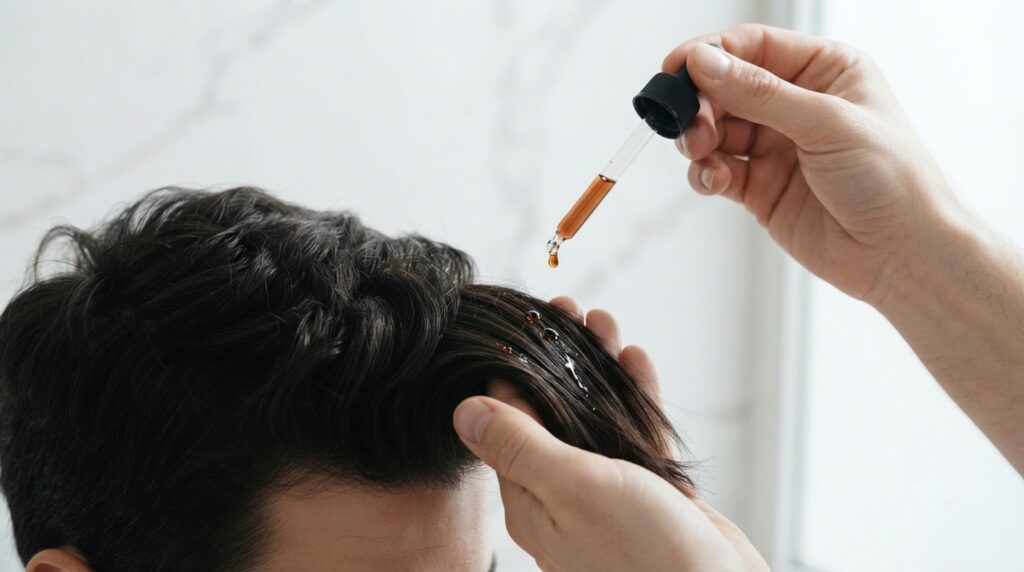
Leaving thick oil on the scalp for hours can contribute to buildup around follicle openings, trapping excess sebum, dead skin cells, and product residue. In some people, this may worsen scalp irritation or dandruff-like symptoms.
Fix:
If you use hair oil, apply a small amount according to your hair and scalp needs. Avoid excessive application or leaving heavy oil on the scalp for prolonged periods, especially if you are prone to buildup or irritation.
Beyond Hair Care: Scalp Health and Internal Causes of Hair Fall
1. Scalp Health Is the Foundation Everything Else Depends On
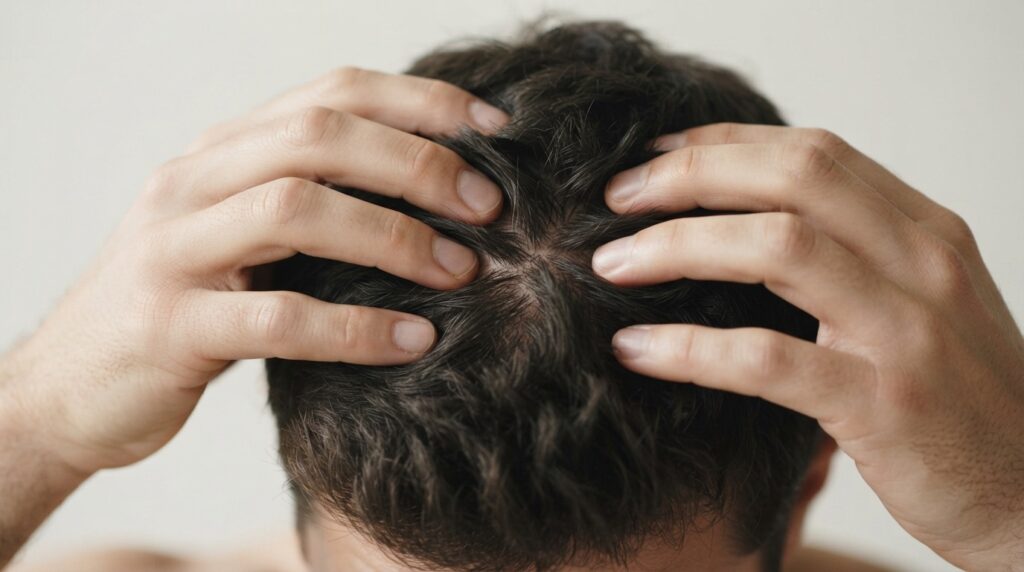
A scalp that is inflamed, congested, or imbalanced will compromise hair growth regardless of how careful your technique is. Scalp massage is one of the most underused steps in a routine. Three to five minutes of gentle fingertip pressure in circular motions before shampooing may temporarily improve local circulation and help loosen surface buildup before cleansing. While research on scalp massage and hair growth is still limited, it can support overall scalp health as part of a consistent routine.
Getting wash frequency right matters just as much as technique. How Often Should Men Wash Their Hair? breaks down the right interval for different scalp types and explains why the goal is not a perfectly clean scalp every day but one that stays balanced rather than stripped or congested.
Fix:
Adjust your wash frequency to match your scalp type. If you use styling products regularly, use a clarifying shampoo when buildup becomes noticeable.
2. Nutritional Gaps That Push Follicles Into Early Shedding
A few deficiencies show up in hair before almost anywhere else in the body:
- Iron and ferritin: Even without anemia, reduced ferritin limits oxygen delivery to follicle cells and shortens the growth cycle. This is one of the most common, most reversible, and most frequently missed causes of diffuse hair fall.
- Zinc: Required for cell repair and protein synthesis at the follicle level. Low zinc produces brittle hair and accelerated shedding.
- Vitamin D: Follicles have Vitamin D receptors directly involved in cycling them through active growth. Research consistently links low Vitamin D levels to non-scarring hair loss in men.
- Biotin: Confirmed deficiency causes visible thinning through disrupted keratin production, though true deficiency is less common than the others.
Fix:
If persistent shedding continues despite improving your hair-care routine, speak with a healthcare professional about whether testing for nutritional deficiencies or other underlying causes is appropriate. Avoid taking supplements unless a deficiency has been identified.
When Should You See a Dermatologist?
Daily hair care changes can reduce shedding caused by routine mistakes, but not every type of hair loss can be treated at home.
Book an appointment with a dermatologist if you notice:
- Hair shedding that continues for more than 3 months
- Sudden or rapid hair loss
- Bald patches or circular areas of hair loss
- A receding hairline that is progressing quickly
- Persistent scalp redness, itching, pain, or scaling
- Hair loss after starting a new medication
- Hair loss accompanied by fatigue, unexplained weight changes, or other symptoms that may suggest an underlying medical condition
A dermatologist may recommend a scalp examination, blood tests, or other treatments depending on the underlying cause.
Hair Fall Myths vs Facts
| Myth | Fact |
|---|---|
| More hair in the drain means you are losing more hair. | Washing can release hairs that were already in the shedding phase. What matters is a persistent or noticeable increase in shedding, not the number of hairs you see after one wash. |
| Washing your hair less often prevents hair fall. | Washing does not cause normal hair shedding, and reducing washes does not stop it. The right frequency depends on your scalp type, oil production, sweat, and product buildup. |
| Sleeping with wet hair causes hair loss. | Wet hair is more vulnerable to stretching and breakage, but sleeping with wet hair does not directly cause follicle-level hair loss. The concern is cumulative mechanical damage, particularly with long or fragile hair. |
| Sleeping with oil in your hair overnight works better than shorter applications. | Longer application does not automatically mean better results. Excessive or prolonged scalp oiling can worsen buildup or irritation in some people, while oil mainly helps condition the hair and reduce dryness. |
| Cutting or trimming your hair makes it grow faster or thicker. | Trimming only removes the hair shaft; it does not change the follicle or growth rate. It can make hair look healthier by removing damaged ends, but it cannot increase hair growth from the root. |
| Hair-care mistakes are the main cause of all hair loss. | Poor hair-care habits can cause breakage and contribute to some forms of hair loss, but genetics, hormones, illness, nutritional deficiencies, medications, and scalp conditions can also cause shedding or thinning. |
Quick Action Checklist
- Use a chelating or clarifying shampoo when hard-water or product buildup becomes noticeable.
- Match your shampoo to your scalp type, not your hair type
- Replace your regular towel with a microfiber towel and press rather than rub
- Detangle with a wide-tooth comb starting from the ends, not the roots
- Add three to five minutes of scalp massage before shampooing
- Use dry shampoo as a short-term bridge between washes and cleanse the scalp regularly to remove buildup.
- Use hair oil according to your hair and scalp needs, avoiding excessive or prolonged application on the scalp.
- If persistent shedding continues despite improving your routine, speak with a healthcare professional about possible underlying causes.
Conclusion
The most useful hair-care changes are usually simple: handle wet hair gently, avoid excessive tension and heat, keep the scalp appropriately clean, and use products in a way that suits your hair and scalp. These habits can reduce preventable breakage and irritation, but they cannot address every cause of hair loss.
Pick two or three changes from the checklist above and apply them consistently. If you are already managing visible thinning alongside daily shedding, Best Hairstyles for Thin Hair Men covers cuts that add fullness while your hair recovers.
Hair responds gradually, so give your routine time before judging the results.
If your hair loss continues despite improving your routine, or you notice patchy hair loss, rapid thinning, or persistent scalp symptoms; seek advice from a dermatologist rather than relying solely on home remedies or new products.
Frequently Asked Questions
What is the difference between hair fall and hair breakage?
Hair fall means the full strand shed from the root. Breakage means the shaft snapped mid-length. Check the shed hair: a small white or clear bulb at one end means the root is attached and it is true hair fall. No bulb means breakage. The fixes are different, so identifying which one you have matters before making any changes.
Can these habit changes actually reverse thinning?
For most people, removing the source of damage allows follicles to resume normal growth cycling and visible density improves over time. Whether existing thinning reverses depends on how long the follicle was compromised and whether hormonal or genetic factors are also involved. Earlier intervention consistently produces better outcomes.
How long before I see results?
Most people notice reduced shedding within four to six weeks of consistent changes. Visible improvement in density takes three to six months. That is how hair biology works, not a sign that the changes are not having an effect.
When should hair fall be assessed by a dermatologist?
If shedding has been significant for more than three months without improvement, if you notice defined bald patches or asymmetric thinning, or if no change produces any effect, professional assessment is the right move. How to Stop Hair Fall in Men covers the full medical and lifestyle picture if you want a thorough reference before your appointment.
Authoritative Sources
- American Academy of Dermatology (AAD) – Hair Loss: Diagnosis and Treatment
https://www.aad.org/public/diseases/hair-loss/treatment - American Academy of Dermatology (AAD) – Hairstyles That Pull Can Lead to Hair Loss (Traction Alopecia)
https://www.aad.org/public/diseases/hair-loss/causes/hairstyles - American Academy of Dermatology (AAD) – How to Stop Damaging Your Hair
https://www.aad.org/public/everyday-care/hair-scalp-care/hair/stop-damage - National Library of Medicine (PubMed) – Hair Cosmetics and Hair Shaft Disorders (Review)
https://pubmed.ncbi.nlm.nih.gov/17728935/ - National Library of Medicine (PubMed) – Telogen Effluvium: A Review
https://pubmed.ncbi.nlm.nih.gov/18627698/ - National Library of Medicine (PubMed) – Nutritional Factors and Hair Loss: A Review of Iron, Zinc, Vitamin D, Biotin and Other Micronutrients
https://pubmed.ncbi.nlm.nih.gov/29028377/