Quick Summary
Beard dandruff is often caused by dry or irritated skin, but persistent flaking can also be linked to seborrheic dermatitis or another skin condition. Identifying the likely cause is the first step toward choosing the right treatment. This guide explains how to tell common causes apart, what you can do to treat beard dandruff, how to prevent it from coming back, and when to see a dermatologist.
Beard dandruff can be frustrating, especially when flakes keep showing up on your beard or clothing no matter how often you wash.
The first thing to know is that beard dandruff is not necessarily a sign of poor hygiene. Flaking can happen because the skin under your beard is dry or irritated, or because of a condition such as seborrheic dermatitis.
The two can look similar, but they do not always need the same approach. Understanding what is causing the flakes is therefore more useful than simply washing your beard more often or adding another grooming product.
Table Of Contents
What Is Beard Dandruff?
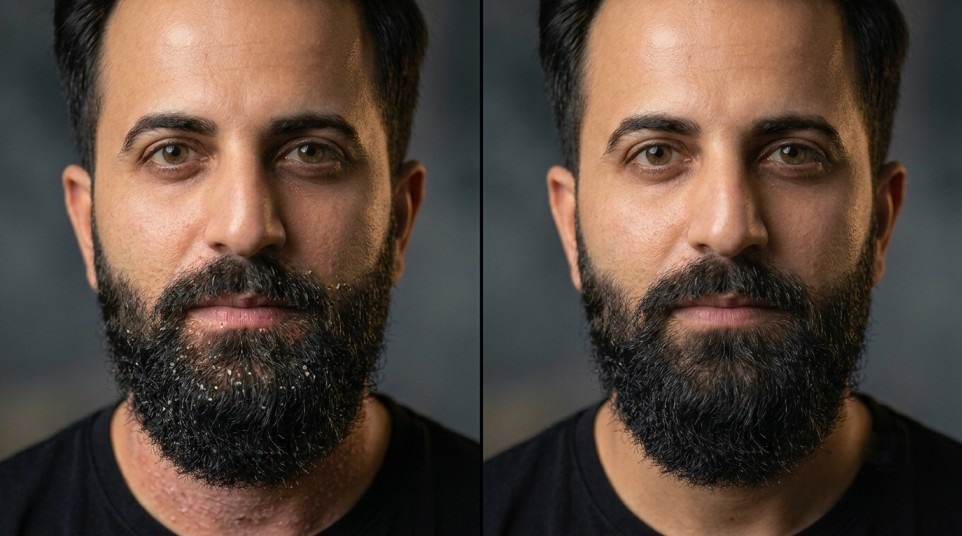
Beard dandruff is flaking, itching, or scaling of the skin underneath the beard. It can be caused by dry or irritated skin, seborrheic dermatitis, or other skin conditions. The flakes may appear white and dry or more yellowish and greasy, depending on the underlying cause.
What Causes Beard Dandruff?
Beard dandruff is most commonly linked to dry or irritated skin or seborrheic dermatitis. Dry skin often causes small, dry flakes, while seborrheic dermatitis can cause recurring flaking, redness, itching, and sometimes greasy or yellowish scales. Identifying the likely cause helps determine the right approach.
Dry Skin or Seborrheic Dermatitis? A Quick Comparison
These signs can help you understand what may be behind your beard flakes, but they cannot confirm a diagnosis on their own.
| If You Notice… | It May Be More Likely… |
|---|---|
| Small, dry flakes with little or no redness | Dry or irritated skin |
| Greasy or yellowish flakes with noticeable itching and redness | Seborrheic dermatitis |
| Flaking that becomes worse in cold, dry weather | Dry or irritated skin |
| Recurring redness, itching, and flare-ups | Seborrheic dermatitis |
| Similar flaking on the scalp, eyebrows, or around the nose | Seborrheic dermatitis |
If the symptoms are persistent, severe, or unclear, a dermatologist can determine the underlying cause and recommend the appropriate treatment.
The Problem: Why Flakes Show Up Specifically in Your Beard
Beard hair can make ordinary skin flaking much more noticeable. Dead skin cells, natural oils, sweat, and grooming products can collect around the hair and sit close to the skin, making flakes easier to see and harder to remove.
The skin underneath the beard also contains many sebaceous glands, which produce oil. This is one reason conditions such as seborrheic dermatitis can affect the beard area, just as they commonly affect the scalp, eyebrows, and areas around the nose.
So when you notice flakes in your beard, the problem is not necessarily the beard itself. The important question is what is happening to the skin underneath it.
What Causes Beard Dandruff?
Not all beard flaking has the same cause. Dry skin and seborrheic dermatitis can look similar, but there are some clues that can help you understand which one may be affecting you.
| Sign | Dry Skin | Seborrheic Dermatitis |
|---|---|---|
| Flakes | Usually small, white, and dry | Often yellowish, greasy, or flaky |
| Redness | Usually mild or absent | Common |
| Itching | Mild or occasional | Often noticeable |
| Other areas affected | Usually limited to the dry area | May also affect the scalp, eyebrows, or around the nose |
Dry Skin
Dry skin can develop when the skin loses moisture faster than it can retain it. Cold, dry weather, hot water, harsh cleansers, and over-washing can all make dryness worse.
If the skin underneath your beard feels tight, rough, or uncomfortable and the flakes are small and dry, improving your cleansing and moisturizing routine may be enough to help.
If dry skin is also a problem elsewhere on your face, our Dry Skin Care Routine for Men can help you build a simple routine that supports the skin barrier.
Seborrheic Dermatitis
Seborrheic dermatitis is a common inflammatory skin condition that often affects oil-rich areas such as the scalp, eyebrows, sides of the nose, and beard area. It is associated with the skin’s response to Malassezia yeast, which normally lives on the skin.
Typical signs include recurring flaking, redness, itching, and sometimes greasy or yellowish scales. Unlike simple dryness, seborrheic dermatitis can return even after the symptoms improve, so ongoing management may be necessary.
Other Factors That Can Make Flaking Worse
Several everyday factors can make beard flaking more noticeable or irritate the skin further:
- Cold, dry weather can increase skin dryness.
- Harsh cleansers or frequent washing can irritate the skin.
- Scrubbing or picking at flakes can increase irritation and redness.
How to Get Rid of Beard Dandruff
Step 1: Wash Your Beard Gently
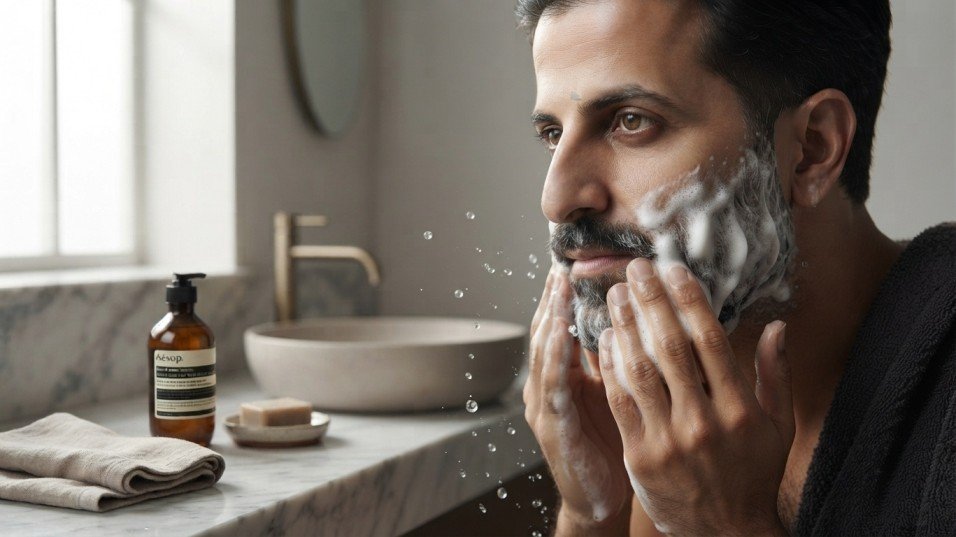
Start with a gentle cleanser and focus on the skin underneath your beard, not just the hair. This helps remove excess oil, dead skin, sweat, and product buildup without unnecessarily irritating the skin.
How often you need to wash depends on your skin, beard length, activity level, and the products you use. If your skin feels tight or irritated after washing, your cleanser may be too harsh or you may be washing too frequently.
Avoid using hot water, harsh soaps, or aggressive scrubbing. A gentle massage with your fingertips is enough to clean the skin underneath the beard.
Step 2: Use a Medicated Shampoo When Needed
If gentle cleansing is not enough and your beard dandruff keeps coming back—particularly when you also have redness, itching, or greasy flakes—a medicated anti-dandruff product may help.
Ingredients such as ketoconazole, selenium sulfide, and zinc pyrithione are commonly used in dandruff and seborrheic dermatitis treatments. However, products are formulated differently, and not every medicated shampoo is intended for use on facial skin. Check the product label before using one on the beard area and follow its recommended contact time and frequency.
If the skin becomes significantly irritated, stop using the product. If symptoms persist despite appropriate care, a dermatologist can determine whether seborrheic dermatitis or another skin condition is responsible.
Step 3: Avoid Scrubbing or Picking at Flakes
It can be tempting to scrub away visible flakes, but aggressive brushing, picking, or gritty exfoliants can irritate the skin underneath your beard and make redness or itching worse.
Instead, let gentle cleansing loosen the flakes naturally. If your skin is already irritated or inflamed, skip exfoliating products until it settles.
The goal is to treat the skin underneath the beard, not simply remove the flakes you can see.
Step 4: Moisturize the Skin Under Your Beard
If dry or irritated skin is contributing to the flakes, moisturizing the skin underneath your beard can help reduce tightness and support the skin barrier.
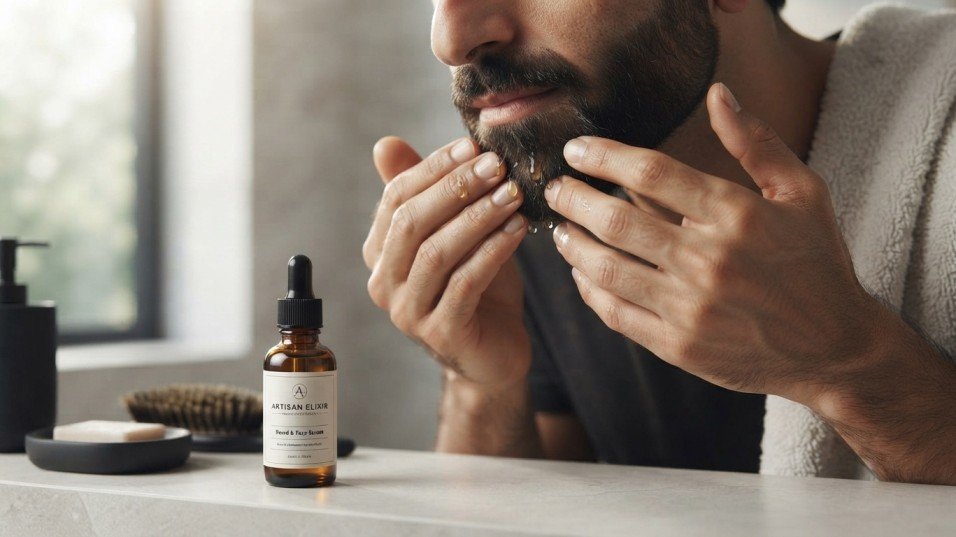
Choose a simple, fragrance-free moisturizer if your skin is sensitive or easily irritated. Work it through the beard so it reaches the skin rather than applying it only to the hair.
Beard oil can make facial hair feel softer, but it should not be treated as a cure for beard dandruff. If your flakes are persistent, greasy, itchy, or associated with redness, treating the underlying condition is more important than adding more oil.
Step 5: Give the Routine Time to Work
Do not change your routine every few days because the flakes have not disappeared immediately. Give a gentle cleansing and moisturizing routine enough time to see whether your skin is improving.
If you are using a medicated anti-dandruff product, follow its label directions and give the treatment time to work. If seborrheic dermatitis is the cause, symptoms can return after they improve, and a dermatologist or the product instructions may recommend occasional maintenance treatment.
If the flaking is getting worse, causing significant redness or discomfort, or is not improving despite appropriate care, it is better to see a dermatologist rather than continuing to experiment with different products.
Prevention: Keeping Beard Dandruff From Coming Back
Once the flakes improve, a few simple habits can reduce the chance of them returning.
- Keep cleansing gentle: Wash your beard regularly enough to remove sweat, oil, and product buildup without leaving the skin tight or irritated.
- Rinse thoroughly: Make sure cleanser and other grooming products are completely rinsed from the beard and skin.
- Avoid aggressive scrubbing: Picking or repeatedly brushing away flakes can irritate the skin and make the problem harder to manage.
- Be careful with new products: If a beard oil, balm, or other grooming product consistently causes itching or irritation, stop using it and see whether your skin improves.
- Maintain treatment when needed: If you have seborrheic dermatitis, symptoms can return even after the visible flakes have cleared. Follow your dermatologist’s advice or the product instructions for any maintenance treatment.
If beard dandruff keeps returning despite these habits, the problem may need a more specific diagnosis or treatment rather than another change in grooming products.
If you’re rebuilding your grooming habits from scratch, our Beginner Beard Grooming Routine guide covers the basics of washing, moisturizing, oiling, and trimming without overcomplicating your routine..
Common Mistakes That Make Beard Dandruff Worse
Mistake 1: Washing More Aggressively to Remove Flakes
Seeing flakes can make you want to wash or scrub your beard more often. But harsh cleansers, hot water, and aggressive scrubbing can irritate the skin and make dryness and itching worse.
Better approach: Clean the beard gently and focus on the skin underneath it.
Mistake 2: Using Heavy Products to Hide the Flakes
Adding more beard oil or balm may temporarily make flakes less visible, but it does not treat the underlying cause. Some products may also irritate sensitive skin or make existing flakes more noticeable.
Better approach: Keep your routine simple and stop using products that consistently cause itching or irritation.
Mistake 3: Picking or Scratching the Skin
Scratching or picking at flakes can damage already-irritated skin and increase redness and discomfort.
Better approach: Let gentle cleansing loosen the flakes rather than trying to remove them forcefully.
Mistake 4: Changing Treatments Too Quickly
Switching between several products every few days makes it difficult to know what is helping—and can expose your skin to unnecessary irritation.
Better approach: Introduce one change at a time and follow the directions for any medicated product you use.
Mistake 5: Assuming Every Beard Flake Is Just Dry Skin
Persistent flakes accompanied by redness, significant itching, swelling, or patchy hair loss may have another cause, including seborrheic dermatitis or a fungal infection.
Better approach: If symptoms persist or look unusual, get the skin assessed by a dermatologist rather than repeatedly treating it as simple dryness.
Common Beard Dandruff Myths vs Fact
| Myth | Fact |
|---|---|
| Beard dandruff means you are not washing your beard enough. | Beard flakes are not necessarily caused by poor hygiene. Dry skin, seborrheic dermatitis, irritation, and other skin conditions can all cause flaking. |
| Scrubbing harder will remove beard dandruff faster. | Aggressive scrubbing can irritate the skin and make itching and redness worse. Gentle cleansing is a better approach. |
| Beard oil can cure beard dandruff. | Beard oil can soften facial hair and reduce the feeling of dryness, but it does not treat conditions such as seborrheic dermatitis. |
| Beard dandruff will disappear permanently once the flakes are gone. | If seborrheic dermatitis is the cause, symptoms can return after they improve. Ongoing management may be needed to control flare-ups. |
When to See a Dermatologist
Most mild beard flaking can be managed with gentle cleansing and appropriate skin care, but some symptoms deserve professional evaluation.
See a dermatologist if:
- Flaking and redness persist despite consistent, appropriate care.
- The skin becomes cracked, swollen, painful, or starts oozing.
- You develop significant itching or inflammation.
- The rash spreads beyond the beard to areas such as the scalp, eyebrows, or around the nose.
- Flaking is accompanied by patchy hair loss, which can have several possible causes, including fungal infections such as tinea barbae.
A dermatologist can determine whether the problem is simple dryness, seborrheic dermatitis, a fungal infection, or another skin condition and recommend treatment accordingly.
Avoid using steroid creams on your face without medical advice. Incorrect or prolonged use can cause skin problems and may worsen some underlying conditions.
If flaking appears alongside patchy or uneven beard growth, our How to Fix a Patchy Beard guide explains what you can realistically expect from beard growth patterns and when professional evaluation may be worth considering.
Realistic Expectations
Beard dandruff is usually manageable, but the time it takes to improve depends on what is causing the flakes.
Dry or irritated skin may settle as soon as the underlying irritation is removed and the skin barrier is given time to recover. Seborrheic dermatitis can require ongoing management because symptoms may return even after the skin clears.
The goal is not simply to remove visible flakes. It is to keep the skin underneath your beard clean, comfortable, and properly cared for so that flaking and irritation become less frequent.
If your symptoms are not improving despite appropriate care, reassess the cause rather than continuously adding new grooming products.
Quick Action Checklist
- Identify whether your beard flakes are more consistent with dry or irritated skin, or possible seborrheic dermatitis.
- Wash your beard gently and focus on cleaning the skin underneath it.
- Avoid harsh soaps, hot water, aggressive scrubbing, and picking at flakes.
- If flakes persist or are accompanied by redness and itching, consider an appropriate medicated anti-dandruff product and follow its label directions.
- Moisturize the skin underneath your beard if dryness or tightness is contributing to the flaking.
- Give your routine enough time to work instead of changing products every few days.
- See a dermatologist if symptoms persist, become painful, spread, or occur with patchy hair loss.
Conclusion
Beard dandruff is not always a hygiene problem, and the right solution depends on what is causing the flakes. Dry or irritated skin may improve with gentler cleansing and proper moisturizing, while seborrheic dermatitis may require a medicated treatment and ongoing management.
Instead of scrubbing harder or constantly switching products, keep your routine simple and give it enough time to work. Pay attention to how your skin responds, and if the flaking persists, becomes painful, spreads, or is accompanied by patchy hair loss, get it checked by a dermatologist.
The goal is not just to remove visible flakes. It is to keep the skin underneath your beard healthy and comfortable so that dandruff becomes easier to manage over time.
Frequently Asked Questions
Is beard dandruff the same as regular scalp dandruff?
They can be related, particularly when seborrheic dermatitis is involved, but they are not exactly the same thing. The skin under a beard can be more difficult to clean and treat than the scalp, so facial skin may need a gentler approach.
Can beard oil cause dandruff?
Beard oil does not directly cause dandruff, but some products may irritate your skin or contribute to product buildup. If you notice more itching or flaking after using a particular beard oil, stop using it and see whether your skin improves.
How long does it take to clear beard dandruff?
It depends on the cause. Mild dryness may improve after you remove the source of irritation and improve your skincare routine, while seborrheic dermatitis may require longer-term management. If symptoms are not improving with appropriate care, see a dermatologist.
Should I shave my beard to get rid of the dandruff faster?
No. Shaving is not usually necessary to manage beard dandruff because the underlying skin condition can still affect the skin after the hair is removed. Treating the skin directly is more important than removing the beard.
Does diet affect beard dandruff?
There is limited evidence that specific foods directly cause or treat seborrheic dermatitis. Skin care and appropriate treatment have a much stronger role in managing beard dandruff. If you notice that a particular food consistently seems to trigger a skin problem, discuss it with a healthcare professional rather than making major dietary changes on your own.
Can beard dandruff spread to my scalp?
If the flaking is caused by seborrheic dermatitis, you may also develop similar symptoms on the scalp, eyebrows, or around the nose. This is not the condition spreading through contact; these are simply common areas where seborrheic dermatitis can occur.
Is beard dandruff a fungal infection?
Not usually. Beard flaking is commonly associated with dry or irritated skin or seborrheic dermatitis. Seborrheic dermatitis is associated with Malassezia yeast that naturally lives on the skin, but it is different from a fungal infection such as tinea barbae.Tinea barbae is less common and can cause symptoms such as painful inflammation, swelling, pustules, or patchy hair loss. If you develop these symptoms, see a dermatologist for an accurate diagnosis.
Authoritative Sources
- American Academy of Dermatology Association (AAD) — [Seborrheic Dermatitis: Self-Care] — Practical guidance on caring for seborrheic dermatitis, including the beard and mustache area. AAD: Seborrheic Dermatitis: Self-Care
- American Academy of Dermatology Association (AAD) — [Seborrheic Dermatitis: Diagnosis and Treatment] — Treatment options and guidance on using dandruff shampoos and managing flare-ups. AAD: Seborrheic Dermatitis: Diagnosis and Treatment
- American Academy of Dermatology Association (AAD) — [DIY Treatment for 5 Common Beard Problems] — Dermatologist guidance specifically covering beard dandruff and common beard-care problems. AAD: DIY Treatment for 5 Common Beard Problems
- American Academy of Dermatology Association (AAD) — [Seborrheic Dermatitis: Signs and Symptoms] — Information on common locations and symptoms of seborrheic dermatitis, including the beard area. AAD: Seborrheic Dermatitis: Signs and Symptoms