Quick Summary
Beard growth oil can help condition the skin and beard and may support healthier-looking growth, but it cannot create new hair follicles or override genetics. Most beard oils are designed mainly to moisturize and soften existing hair, while evidence for ingredients marketed specifically for beard growth is still limited. The right product can be useful as part of a consistent beard-care routine, but expectations need to stay realistic.
You’ve been using a beard growth oil every day, but after a month your beard looks exactly the same. That raises a fair question: does beard growth oil actually work, or is it mostly marketing?
The answer is more nuanced than either claim. Beard oil can improve the condition of the skin and existing beard hair, reduce dryness and breakage, and make a beard look healthier. But no oil can create new follicles or change the genetic and hormonal factors that largely determine beard growth.
This guide separates the useful claims from the hype. We’ll look at what beard growth oil can realistically do, which ingredients are worth paying attention to, how to apply it properly, and when a different approach may make more sense.
Table Of Contents
What Is Beard Growth Oil?
Beard growth oil is a topical oil designed to condition the beard and moisturize the skin underneath it. Some formulas also contain ingredients marketed for hair growth, but evidence that these oils can significantly increase beard growth in humans is limited.
What a beard oil can realistically do is improve the condition of existing beard hair, reduce dryness and breakage, and keep the skin underneath the beard comfortable. It cannot create new hair follicles or overcome the genetic and hormonal factors that determine where and how densely your beard grows.
What Beard Growth Oil Actually Does
Most products sold as beard oil are primarily designed to condition the beard and moisturize the skin underneath it. They can make coarse hair feel softer, reduce dryness, and improve the overall appearance of the beard. Those are useful benefits, but they are not the same as stimulating new hair growth.
Some formulas also contain ingredients that are marketed for hair growth. That does not automatically mean the product has been proven to increase beard density. Human research on most popular beard-growth ingredients is limited, and evidence from scalp hair does not automatically apply to facial hair.
This is why the ingredient list matters more than phrases such as “fuller beard,” “growth formula,” or “revitalizing blend.”
What to Look For on the Label
Carrier oils such as jojoba, argan, and sweet almond oil can moisturize the skin and condition beard hair. They can be useful ingredients, but their presence alone does not make a product a beard-growth treatment.
If a product makes specific growth claims, look beyond the marketing and check which active ingredients it contains, how they are positioned in the formula, and whether there is credible human evidence supporting those claims.
A bottle can make your beard feel healthier without actually increasing the number of hairs growing from your face. That distinction is important when deciding what you are paying for.
Does Beard Growth Oil Actually Help Your Beard Grow?
The honest answer is: possibly, but the evidence is limited.
Beard oils can clearly improve the condition of the skin and existing beard hair. They can reduce dryness, improve softness, and help minimize breakage, which can make a beard look healthier and fuller over time.
The more difficult question is whether they can actually increase the number or thickness of beard hairs. For most ingredients commonly found in beard-growth oils, there is not enough high-quality human research to say that they reliably increase beard density.
Some ingredients have shown interesting results in preliminary research, but evidence from scalp hair, laboratory studies, or animal studies cannot automatically be treated as proof that the same ingredient will grow a thicker beard in humans.
What Beard Growth Oil Cannot Do
A topical oil cannot create new hair follicles or change the genetic and hormonal factors that determine your natural beard pattern.
It also cannot be expected to fill every patch or produce dramatic changes within a few weeks. If an area has naturally sparse facial hair, an oil may improve the condition and appearance of the existing hair, but that does not mean it can create new growth where follicles are not producing hair.
So if you are buying a beard-growth oil, judge it for what it can realistically offer: better skin and beard condition, reduced dryness and breakage, and potentially some benefit from specific active ingredients—but not a guaranteed increase in beard density.
Why Your Beard May Still Look Patchy
Not every patchy beard is a product problem. Beard density and growth pattern are strongly influenced by genetics, age, and hormones, so two men can follow the same routine and end up with very different results.
Skin condition still matters. Persistent dryness, irritation, or flaking underneath the beard can make the beard uncomfortable to maintain and may affect how healthy it looks. Keeping the skin clean, moisturized, and free from ongoing irritation is therefore a sensible part of beard care.
If you have persistent itching, redness, or flaking beneath your beard, address that problem rather than simply adding more growth products. Our Beard Dandruff Explained: Why It’s Happening and How to Get Rid of It guide covers the common causes and treatment options.
If your beard has always been sparse in certain areas, however, there may simply be less hair growth in those areas. Beard oil cannot create follicles that are not producing hair.
Ingredients to Know in Beard Growth Oils
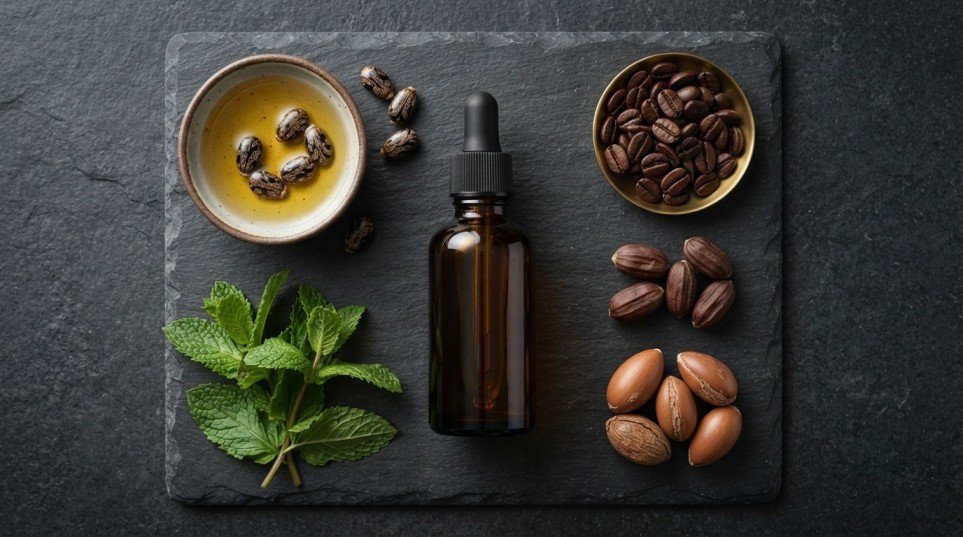
The ingredient list is more useful than the word “growth” on the front of the bottle. But it is important to separate ingredients with promising research from those that are simply good conditioners.
Peppermint Oil
Peppermint oil has shown promising hair-growth effects in animal research, but this does not establish that it can increase beard growth in humans. More clinical research is needed before it can be considered a proven beard-growth ingredient.
If you use a product containing peppermint oil, remember that essential oils can irritate the skin when used at high concentrations. Follow the product’s directions rather than applying concentrated peppermint oil directly to your face.
Castor Oil
Castor oil is a popular beard-care ingredient because it helps soften hair and reduce dryness. It contains ricinoleic acid and can make the beard feel more conditioned, but there is currently no strong clinical evidence that castor oil directly stimulates new beard growth.
Its value is mainly in conditioning the beard and supporting a comfortable skin environment.
Caffeine
Caffeine has been investigated as a topical ingredient for hair growth, particularly in relation to scalp hair. However, evidence that topical caffeine increases beard growth in humans is limited.
It is therefore better viewed as a potentially interesting ingredient rather than a proven beard-growth treatment.
Carrier Oils
Jojoba, argan, sweet almond, and similar carrier oils are primarily used to moisturize the skin and condition beard hair. They can make a beard feel softer and reduce dryness, but they should not automatically be treated as growth stimulants.
A Better Way to Judge the Formula
Do not choose a beard oil simply because it contains a particular ingredient. Look at the complete formula, consider what the product is actually designed to do, and check whether the growth claims are supported by human evidence.
For most beard oils, the strongest and most reliable benefit is conditioning—not dramatically increasing beard density.
How to Apply Beard Oil Properly
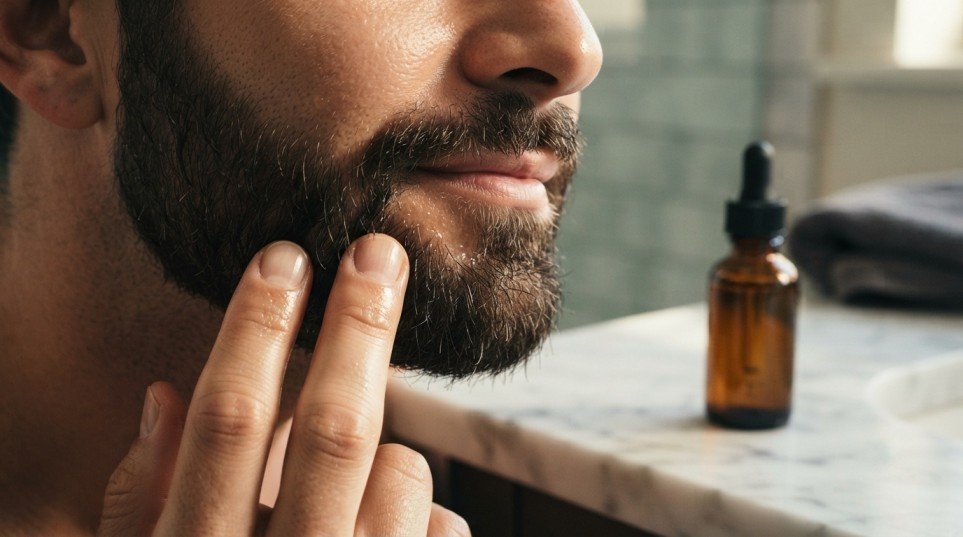
How you apply beard oil matters mainly because the product needs to reach the skin beneath the beard, not just coat the hair.
Apply a small amount to a clean, slightly damp beard and skin. For a short beard, a few drops are usually enough; longer or denser beards may need more. Start with less and add another drop if necessary rather than applying too much at once.
Work the oil through the beard with your fingertips, making sure some reaches the skin underneath. A gentle massage can help distribute the product evenly, but there is no need to press hard or massage for several minutes.
Use the product according to its directions. If your skin is prone to breakouts or irritation, start with a small amount and stop using it if you develop persistent redness, itching, or clogged pores.
Consistency matters more than using a large amount. Applying more oil will not make the beard grow faster.
When Beard Growth Oil May Help—and When It Probably Won’t
Beard oil is most useful when your main problem is the condition of the beard or the skin underneath it. It can soften coarse hair, reduce dryness, and help minimize breakage, making the beard look healthier and better maintained.
It may also be worth trying if you are interested in a product containing a specific active ingredient with preliminary research behind it. However, beard-growth claims should be treated cautiously because strong human evidence is still limited.
It May Be Worth Trying If:
- Your beard hair is dry, coarse, or prone to breakage.
- The skin underneath your beard is dry or uncomfortable.
- You want to improve the appearance and manageability of an existing beard.
- You understand that any potential growth benefit is likely to be modest and is not guaranteed.
It Probably Won’t Solve the Problem If:
- Certain areas of your beard have always been naturally sparse.
- Your main goal is to create new hair where there is little or no existing growth.
- You are expecting a dramatic change within a few weeks.
- You have persistent skin problems, significant hair loss, or a sudden change in beard growth that needs medical evaluation.
The important distinction is between improving the condition of existing beard hair and creating new beard growth. Beard oil can reasonably help with the first. Evidence for the second is much weaker.
A Simple Beard Care Routine to Support Your Results
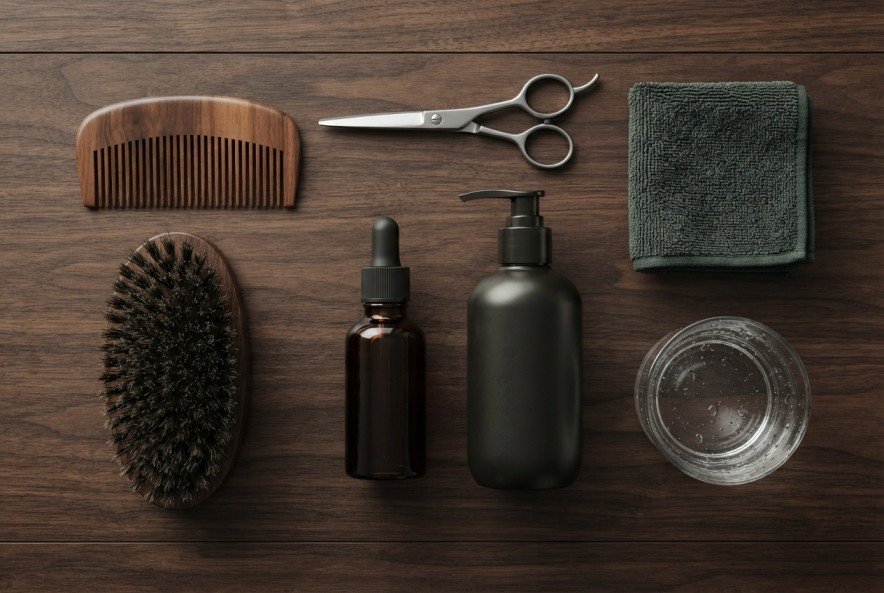
Beard oil works best when the rest of your beard-care routine is simple and consistent. You do not need a long list of products to maintain healthy-looking facial hair.
Cleanse as needed. Use a gentle beard or facial cleanser regularly enough to remove sweat, dirt, and product buildup without leaving the skin tight or irritated. How often you need to cleanse depends on your skin, beard length, and daily activity.
Moisturize when needed. If the skin underneath your beard feels dry or tight, a suitable moisturizer can help maintain comfort and reduce flaking.
Trim for maintenance. Regular trimming does not make the beard grow faster, but it can remove damaged ends and keep the beard looking fuller and more even.
Use beard oil for conditioning. Apply a small amount to the beard and the skin underneath it when your beard feels dry or needs additional softness.
For a complete framework covering the basics of beard care, our Beginner Beard Grooming Routine for Men That Actually Works guide takes you through the routine step by step.
Beard Growth Oil: Myths vs Facts
| Myth | Fact |
|---|---|
| Beard growth oil can create new hair follicles. | No. Beard oil cannot create new follicles or override the genetic and hormonal factors that influence beard density and growth pattern. |
| Peppermint, castor oil, or caffeine will automatically make your beard grow faster. | Not necessarily. Some ingredients have preliminary research, but strong human evidence that they increase beard growth is still limited. |
| Using more beard oil will make your beard grow faster. | No. Applying more product does not accelerate growth and may leave the skin greasy or increase the chance of irritation or clogged pores. |
| A beard oil that makes your beard look fuller has increased your beard density. | Not necessarily. Conditioning can soften hair, reduce dryness and breakage, and make existing beard hair appear healthier and fuller without creating new growth. |
| Beard oil can fill every patchy area if you use it consistently enough. | No. Consistent use can improve beard and skin condition, but naturally sparse areas may remain sparse because beard density is strongly influenced by genetics, age, and hormones. |
Quick Action Checklist
- Check the ingredient list instead of relying only on “growth” claims on the label.
- Choose a formula that matches your main goal—conditioning, moisturizing, or a product containing a specific growth-focused ingredient.
- Apply a small amount to clean skin and work it through the beard.
- Start with less product and add more only if needed.
- Massage gently to distribute the oil rather than applying excessive pressure.
- Use the product consistently according to its directions.
- Keep the skin underneath your beard clean and moisturized.
- Stop using the product if it causes persistent irritation or breakouts.
- Give the product enough time to judge changes in beard condition rather than expecting rapid growth.
- If your beard develops sudden patchy hair loss or a significant change in growth, consider speaking with a dermatologist.
Conclusion
Beard growth oil can be a useful part of a beard-care routine, but it should not be treated as a guaranteed beard-growth treatment. Its most reliable benefits are conditioning the beard, moisturizing the skin underneath it, and helping reduce dryness and breakage.
Some ingredients used in growth-focused formulas have promising preliminary research, but strong human evidence for increasing beard density is still limited. Your natural beard pattern remains largely influenced by genetics, age, and hormonal factors, so no oil can guarantee a thicker beard or fill every naturally sparse area.
If you choose to use one, focus on the formula rather than the marketing claims, apply a small amount to the beard and underlying skin, and use it consistently according to the product directions. The realistic goal is healthier-looking, better-conditioned facial hair—not a guaranteed transformation in beard growth.
Frequency Asked Questions
How long does beard growth oil take to show results?
There is no reliable timeline for beard-growth results because most beard oils have not been studied in strong human clinical trials for increasing beard density. Improvements in softness, dryness, and overall beard condition may appear sooner, while any change in growth will depend on the individual product and your natural beard pattern.
Can it cause breakouts?
Yes. Facial oils can potentially contribute to clogged pores or irritation, particularly if your skin is acne-prone or the formula is heavy. Start with a small amount and stop using the product if it consistently causes breakouts, redness, or irritation.
Does it work on a full beard too?
It can still be useful on a full beard, mainly for conditioning the hair and moisturizing the skin underneath it. It may help reduce dryness and breakage and make the beard easier to manage, but it should not be expected to dramatically increase beard density.