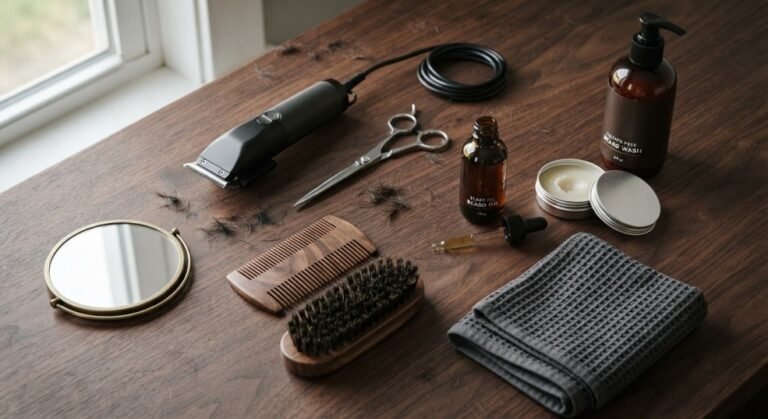
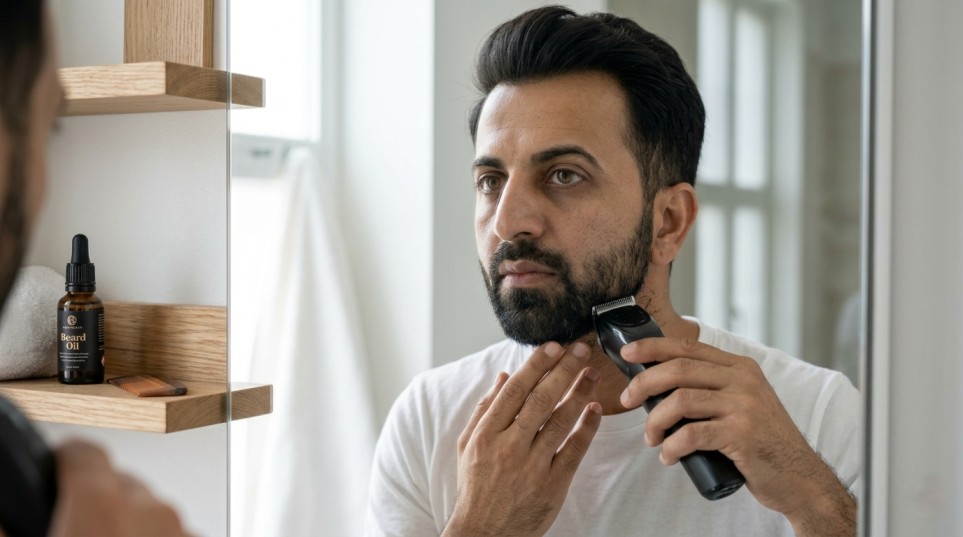
Quick Summary
A beginner beard grooming routine is simple: cleanse regularly, moisturize according to your skin type, dry gently, and trim as needed. The right routine can help manage dryness, irritation, beard dandruff, and rough-looking facial hair without relying on too many products. This guide explains each step, common mistakes, and how to handle common beard problems. The key is to choose products that suit your skin and beard and use them consistently.
Growing a beard is relatively easy. Keeping it clean, comfortable, and well-groomed is where many beginners run into problems.
Some men barely wash their beard, while others respond to every new problem by adding another oil, balm, shampoo, or styling product. Neither approach is particularly useful.
A good beard grooming routine starts with a few basic habits: cleanse the beard and the skin underneath it, moisturize when needed, dry it gently, and maintain its shape as it grows.
The right routine also depends on your skin type, beard length, growth pattern, and the problems you are actually trying to solve.
So, what should a beginner beard grooming routine look like?
Let’s break it down step by step.
Table of Contents
What Is the Best Beard Grooming Routine for Beginners?
A beginner beard grooming routine should focus on keeping the beard and the skin underneath it clean, comfortable, moisturized, and well maintained.
For most men, the foundation is simple: regular cleansing with a gentle product, moisturization when needed, gentle drying, and trimming as the beard grows. Styling products such as balm, wax, brushes, and combs are optional and become more useful as the beard gets longer.
There is no single routine that works for every man. Your skin type, beard length, hair texture, and individual concerns should determine which products and steps you actually need.
What Is a Beard Grooming Routine for Men?
A beard grooming routine is a set of habits used to keep facial hair and the skin underneath it clean, comfortable, moisturized, and well maintained.
A consistent routine can help manage everyday issues such as dryness, rough-feeling hair, product buildup, and irritation. It can also make the beard easier to shape and maintain as it grows.
The important part is not how many products you use. It is whether each product has a clear purpose and suits your skin and beard.
Why Most Beginner Beard Routines Fail
One common mistake is assuming that a beard should be washed as little as possible to preserve its natural oils.
The American Academy of Dermatology recommends regular cleansing of the face and beard with a gentle cleanser suited to your skin type. The aim is to remove accumulated oil, dead skin, sweat, and other debris without unnecessarily irritating the skin.
The bigger issue is often what you wash with, rather than simply how often you wash.
Scalp shampoo and harsh bar soap are formulated for different purposes and may be unnecessarily drying for some facial skin. A gentle facial cleanser is a more sensible starting point for many beginners.
Persistent flaking is also not always a sign that your beard is simply dirty or dry. It can be associated with conditions such as seborrheic dermatitis. If you are dealing with ongoing flakes, redness, or irritation, our guide to beard dandruff explains the problem in more detail.
Beginner Beard Grooming Routine: Step by Step
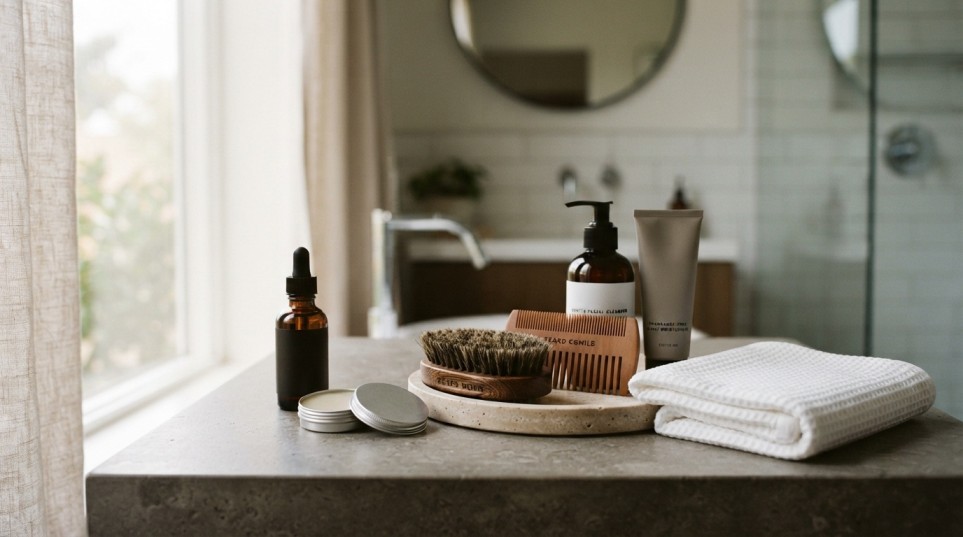
1. Brush Before You Wash
If your beard is long enough to brush, gently brushing it before washing can help loosen flakes, debris, and loose hairs.
It can also help separate tangled hairs, making the beard easier to clean and maintain.
You do not need to brush aggressively. A few gentle passes are enough.
2. Wash With a Gentle Cleanser
Clean your face and beard regularly with a mild cleanser suited to your skin type.
Make sure you cleanse the skin underneath the beard as well as the hair itself. Facial hair can trap sweat, oil, dead skin, and product residue close to the skin.
Avoid treating your beard exactly like scalp hair. A scalp shampoo may be unnecessarily drying for some facial skin, particularly when used frequently.
If you prefer a dedicated beard wash, choose a formulation that cleans effectively without leaving the beard or skin feeling excessively dry.
3. Pat Dry Instead of Rubbing
After washing, gently squeeze out excess water and pat the beard dry with a clean towel.
Aggressively rubbing wet beard hair creates unnecessary friction and can make the hair feel rough or frizzy.
You do not need to leave the beard soaking wet, but avoid scrubbing it dry.
4. Moisturize According to Your Skin
Moisturization becomes particularly important when the skin underneath your beard feels dry or uncomfortable.
The right product depends on your skin and how your beard responds to it.
Normal to dry skin: A beard oil can help condition facial hair and reduce a dry or rough feel.
Oily or acne-prone skin: A lightweight, non-comedogenic moisturizer or conditioner may be preferable if heavier products leave your skin greasy or contribute to breakouts.
Sensitive skin: A simple, fragrance-free moisturizer may be a better choice than heavily fragranced beard products.
There is no single beard-care product that is automatically best for every skin type. The formulation, ingredients, amount used, and your individual skin response all matter.
If you are unsure what type of skin you have, start with our guide on how to find your skin type for men before choosing beard-care products.
5. Use Balm or Wax for Styling
Beard balm and wax are primarily styling products.
They can help control flyaways, add hold, and make a longer beard easier to shape. They are not a replacement for proper skin moisturization.
If your beard is short, you may not need either product.
Once there is enough length to shape, a small amount of balm or wax can make everyday styling easier.
6. Keep Your Hands Off Your Beard
Constantly touching your beard is an easy habit to overlook.
Your hands pick up oil, dirt, and other debris throughout the day. Repeatedly touching your beard can transfer some of that material to the skin underneath it.
If you notice yourself running your hands through your beard throughout the day, reducing the habit is a simple way to limit unnecessary contact with your facial skin.
Beard Grooming Routine Schedule
| Step | Frequency | Purpose |
|---|---|---|
| Brush | Daily, if beard length allows | Loosens flakes and detangles hair |
| Cleanse | Regularly, according to skin needs | Removes oil, sweat, debris, and product buildup |
| Moisturize | Daily when needed | Helps maintain comfortable skin and softer beard hair |
| Balm/Wax | As needed | Styling and hold |
| Trim | As needed | Maintains shape and removes unwanted length |
There is no universal trimming schedule. Shorter beards may need more frequent maintenance, while longer beards can often go longer between trims.
For detailed trimming technique, see our guide on how to trim your beard properly.
Common Beard Problems and What to Do
1. Beard Dandruff
Persistent flakes, redness, or irritation underneath the beard may be associated with seborrheic dermatitis rather than simple dryness.
Seborrheic dermatitis is a common inflammatory skin condition that can affect areas where oil production is higher. Depending on the cause and severity, treatment may involve medicated antifungal products or other medical treatment.
If your flaking continues despite a simple grooming routine, do not keep adding oils and conditioners in an attempt to fix it. The underlying problem may need a different approach.
2. Razor Bumps and Ingrown Hairs
Small bumps around the neck or jawline after shaving may not be acne.
When coarse or curly hair curls back into the skin after shaving, it can cause inflammation known as pseudofolliculitis barbae.
Shaving in the direction of hair growth, avoiding excessive pressure, and not pulling the skin tightly can help reduce the risk.
2. Dry or Itchy Beard
Dryness can come from the skin underneath the beard, the beard hair itself, environmental conditions, or the products you are using.
Start by simplifying the routine. Use a gentle cleanser, avoid unnecessarily hot water, and choose a moisturizer or conditioning product that your skin tolerates.
If itching is persistent or accompanied by redness, scaling, or a rash, do not assume it is simply part of growing a beard.
3. Patchy Beard Growth
A grooming routine can improve the appearance and condition of the beard you already have, but it cannot reliably change your natural beard density.
Genetics, age, and androgen sensitivity all influence facial-hair growth.
If patchiness is your main concern, our guide to beard growth oils explains what these products can realistically do and where marketing claims can go beyond the evidence.
For more information about factors that influence beard growth, see our guide on how to grow a beard faster naturally.
Common Mistakes Beginners Make
- Using scalp shampoo or harsh soap: Facial skin may be more sensitive to unnecessary stripping.
- Using too much beard oil: More product does not automatically mean better conditioning and may leave the skin greasy.
- Ignoring skin type: A product that works well for one beard may not suit another person’s skin.
- Rubbing the beard dry: Excessive friction can make facial hair feel rough and frizzy.
- Touching the beard constantly: Repeated contact transfers oil and debris to the skin.
- Ignoring persistent dandruff: Ongoing flaking may require treatment rather than more grooming products.
- Shaving too aggressively: Shaving against the grain or pulling the skin tight can increase the risk of razor bumps.
- Trimming too much too soon: Beginners can easily remove more length than intended while trying to create a perfectly shaped beard.
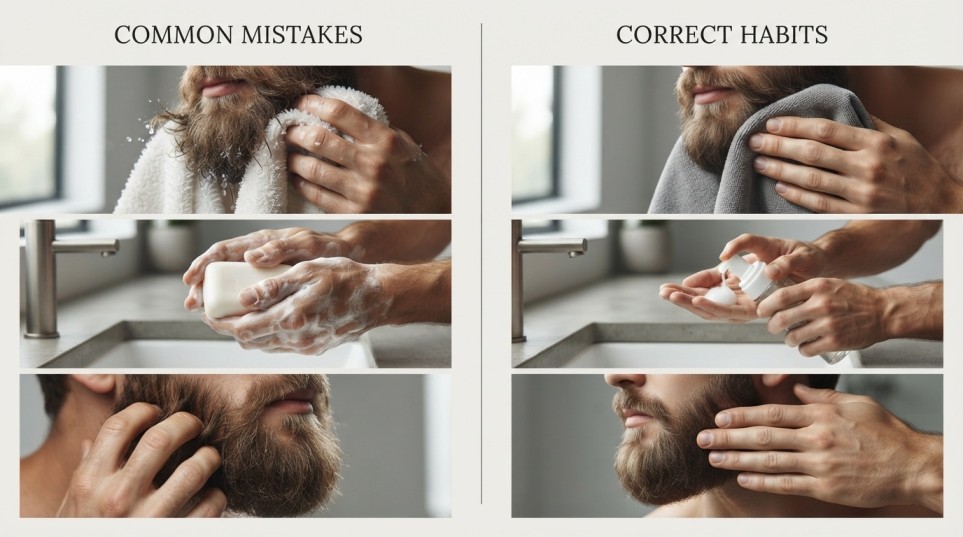
For a broader look at habits that can affect beard health and appearance, see 10 Common Beard Care Mistakes Men Make.
Myth vs Fact
| Myth | Fact |
|---|---|
| You should wash your beard only a few times a week. | Regular cleansing is important. The cleanser and your skin’s tolerance matter more than following a fixed low-frequency rule. |
| Trimming makes your beard grow faster. | Trimming changes the visible hair but does not alter the follicles responsible for growth. |
| More beard oil means a healthier beard. | Excess product can leave the beard greasy and may not suit every skin type. |
| Beard products can fill in naturally patchy areas. | Grooming products can improve the appearance and condition of existing hair, but they cannot reliably create new beard density. |
| Every itchy beard has dandruff. | Itching can have several causes, including dryness, irritation, ingrown hairs, and skin conditions such as seborrheic dermatitis. |
Quick Action Checklist
- Cleanse your face and beard regularly with a gentle product suited to your skin.
- Brush gently if your beard is long enough to benefit from it.
- Pat the beard dry instead of aggressively rubbing it.
- Moisturize the skin underneath the beard when needed.
- Choose beard oil, conditioner, or moisturizer based on your skin’s needs.
- Use balm or wax when you need styling and hold.
- Avoid constantly touching your beard.
- Do not ignore persistent flakes, redness, or irritation.
- Trim gradually rather than removing too much length at once.
- Give your routine time before constantly changing products.
Conclusion
A good beard grooming routine does not need to be complicated.
For most beginners, the foundation is straightforward: cleanse regularly, moisturize according to your skin’s needs, dry the beard gently, and maintain its shape as it grows.
The biggest mistake is usually not using too few products. It is using products without a clear reason, choosing them without considering your skin, or changing the routine every time a new problem appears.
Start with the basics and add products only when your beard actually needs them.
As your beard becomes longer, you can adjust the routine around trimming, conditioning, and styling rather than following a fixed list of products.
Frequently Asked Questions
Should I wash my beard every day or a few times a week?
There is no single frequency that suits every beard and skin type. The important point is to cleanse regularly with a gentle product that your skin tolerates. If daily cleansing leaves your skin excessively dry or irritated, reconsider the cleanser and adjust the routine to your skin’s needs.
Do I need beard oil and beard balm, or just one?
They serve different purposes. Beard oil is primarily used for conditioning facial hair and the skin, while balm provides more styling control. Beginners with shorter beards may not need both.
Why is my beard itchy?
Itching can result from dryness, irritation, ingrown hairs, or an underlying skin condition. If the itching is persistent or accompanied by redness, scaling, or a rash, it is worth investigating the cause rather than assuming it is normal beard growth.
What’s the difference between an itchy beard and beard dandruff?
Simple dryness may cause tightness or mild itching without significant scaling. Beard dandruff associated with seborrheic dermatitis can involve visible flakes, redness, scaling, or irritation. Persistent symptoms may require treatment or professional evaluation.
Can a grooming routine fix a patchy beard?
No. A good routine can make existing facial hair look healthier, softer, and more controlled, but it cannot reliably increase natural beard density. Genetics, age, and androgen sensitivity have a major influence on beard growth.
Does beard oil make your beard grow faster?
Not reliably. Beard oil can condition existing hair and improve its appearance, but cosmetic beard oils are not established treatments for significantly increasing beard growth or creating new follicles.
When should I start trimming a new beard?
You do not need to trim heavily as soon as your beard starts growing. Give it enough time for its natural growth pattern to become visible, then make small adjustments to the neckline, cheek line, and overall length.
Authoritative Sources
American Academy of Dermatology — A Dermatologist’s Top Tips for a Healthy Beard
American Academy of Dermatology — DIY Treatment for 5 Common Beard Problems
Yale Medicine — Itchiness, Acne, and Skin Irritation: How to Solve Your Facial Hair Problems