Quick Summary
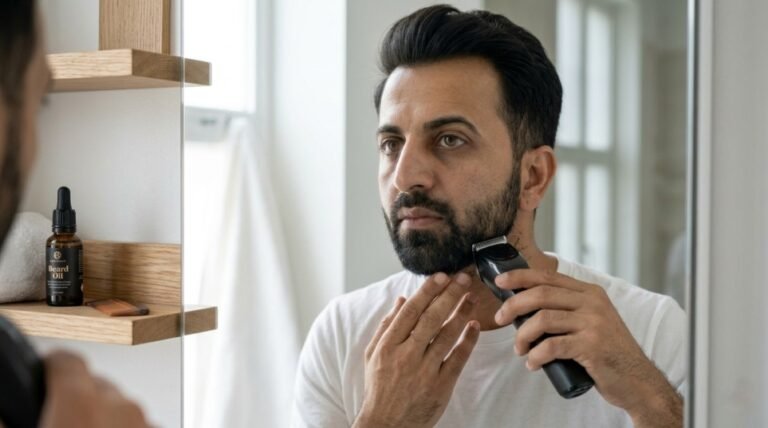
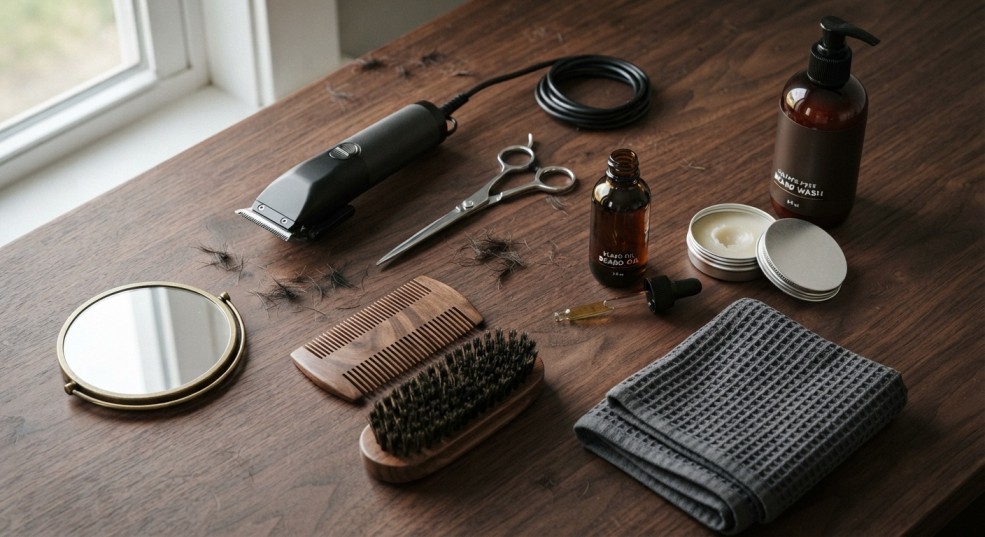
Most beard care mistakes come from treating beard hair like scalp hair. This guide covers 10 common mistakes, why they can lead to itch, flaking, irritation, or uneven growth, and what to do instead.
Most beard care mistakes happen because men treat their beard like an extension of their scalp hair. Here’s something that doesn’t get said enough: your beard isn’t a longer version of your scalp hair, and the skin underneath it isn’t the same skin you’ve been washing your face with for years. Most beard grooming habits that work well for your scalp don’t translate well to facial hair. Facial skin is thinner in some areas and oilier in others, and beard hair is generally coarser and more porous than scalp hair.
That mismatch is the single biggest theme running through the mistakes below. Once you see it, the fixes stop feeling like a list of rules and start making sense as one coherent shift: treat your beard as its own thing, not an extension of your haircut.
Table Of Contents
What Are the Most Common Beard Care Mistakes?
The most common beard care mistakes include over-washing, skipping beard oil or balm, trimming at the wrong time, neglecting the skin underneath, using regular shampoo on facial hair, and shaving too early during patchy growth. These habits often lead to dryness, beard dandruff, itch, uneven growth, and irritation because beard hair requires different care than scalp hair.
Mistake 1: Washing Your Beard Every Day
The problem: Daily washing with regular soap or shampoo strips the natural oils (sebum) that keep both your skin and beard hair conditioned.
Why it’s harmful: Sebum isn’t the enemy. It’s your skin’s built-in moisturizer, and the American Academy of Dermatology notes that over-washing disrupts the skin barrier, leading to dryness, irritation, and increased itch. This is the number one message we get from readers asking why their beard itches more the cleaner they keep it, and the answer is almost always wash frequency.
The fix: Wash your beard 2 to 3 times a week with a sulfate-free beard wash or a gentle cleanser. On non-wash days, rinse with warm water only. If you’re building a full routine from scratch, our beginner beard grooming routine walks through exactly where washing fits alongside oil and trimming.
Mistake 2: Skipping Beard Oil or Balm
The problem: Many men treat beard oil as optional or purely cosmetic.
Why it’s harmful: Beard hair is coarser and drier than scalp hair, and the skin underneath doesn’t always produce enough oil to keep both hair and skin comfortable, especially once the beard passes the one-inch mark. This is a major contributor to flaking that’s often mistaken for dandruff, and to the wiry, brittle feel of an unconditioned beard. If your beard is flaking and you’re not sure whether it’s just dryness or something more, beard dandruff explained covers how to tell the difference.
Why it works: Carrier oils like jojoba and argan closely mimic natural sebum, helping to soften hair and reduce moisture loss from the skin barrier.
The fix: Apply 3 to 5 drops of beard oil daily after showering, while skin is still slightly damp, and work it in from skin to tip.
Realistic expectation: Oil softens texture and reduces flaking within 1 to 2 weeks. It does not speed up growth rate or fill in patchy areas, no matter what the bottle implies.
Mistake 3: Trimming a Dry Beard
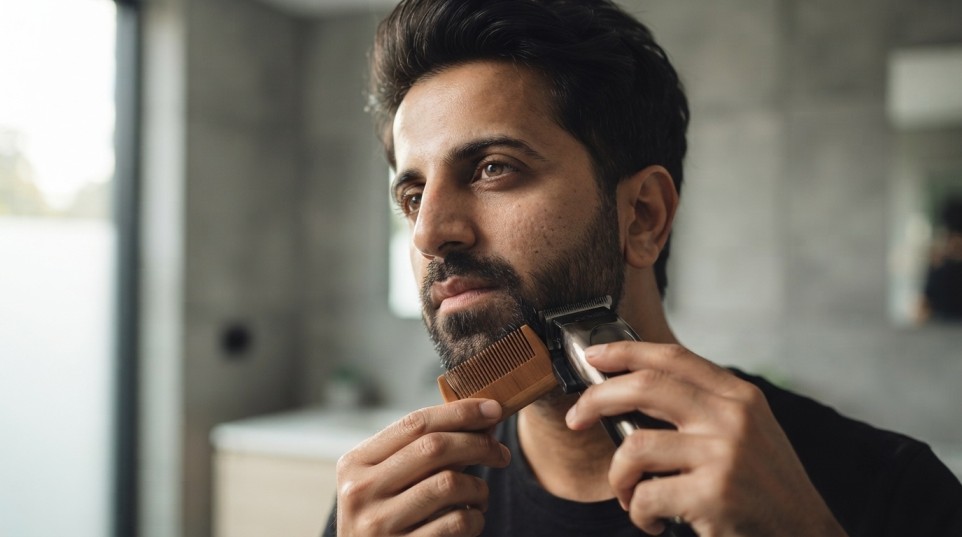
The problem: Cutting beard hair while it’s completely dry.
Why it’s harmful: Dry hair is more brittle and prone to split ends, and it’s harder to judge true length since dry beard hair often appears bushier than it actually is, leading to over-cutting or uneven lines.
The fix: The fix: Trim your beard when it’s clean and completely dry, or only slightly towel-dried if that’s how you normally style it. Avoid trimming soaking-wet hair because it shrinks as it dries, making it easier to remove more length than intended. Comb it in the direction of growth first, then trim gradually, checking length as you go. For a full walkthrough of getting clean, even lines, see how to trim your beard properly.
Mistake 4: Ignoring the Skin Underneath the Beard
The problem: Focusing entirely on the hair while neglecting the skin it grows from.
Why it’s harmful: Beard hair grows from skin, and if that skin is irritated, dry, or inflamed, it directly affects hair quality and comfort. Conditions like seborrheic dermatitis, a common cause of flaking and redness, thrive in the warm, occluded environment under a thick beard, according to dermatology sources including the Cleveland Clinic. This is the mistake we see most often in longer beards, past three or four months, where the hair looks fine but the skin underneath has been neglected the entire time.
The fix: Exfoliate gently underneath the beard once or twice a week with a soft brush, and apply a lightweight, non-comedogenic moisturizer or beard balm to the skin, not just the hair.
When it may not need product intervention: Mild, occasional flaking often resolves with consistent oil use. Persistent redness, scaling, or itching that doesn’t improve after a few weeks is worth having evaluated by a dermatologist, since it may indicate a skin condition rather than a grooming gap.
Mistake 5: Shaving Too Early During Patchy Growth

The problem: Giving up and shaving at week 3 or 4 because the beard looks uneven.
Why it’s harmful: Beard growth isn’t uniform across the face because hair in different areas grows and fills in at different speeds due to genetics and differences in hair growth cycles. Most patchiness that looks permanent at 4 weeks fills in noticeably by week 8 to 12, and this is the single most common reason we hear from men who quit growing a beard too soon and regretted it.
The fix: Commit to at least a 4-week grow-out minimum before making any judgment, and ideally 8 to 12 weeks before deciding a style isn’t working. Our best beard care routine for men includes a week-by-week guide for exactly this stage.
Realistic expectation: Some patchiness, especially along the cheek line, is genetic and may not fully fill in regardless of grow-out time. In that case, a well-defined cheek line or a shorter style often looks more intentional than fighting the pattern.
Mistake 6: Using Regular Shampoo on Your Beard
The problem: Reaching for the same shampoo you use on your scalp.
Why it’s harmful: Scalp shampoo is formulated for a different hair type and often contains stronger surfactants than beard hair or facial skin needs. This is the scalp-logic mismatch showing up in its most literal form: the product is fine for your head, but too harsh for your face.
The fix: Use a dedicated beard wash or a mild, fragrance-free cleanser designed for facial skin.
Mistake 7: Neglecting a Beard Comb or Brush
The problem: Never combing or brushing the beard, especially past the one-inch stage.
Why it’s harmful: Without regular combing, beard hairs curl and tangle against each other, making the beard look untidy and making trimming less even because the hair isn’t lying in a consistent direction
The fix: Comb daily with a wide-tooth wooden or horn comb to train hair growth direction and distribute natural oils evenly. Brush with boar bristle for shorter, denser beards.
Mistake 8: Shaving Against the Grain Too Soon
The problem: Shaving neck and cheek lines against the direction of hair growth while the beard is still short.
Why it’s harmful: Shaving against the grain cuts hair below the skin’s surface, which raises the risk of ingrown hairs and razor bumps, a concern the AAD specifically flags for curlier or coarser facial hair.
The fix: Always shave with the grain for cleanup lines, especially in the first few months of growing out a beard. Save against-the-grain shaving for a very close finish only once skin has adjusted and irritation isn’t a pattern.
Mistake 9: Overlooking Diet, Sleep, and Hydration
The problem: Treating beard health as purely a topical, product-based issue.
Why it’s harmful: Hair growth and quality are influenced by overall health. Poor sleep, dehydration, and nutrient gaps, particularly protein, iron, and zinc, can affect hair strength and growth cycles, though evidence connecting specific supplements to faster beard growth in healthy men remains limited.
The fix: Focus on the basics that are well-supported: adequate protein intake, consistent sleep, and hydration. Be skeptical of supplements marketed with dramatic beard-growth claims, since strong clinical evidence for most of them is lacking.
Mistake 10: Expecting Instant Results
The problem: Judging a beard care routine after a few days or a single wash.
Why it’s harmful: Skin barrier repair, hair conditioning, and visible growth all operate on a timeline of weeks, not days. Abandoning a routine too early means never actually finding out whether it worked, which is how most men end up cycling through products instead of sticking with one long enough to see results.
The fix: If you’re still expecting faster growth, our how to grow a beard faster naturally explains what actually influences beard growth and what doesn’t.
Common Beard Care Myths vs Facts
Myth vs Fact
| Myth | Fact |
|---|---|
| Shaving more often makes your beard grow thicker. | No. Shaving does not change beard thickness, density, or growth rate. New growth may only look thicker because the hair has a blunt tip. |
| Beard care isn’t necessary. | Beard hair is coarser than scalp hair, and the skin underneath can become dry, irritated, or flaky. Basic beard care helps keep both comfortable and healthy. |
| Beard oil makes your beard grow faster. | Beard oil conditions existing hair and helps reduce dryness, but it does not increase growth rate or create new follicles. |
| A patchy beard means you have low testosterone. | Not usually. Beard density is largely influenced by genetics and how facial hair follicles respond to androgens. |
| The more you wash your beard, the healthier it will be. | Over-washing can strip natural oils and contribute to dryness and irritation. Most men do not need to wash their beard every day. |
| Growing your beard longer will always fill in patchy areas. | Not necessarily. Some patchiness is genetic and may remain even after months of growth, although early uneven growth can become less noticeable with time. |
Quick Action Checklist
- Wash your beard 2–3 times a week, not daily.
- Apply beard oil daily after showering.
- Trim only clean, towel-dried hair.
- Exfoliate the skin underneath your beard weekly.
- Give any new beard 8–12 weeks before judging patchiness.
- Shave with the grain during early growth stages.
- Comb daily once your beard passes the one-inch mark.
Conclusion
Every mistake on this list points back to the same misunderstanding: beard hair and the skin beneath it don’t follow scalp-hair rules, and treating them like they do is what causes the itch, the flaking, and the patchiness that never seems to fully resolve. Fix these one at a time rather than overhauling everything at once, and give each change a few weeks to actually show results before moving to the next.
Start this week by picking just one mistake from this list that sounds like your own routine, and correct it before adding anything else.
If you have persistent redness, severe flaking, pain, or bleeding that doesn’t improve with a consistent beard care routine, it’s worth seeing a dermatologist to rule out an underlying skin condition.
Frequently Asked Questions
How long does it take to fix a dry, itchy beard?
Most men notice less itch and flaking within 1 to 2 weeks of adding daily beard oil and reducing wash frequency, though full skin barrier recovery can take up to 4 weeks.
Is beard dandruff the same as scalp dandruff?
Not always. Beard flaking is often simple dry skin from over-washing or under-moisturizing, but persistent, red, or itchy flaking can indicate seborrheic dermatitis, which may need a medicated treatment.
Can beard oil unclog pores or cause breakouts?
It can, if the oil is heavy or comedogenic for your skin type. Choose lightweight, non-comedogenic oils like jojoba, and reduce frequency if you notice new breakouts.
Should I brush or comb a short beard?
A comb is generally better for beards under one inch, since bristle brushes work best once there’s enough length to actually train direction and distribute oil.
Is it normal for a beard to be patchy in the first few months?
Yes. Uneven growth in the first 8 to 12 weeks is common and often improves as follicles in slower-growing areas catch up.
Can washing your beard too much cause beard dandruff?
Yes. Washing your beard too often, especially with regular shampoo or harsh cleansers, strips away natural oils from both the beard and the skin underneath. That dryness can lead to flaking that’s often mistaken for beard dandruff. Washing 2–3 times a week with a gentle beard wash is enough for most men.
Image Disclaimer
The images in this article are AI-generated and are provided for illustrative purposes only. They are intended to help explain beard care concepts and should not be interpreted as real people, actual treatment results, or guaranteed outcomes. Individual results may vary depending on genetics, skin type, grooming habits, and overall health.
Authoritative Sources
- American Academy of Dermatology (AAD) – Skin Care Basics: https://www.aad.org/public/everyday-care
- Cleveland Clinic – Seborrheic Dermatitis: https://my.clevelandclinic.org/health/diseases/14403-seborrheic-dermatitis
- Mayo Clinic – Seborrheic Dermatitis (Symptoms & Causes): https://www.mayoclinic.org/diseases-conditions/seborrheic-dermatitis/symptoms-causes/syc-20352710
- Mayo Clinic – Folliculitis (Symptoms & Causes): https://www.mayoclinic.org/diseases-conditions/folliculitis/symptoms-causes/syc-20361634
- NHS – Seborrhoeic Dermatitis: https://www.nhs.uk/conditions/seborrhoeic-dermatitis/
- American Academy of Family Physicians (AAFP) – Pseudofolliculitis Barbae: https://www.aafp.org/pubs/afp/issues/2023/0100/dermatologic-conditions-skin-of-color.html