Quick Summary
A patchy beard can still look clean and intentional when you work with your natural growth pattern. Give your beard enough time to show where it grows unevenly, then choose a style and length that suit those areas. Strategic trimming, clean cheek and neckline edges, and light styling products can make sparse areas less noticeable, but they cannot change your underlying beard density. The goal isn’t to make a patchy beard look fully dense—it’s to make the growth you have look deliberate and well-groomed.
A patchy beard doesn’t mean you have to give up on having a good-looking beard. The key is understanding where your growth is uneven and choosing a style, length, and shape that work with it rather than trying to hide every gap.
Most men don’t have perfectly even facial hair. You may have sparse cheeks, a weak mustache connector, or thinner growth under the jaw. These patterns are largely determined by genetics and follicle distribution, so grooming can’t make a naturally sparse area grow denser. What it can do is make the beard you already have look cleaner, more balanced, and intentional.
This guide shows you how to assess your patch pattern, choose a suitable beard style, trim different areas strategically, define clean edges, and use styling products without expecting them to change your actual beard growth.
Table Of Contents
What Is Styling a Patchy Beard?
To style a patchy beard, grow it for at least 4–6 weeks to understand your natural growth pattern, then choose a beard style and length that suit the areas where growth is strongest. Keep the cheek line and neckline clean, adjust trimming based on density, and use a small amount of balm or other styling products to control stray hairs. Grooming can improve the appearance of patchiness, but it cannot permanently increase beard density.
How to Style a Patchy Beard: Step by Step
Step 1: Grow It Out Before You Decide Anything
Patchy areas almost always look worse in the first couple of weeks. Short stubble makes every gap obvious because there isn’t enough length yet for surrounding hair to lean over and cover thin spots.
Give it at least four weeks before judging your pattern, and ideally six to eight. By then, hair from the denser areas has enough length to comb or brush across the thinner ones, which changes how the whole beard reads even if the patch itself hasn’t filled in. If you’re impatient during this stage, our guide on how to grow a beard faster covers what you can realistically influence, though growth speed and your patch pattern are largely separate things.
Step 2: Map Your Patch Pattern
Before picking a style, figure out exactly where your growth is thin. The usual spots are:
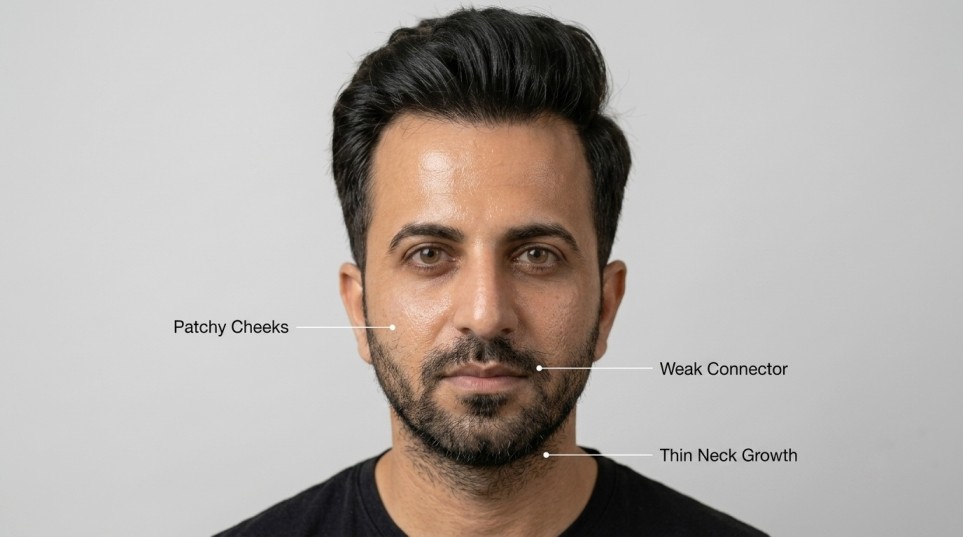
- Cheeks – the most common patchy zone, often uneven side to side
- The mustache-to-beard connector – the strip of skin between the corner of the mouth and the jawline
- Under the jaw or on the neck – frequently thinner or finer than the chin and mustache
This pattern tends to stay fairly consistent over time, so once you know where your gaps are, you can pick a style that works around them instead of against them.
Step 3: Choose a Style That Works With Your Pattern
This is the decision that matters most. Matching the style to the pattern, not the other way around, is what makes a patchy beard look intentional. The next section covers specific styles worth trying, but as a general rule: shorter, more contained shapes tend to work better than full, long beards when patchiness is significant, because there’s simply less surface area for gaps to show up on.
Step 4: Trim Strategically, Not Uniformly
Instead of running one guard length over your entire beard, use a slightly shorter guard on the patchy sections and a touch more length elsewhere. Switch to scissors for fine control around the connector and jawline, where uneven strand length is usually most visible.
Trim more often in the first couple of months. Hair in different areas often grows at different rates early on, and letting it all go unchecked makes the length mismatch, and the patchiness, more obvious. If you’re still getting comfortable with a trimmer, how to trim your beard walks through the basics of guard lengths and technique before you start cutting into patchy sections.
Step 5: Define Clean, Sharp Lines
A crisp cheek line and neckline do more for a patchy beard than almost anything else on this list. A sharp edge signals that the beard is shaped on purpose, even when the density inside that line isn’t perfectly even.
Get your first line cut by a barber so you know exactly where it should sit for your face, then maintain it yourself with a trimmer or straight razor every few days.
Step 6: Use Styling Products the Right Way
Products won’t change how much hair grows, but they change how the hair you have behaves:
- Beard balm or wax adds hold and a bit of weight to each strand, which helps you comb hair over a thin patch and makes the beard look slightly denser because the strands sit closer together.
- A boar-bristle beard brush trains hair to lie flat in one direction and can be used to brush hair from a denser area across a thinner one.
- Beard fiber or powder concealers, the kind some barbers use, are a temporary cosmetic fix. They can make patches less visible for a day but wash out and aren’t a treatment for the underlying growth.
Apply beard balm sparingly. Too much product can weigh facial hair down and make patchy areas look greasy instead of fuller.
Skip heavy hair pomades that aren’t formulated for beard hair. They tend to sit greasy on shorter, coarser facial hair instead of styling it. If you’re wondering whether beard oil belongs in this routine at all, does beard oil actually work covers what it does and doesn’t do.
Step 7: Maintain It On a Schedule
Patchy beards look patchier the longer you go between trims, simply because the denser and thinner areas grow at visibly different rates. Touch up the neckline and cheek line every three to five days, and do a full trim every two to three weeks depending on how fast your beard grows.
Best Beard Styles for a Patchy Beard
Once you know where your pattern is thinnest, these four styles are the most reliable starting points. Each one works by containing the beard to areas where growth is already denser, rather than trying to stretch thin hair across a bigger area.
1. Short Boxed Beard
A boxed beard kept around 3–5mm with a tight, straight boundary along the cheeks and neck. This is the most versatile option for general patchiness because short, uniform length minimizes the contrast between denser and thinner spots. There’s less length overall for gaps to show through, and the straight edges make the whole shape read as deliberate.

Best for: mild, all-over unevenness rather than one severe bald patch.
2. Corner Beard (Chin Strap with Mustache)
A corner beard follows the jawline and chin but stops short of covering the cheeks entirely, connecting to a mustache at the corners of the mouth. Because it skips the cheeks by design, it works well when cheek patchiness is the main problem, since that area simply isn’t part of the shape.
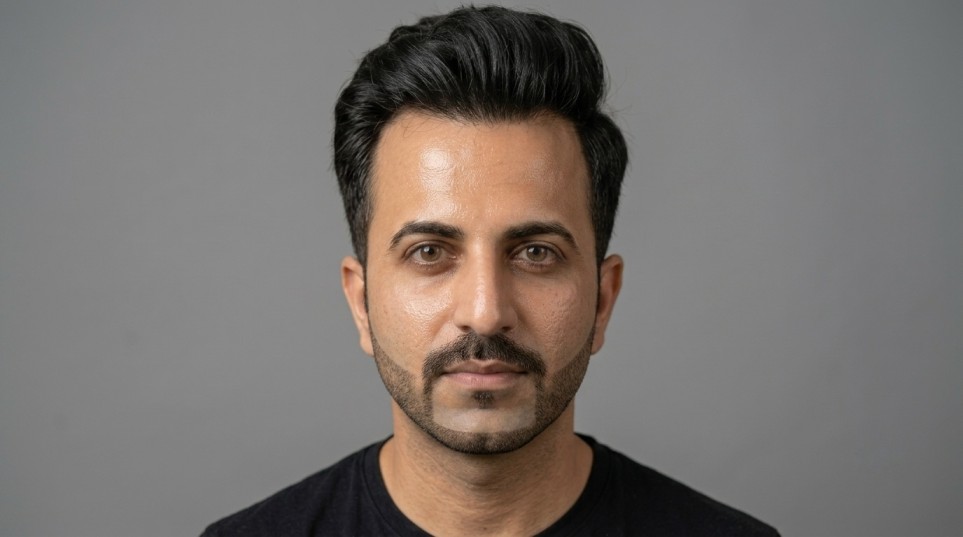
Best for: noticeable cheek patches with decent growth along the jaw and chin.
3. Extended Goatee (Anchor Style)
This style frames the jawline with a pointed or squared-off chin section and a thin line running along the jaw, paired with a mustache. It draws attention to the chin and jaw, which tend to have the densest growth on most faces, while leaving the cheeks and neck out of the shape.

Best for: weak cheek and neck growth combined with solid chin and mustache density.
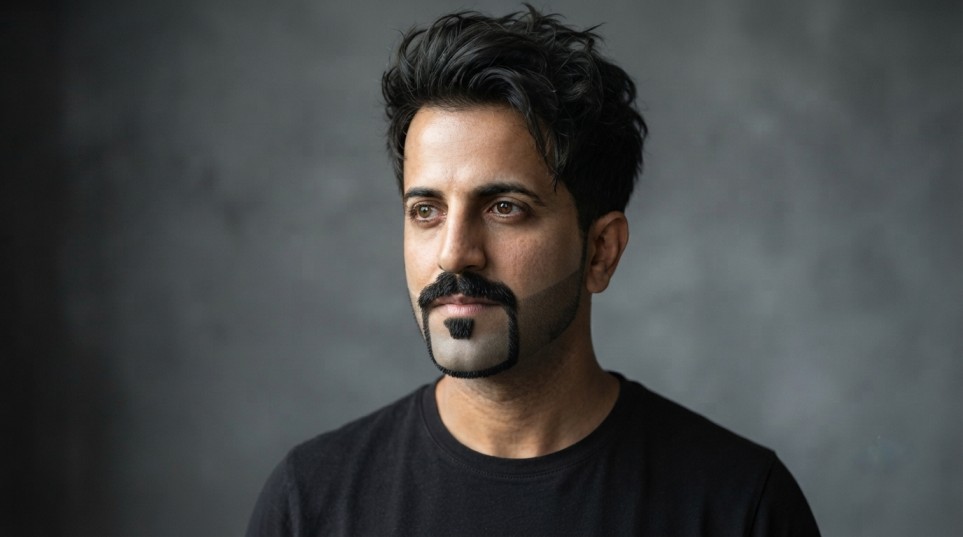
4. Disconnected Mustache and Chin Beard
Instead of trying to bridge a thin mustache-to-beard connector, this style keeps the mustache and chin beard visibly separate on purpose, with a small gap of clean-shaven skin between them. It turns a common weak spot into an intentional design choice instead of something you’re trying to hide.

Best for: a thin or patchy connector between the mustache and the rest of the beard.
A barber can help confirm which of these actually suits your face shape as well as your growth pattern, since jawline and cheekbone structure affect how each style sits.
Healthy skin creates a better foundation for beard grooming. If you’re unsure how to care for the skin underneath your beard, start by identifying your skin type.
Common Mistakes
- Shaving too soon, before the pattern has had a chance to show itself at four-plus weeks.
- Picking a full, thick beard style despite significant cheek patchiness, which puts the thinnest area on full display.
- Skipping the neckline and cheek line. Without them, an uneven beard just looks unkempt rather than styled.
- Using one length across the whole face instead of adjusting length by density.
- Relying on thickening products expecting a permanent fix. Balms and fibers change appearance temporarily; they don’t change growth.
- Going too long between trims, which lets the length mismatch between dense and thin areas become obvious.
- Choosing a beard style that doesn’t match your natural growth pattern. Working with your beard instead of against it almost always produces better results.
Myth vs Fact
| Myth | Fact |
|---|---|
| A patchy beard means low testosterone. | Beard density depends largely on genetics, follicle distribution, and how sensitive individual follicles are to androgens. A patchy beard does not automatically mean low testosterone. |
| Shaving makes a patchy beard grow back thicker. | Shaving only cuts the hair at the skin’s surface. It does not change the follicle or increase beard density. Regrowth can feel rougher because the hair has a blunt tip, but it isn’t actually thicker. |
| If you wait long enough, a patchy beard will fully fill in. | Beard density can increase as some follicles mature through the late teens and twenties, but a genetically determined growth pattern often remains. Waiting may help reveal your full potential, but it cannot guarantee full coverage. |
| Growing a beard longer will always hide patchy areas. | More length can sometimes help surrounding hairs blend, but longer hair can also separate and make differences in density more obvious. The right length depends on where your beard is sparse and how the hair behaves. |
| Beard oil or beard balm can fix a patchy beard. | These products can condition facial hair and improve how it sits, making sparse areas look more controlled. They cannot create new follicles or permanently increase beard density. |
Quick Action Checklist
- Grow for at least 4–6 weeks before making any styling decisions
- Map your patch zones: cheeks, mustache-jaw connector, neck
- Choose a style and length that match your specific pattern (short boxed beard, corner beard, extended goatee, or disconnected style)
- Get a clean, defined cheek line and neckline
- Use balm and a beard brush to train direction and add coverage
- Trim edges every 3–5 days to prevent uneven length
- Skip heavy pomades not made for beard hair
Conclusion
Styling a patchy beard comes down to working with your pattern instead of against it: give it enough time to show its true shape, pick a style and length that suit your specific gaps, keep the lines sharp, and use products to style rather than to chase a fix that isn’t there. Do that consistently and a patchy beard reads as a deliberate look, not an unfinished one.
If you’ve mapped your pattern and you’re still not sure a beard is worth keeping, it’s worth reading how to fix a patchy beard to see whether the patchiness itself can be improved before you commit to a style.
Even naturally full beards aren’t perfectly symmetrical. A well-shaped beard almost always looks better than an untouched one, regardless of density.
Frequently Asked Questions
How long should I grow my beard before trying to style around a patchy area?
At least four weeks. Check again at six to eight weeks before deciding on a final style, since patches often look less obvious once surrounding hair has more length.
What’s the best beard style for a very patchy beard?
Short, uniform stubble or a boxed beard in the 2–5mm range usually works best, since shorter length reduces the visual contrast between thick and thin areas. A corner beard can also work well if the cheeks are the main problem area.
Does trimming patchy spots shorter actually help?
Yes. Cutting patchy sections a touch shorter than the rest reduces how much bare skin shows through and keeps the overall length looking even.
Will beard oil or balm fix patchiness?
No. Neither changes how much hair grows or how dense it is. Balm can help style hair to lie closer together and look slightly fuller, but that’s a styling effect, not a growth one.
Should I just shave off a patchy beard completely?
That’s a personal preference, not a medical necessity. Some men prefer a clean shave over visible patchiness; others prefer to style around it. Both are reasonable choices.
Can a barber make a patchy beard look better?
Yes. A skilled barber can recommend a beard style that suits your growth pattern, create clean cheek and neckline edges, and balance thicker and thinner areas to make your beard look more intentional.
Is a patchy beard more noticeable when it’s long?
Often, yes. As a beard grows longer, differences in density can become more noticeable. Many men find that a short or medium-length beard creates a cleaner, more balanced appearance.
Authoritative Sources
- American Academy of Dermatology (AAD) — DIY treatment for 5 common beard problems
- Cleveland Clinic — 5 Reasons Why You Can’t Grow a Beard
- American Academy of Dermatology (AAD) — A dermatologist’s top tips for a healthy beard
- American Academy of Dermatology (AAD) — Alopecia areata: Signs and symptoms