Quick Summary
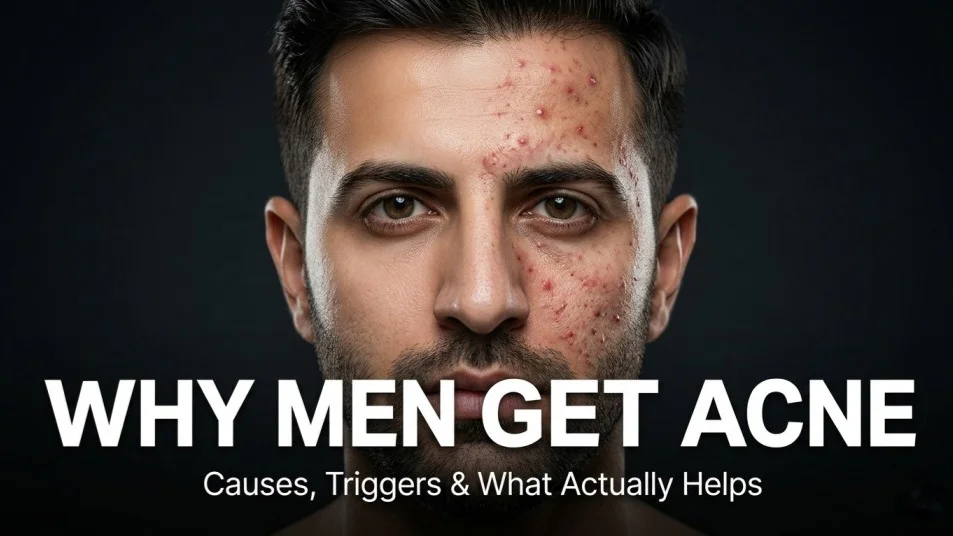
Men can keep getting acne long after their teenage years because it develops through several processes working together: androgen-driven oil production, clogged follicles, Cutibacterium acnes, and inflammation. Where you break out can offer useful clues, but it’s not a diagnosis. Some beard-area bumps are actually razor bumps or folliculitis, while evidence-backed ingredients like adapalene and benzoyl peroxide target different acne problems. The key is understanding what’s driving your breakouts—not chasing the “best” product.
Acne doesn’t stop mattering once you’re out of your teens. Plenty of men in their late twenties, thirties, and beyond keep dealing with breakouts, or start getting them for the first time as adults. Understanding why men get acne matters here, because the usual explanations — dirty skin, too much oil — are too simple for what’s actually happening under the surface.
Acne develops through several processes working together inside a hair follicle, and figuring out which one matters most for you takes more than a glance in the mirror. A more useful approach: look at where and how you’re breaking out, think about what could be feeding it, work out what type of acne you’re actually dealing with, then match that to an ingredient with real evidence behind it. Before any of that, it helps to know your baseline. If you’re not sure whether your skin runs oily, dry, or something in between, how to find your skin type is worth sorting out first, since it changes how your skin handles acne treatment.
Table Of Contents
Why Do Men Get Acne?
Acne isn’t caused by one thing. It develops because several processes happen inside a hair follicle at roughly the same time: androgens drive higher sebum (oil) production, skin cells inside the follicle shed abnormally and build up instead of clearing out, the follicle becomes blocked, a normal skin bacterium called Cutibacterium acnes multiplies in that blocked, oil-rich environment, and the immune system responds with inflammation. No single step causes acne on its own — it’s the combination, and how strongly each part is happening, that decides whether you get an occasional blackhead or persistent, inflamed breakouts.
What Actually Causes Acne in Men?
Each of the processes above deserves its own explanation, because they build on each other in a fairly logical order.
Androgens and Sebum Production
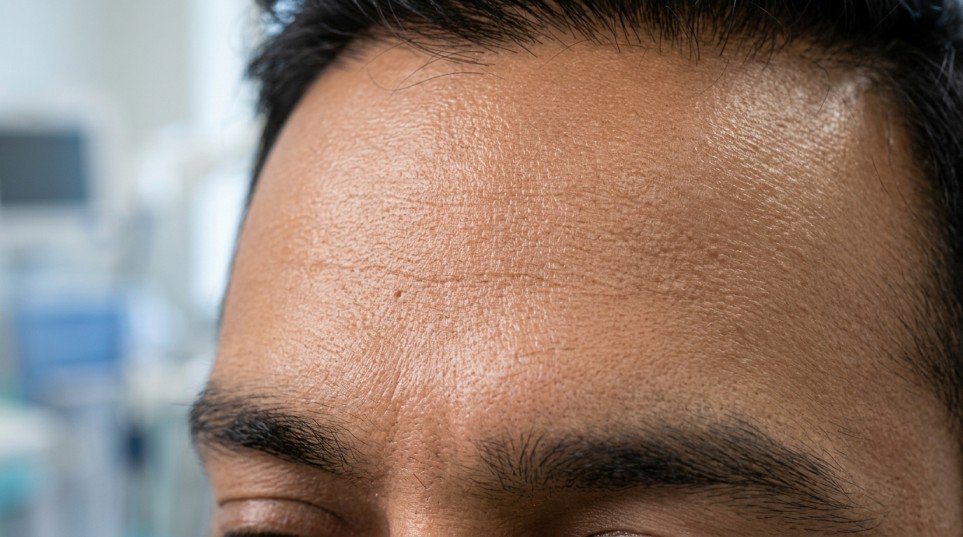
Sebaceous glands — the oil glands attached to hair follicles — respond directly to androgens, mainly testosterone and its more potent relative, DHT. Because men typically run higher circulating androgen levels than women, their sebaceous glands tend to produce more sebum, especially across the T-zone, chest, and back, where those glands are largest and most numerous.
More sebum isn’t the same thing as more acne, though. Some men produce a lot of oil and rarely break out, while others with fairly average oil production still struggle with persistent acne. Sebum changes the environment inside the follicle and feeds the bacteria involved in acne, but it’s one contributor among several rather than the whole story. If oil management is the main thing you’re dealing with day to day, it’s worth building around an oily skin care routine for men rather than treating oil control and acne as separate problems.
How a Pore Becomes Blocked
Before a pimple is ever visible, something has already gone wrong inside the follicle. Skin cells lining the follicle wall are supposed to shed in an orderly way and rise to the surface. In acne-prone follicles, that shedding turns abnormal — cells stick together and accumulate instead of clearing.
Combined with sebum, this builds a plug near the top of the follicle. That plug is a comedo, the technical term for a blackhead or whitehead. A blackhead sits open to air, so the trapped material oxidizes and darkens; a whitehead stays capped over. At this stage, there’s no redness or swelling. The blockage has to form first, which is why treating comedones early tends to work better than waiting for an obvious pimple to show up.
Why Inflammation Turns a Blockage Into a Pimple
Cutibacterium acnes lives on everyone’s skin as part of the normal microbial community — it isn’t a sign of poor hygiene or an infection in the everyday sense. Inside a blocked, oil-rich follicle, though, it multiplies more than usual and interacts with the immune system in a way that triggers inflammation.
That’s the difference between a mild comedone sitting quietly under the skin and a red, swollen, sometimes painful pimple. Some clogged follicles stay relatively calm; others provoke a stronger inflammatory response and turn into the deeper lesions — papules, pustules, nodules — that are harder to ignore. Genetics, local immune response, and how much C. acnes is present all play into why one blocked pore barely shows and another becomes obvious.
Where You Break Out Can Give You a Clue
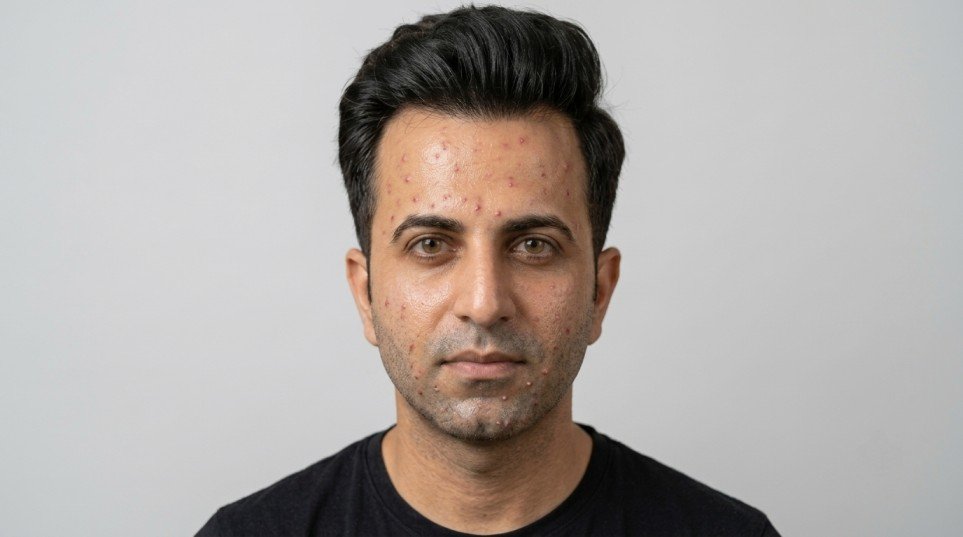
Breakout location isn’t a diagnosis, and treating it like one — the old face-mapping charts claiming a spot on your chin means a liver problem — isn’t supported by evidence. But pattern does matter. Where you consistently break out can point toward a habit, product, or exposure worth checking, especially when the cause is external rather than purely hormonal.
| Breakout location/pattern | What it may suggest | What to investigate first |
|---|---|---|
| Forehead / hairline | Product buildup, occlusion, or trapped sweat | Hair products like waxes and pomades, headwear worn often, sweat left on skin after workouts |
| Jawline / chin | Areas some men notice more hormonal sensitivity in | Whether breakouts follow any kind of cycle, stress levels, shaving direction and technique |
| Beard area | Can be genuine acne, but very often razor bumps or folliculitis instead | Shaving method and blade sharpness, whether bumps follow the direction of hair growth |
| Chest / back / shoulders | Large, active sebaceous glands that respond easily to sweat and friction | Tight or non-breathable workout clothing, how long sweat sits on skin before a shower |
| Helmet / strap / collar areas | Localized friction or occlusion rather than classic acne | Backpack straps, chin straps, tight collars, repeated pressure in the same spot |
None of this proves what’s causing your acne by itself. A pattern is a starting point for a short list of things to check, not evidence of an internal condition. If two clues line up — jawline breakouts that also flare during stressful weeks, for instance — that combination tells you more than either detail alone.
Acne or Something That Looks Like Acne?
Not every bump on the face is acne, and treating something that isn’t acne with acne products usually doesn’t help. Sometimes it makes things worse.
1. Razor Bumps (Pseudofolliculitis Barbae)
Razor bumps happen when a shaved hair curls back into the skin or grows sideways beneath it instead of exiting straight, triggering an inflammatory bump that can look a lot like a pimple. They’re especially common in men with curlier facial hair and are tied directly to shaving, not to the follicular process behind acne.
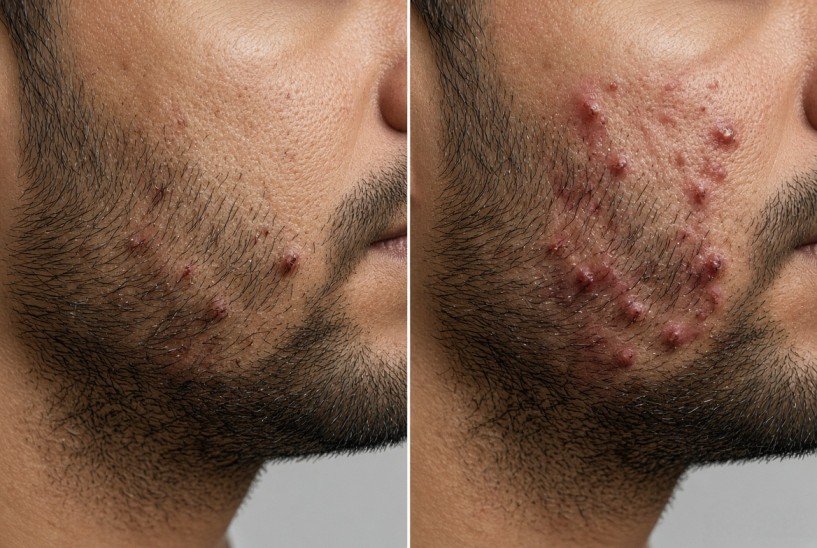
The pattern that makes razor bumps more likely than ordinary acne: bumps that line up with the direction of hair growth, cluster mainly where you shave closely, and noticeably improve if you stop shaving or change technique for a week or two.
2. Folliculitis
Folliculitis is inflammation or infection of the hair follicle, often bacterial, and it can look almost identical to acne — small red or pus-filled bumps clustered around hairs. It can appear anywhere hair grows, not just the face.
If bumps aren’t responding to a reasonable acne treatment trial, look unusual, or keep recurring in the same spots, that’s a reason to get an actual diagnosis rather than cycling through more acne products.
What Actually Helps Men’s Acne?
This section covers active ingredients, not products or brands — what matters is matching the ingredient to the problem you actually have.
| Main acne problem | Evidence-backed active | What it targets | Realistic expectation |
|---|---|---|---|
| Blackheads, whiteheads, clogged pores | Adapalene (topical retinoid) | Normalizes how follicle cells shed, preventing new blockages from forming | Fewer new comedones over 8–12 weeks; existing ones clear gradually, not overnight |
| Red, inflamed pimples | Benzoyl peroxide | Reduces acne-associated bacteria; strong guideline support for inflammatory acne | Visible reduction in inflamed lesions within a few weeks for many men |
| Mild congestion, rough texture | Salicylic acid | Helps loosen and clear buildup inside the follicle | Modest improvement; better suited to prevention than to clearing established acne |
| Acne with lingering dark marks | Azelaic acid | Treats active acne and helps fade post-inflammatory discoloration | Gradual improvement in both breakouts and marks over several weeks |
Adapalene and benzoyl peroxide carry the strongest guideline support, including from the American Academy of Dermatology, and are generally considered first-line for most facial acne. Salicylic acid and azelaic acid have real, but more conditional, support — worth trying for the right problem, though not interchangeable with the first two in terms of evidence strength.
Which Ingredient Should You Start With?
As a starting point based on the problem in front of you:
- Mostly blackheads and whiteheads → adapalene is worth trying first.
- Mostly red, inflamed pimples → benzoyl peroxide has the strongest track record.
- Mild congestion without much inflammation → salicylic acid can help, though results tend to be subtler.
- Acne plus stubborn dark marks left behind → azelaic acid addresses both at once.
These are starting points, not fixed rules. Severity, skin tolerance, and whether your acne has actually been diagnosed as acne all change the picture. Severe, cystic, nodular, or scarring acne generally responds better to dermatologist-guided treatment than to over-the-counter actives alone, no matter how well-matched the ingredient looks on paper.
Foods That May Worsen Acne in Men
1. High-Glycemic Foods
Of the dietary links studied, high-glycemic eating has the more consistent research signal — refined carbohydrates and sugary foods spike blood sugar and insulin, which can influence hormones tied to sebum production. Randomized trials have shown some men’s acne improve on a lower-glycemic diet. That doesn’t mean every slice of white bread triggers a breakout; it means glycemic load is one contributor worth paying attention to if your diet leans heavily processed.
2. Milk and Dairy
The evidence connecting milk and dairy to acne is observational and mixed, and it appears to depend on factors like sex and overall diet pattern. It isn’t strong enough to justify telling every man with acne to cut out dairy across the board. If you already suspect dairy is an issue for you specifically, that’s worth testing individually — it just isn’t a universal rule.
3. Whey Protein
Whey protein comes up often because so many men who train use it, and there are scattered case reports of acne — usually on the chest and back — appearing after starting a supplement. But the strongest available evidence, a controlled trial in men with mild to moderate acne, found no significant difference in severity between men taking whey and those who weren’t. The honest summary: a link has been reported in some individuals, it isn’t established as a general cause, and a clear pattern in your own skin is more informative than the average result either way.
4. How to Tell If Food Is Actually a Trigger
Change one variable at a time, not five at once. Give it several weeks, since skin doesn’t respond overnight. Look for a pattern that repeats more than once before drawing a conclusion, and keep in mind that skin getting worse after eating something isn’t proof that food caused it — stress, sleep, and new products can all be happening at the same time.
Acne Mistakes That Actually Make Things Worse
Over-treating the skin
Stacking a retinoid, benzoyl peroxide, and a strong exfoliant at once often creates irritation that looks like worse acne but is really just an inflamed, damaged barrier.
Picking and popping
This pushes bacteria and debris deeper, increases inflammation, and is one of the more avoidable causes of dark marks and permanent scarring.
Constantly switching treatments
Most acne actives need six to twelve weeks before you can fairly judge whether they’re working. Switching every week or two means you never actually find out.
Calling every breakout “purging”
A genuine adjustment period is short and shows up as the same type of breakout you would expect anyway, in areas where you already break out. Ongoing irritation, burning, or new kinds of lesions usually mean the product does not suit you, not that it is working as intended.
Treating razor bumps as acne
Acne products won’t fix a shaving problem, and can dry out or irritate skin that’s already inflamed from ingrown hairs.
Ignoring persistent or scarring acne
Self-treatment has limits. If it isn’t improving after a fair trial, or it’s leaving marks behind, waiting longer usually costs more than getting help sooner would.
Myth vs Fact
| Myth | Fact |
|---|---|
| Acne means your skin is dirty. | Acne starts inside the follicle — with oil, shedding cells, bacteria, and inflammation — not with surface dirt. |
| More washing means less acne. | Washing removes surface oil but doesn’t reach the blockage forming inside the follicle. Over-washing can irritate skin and make it look worse. |
| Chocolate automatically causes acne. | Evidence doesn’t support a direct, universal chocolate–acne link. High-glycemic, sugary eating overall has a stronger connection than chocolate specifically. |
| All dairy causes acne. | The dairy–acne link is observational and inconsistent — it may apply to some men and not others. |
| Sun exposure clears acne. | A tan can temporarily mask redness, but UV exposure doesn’t treat the underlying process and carries its own skin risks. |
| Every breakout after starting an active is purging. | Purging is real but time-limited and predictable. Ongoing irritation or clearly worsening acne is more likely intolerance than purging. |
When Acne Needs a Dermatologist
Most acne can be reasonably managed with the right over-the-counter active and some patience. A few signs suggest it’s worth getting a professional opinion instead of continuing to self-treat:
- Nodules or cysts — deep, painful lumps rather than surface pimples
- Visible scarring, or acne that’s clearly heading that way
- Severe or widespread breakouts covering large areas
- Acne that hasn’t improved after a genuine trial of an appropriate treatment
- Dark marks or discoloration that are worsening rather than fading
- Bumps you’re not confident are actually acne
- Sudden, severe acne that started after a new medication or performance-enhancing drug
None of these mean something is seriously wrong. They’re just situations where a dermatologist can shortcut months of trial and error with an accurate diagnosis and a plan suited to what’s actually happening on your skin.
Quick Action Checklist
- Identify your dominant breakout pattern — location, and whether it’s mostly clogged or mostly inflamed.
- Rule out shaving, friction, and gym-related causes before assuming it’s acne.
- Confirm the bumps actually look like acne, not folliculitis or razor bumps.
- Choose an active ingredient based on what your acne is doing, not on marketing.
- Introduce one new active at a time.
- Give any treatment 8–12 weeks before judging it.
- See a dermatologist if acne is severe, scarring, or not responding.
Conclusion
Men get acne because several processes are happening inside the follicle at once, and androgen-driven sebum is only part of that picture. Shaving, friction, and occlusion can aggravate certain patterns without being the root cause. Diet can matter for some men, particularly around high-glycemic eating, but it isn’t a universal explanation and shouldn’t be treated like one.
The type of acne you have, and what’s realistically driving it, should decide the approach — not whatever product is trending. The better question isn’t “what’s the best acne product?” It’s “what’s actually driving my acne, and which evidence-backed ingredient targets that specific problem?”
Frequently Asked Questions
Why do men get acne even as adults?
Androgen-driven sebum production doesn’t stop after the teenage years, and other contributors — stress, shaving, sweat, certain medications — can trigger or maintain breakouts well into adulthood.
Is oily skin the main cause of male acne?
No. Oily skin is one contributing factor, not the cause on its own. Many men with oily skin don’t develop significant acne, and some with less oil still do.
Why do I get acne around my beard?
It could be genuine acne, but beard-area bumps are also commonly razor bumps or folliculitis, both of which need a different approach than standard acne treatment.
Does shaving cause acne?
Shaving itself doesn’t cause acne, but it can cause razor bumps that resemble it, and irritation from shaving can aggravate acne that’s already present.
Does whey protein cause acne?
Evidence is mixed. Some men report a connection, but the best controlled research so far hasn’t found a significant overall effect. A personal pattern is worth acting on regardless of the average result.
Which ingredient is best for clogged pores?
Adapalene has the strongest evidence for normalizing follicular shedding and preventing new blackheads and whiteheads.
Which ingredient helps red, inflamed pimples?
Benzoyl peroxide has strong guideline support for reducing acne-associated bacteria and inflammation.
How long does acne treatment take to work?
Most active ingredients need 8 to 12 weeks of consistent use before you can fairly judge whether they’re working.
When should a man see a dermatologist?
When acne is severe, nodular, or scarring, isn’t improving despite a reasonable treatment trial, or when you’re not confident the bumps are actually acne.
Authoritative Sources
American Academy of Dermatology
- Acne Clinical Guideline
- Updated Guidelines for the Management of Acne
- Adult Acne Treatment
- Folliculitis / Acne-like Breakouts
PubMed / Peer-Reviewed Evidence