Quick Summary
A good beard care routine is less about growing a beard faster and more about keeping the hair and skin underneath clean, conditioned, and protected as it grows. This guide covers how to wash, moisturize, brush, trim, and maintain your beard at every growth stage, along with weekly care, common mistakes, and practical habits that help you maintain a healthier-looking beard.
A well-maintained beard doesn’t require a complicated routine or a shelf full of products. The basics are simple: keep the beard and skin underneath clean, maintain moisture, control dryness and irritation, and trim regularly as the beard grows.
Whether you’re growing your first beard or maintaining a fuller one, consistent care can make your beard softer, easier to manage, and healthier-looking while reducing common problems such as itch, dryness, and breakage.
This guide breaks down the best beard care routine step by step—from washing and moisturizing to brushing, trimming, and weekly maintenance—plus practical advice for each stage of beard growth.
Table Of Contents
Best Beard Care Routine: Why It Matters
A good beard care routine keeps both the beard and the skin underneath clean, moisturized, and easier to manage. Regular cleansing, conditioning, brushing, and trimming can help reduce dryness, itch, tangling, and breakage while keeping the beard looking healthier.
The ideal routine depends on your beard length, skin type, and how quickly your beard becomes oily or dirty. The goal isn’t to follow a rigid schedule—it’s to use enough care to keep your beard and the skin underneath comfortable and well maintained.
What Is a Beard Care Routine?
A beard care routine is a set of daily and weekly grooming habits that keeps your beard and the skin underneath clean, moisturized, healthy-looking, and manageable. It typically includes cleansing, conditioning, brushing or combing, moisturizing, and trimming, with the exact routine adjusted to your beard length and skin needs.
Why the Skin Beneath Your Beard Is the Real Starting Point
Beard health starts at the follicle, not at the hair shaft. Dry, clogged, or irritated skin beneath your beard can contribute to itchiness, beard dandruff, ingrown hairs, and an unhealthy environment for hair follicles, making it harder to maintain a healthy-looking beard. Dead skin cells, product residue, and excess sebum can block follicles, causing patchiness, persistent itch, and uneven density.
Every step in a beard care routine is, at its foundation, a skin care step. Products applied to the hair mean little if the skin beneath is neglected. That connection shapes everything in this guide.
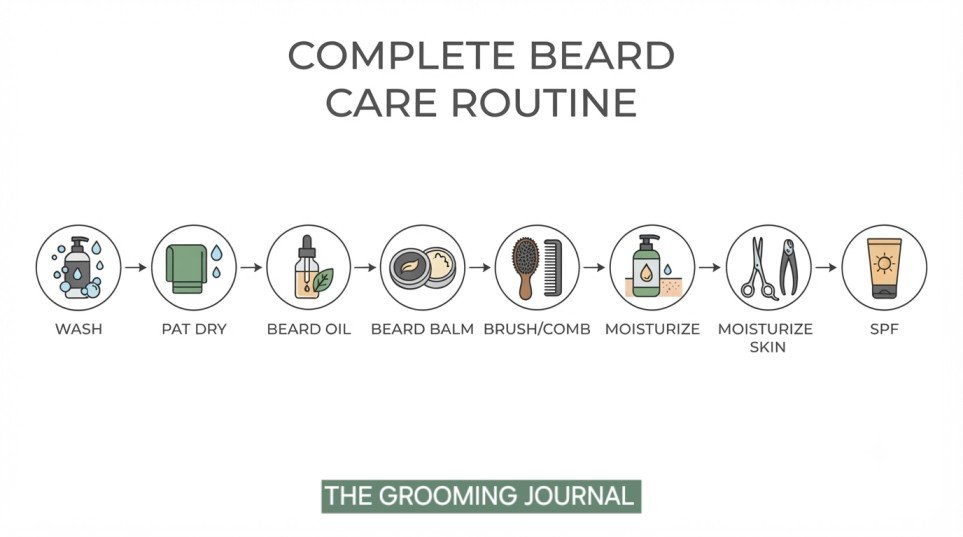
The Complete Beard Care Routine: Step by Step
Step 1: Wash Your Beard Correctly (Not Every Day)
How often you wash your beard is just as important as the products you use. Washing too frequently removes natural oils that keep both your beard and the skin underneath hydrated, often leading to dryness and brittle hair. For most men, washing 2 to 3 times per week provides the right balance between cleanliness and moisture.
Use a dedicated beard wash or a sulfate-free face cleanser. Regular shampoo and body soap are too harsh for facial skin and gradually erode the skin’s moisture barrier.
If you exercise regularly, sweat heavily, or work in a dusty environment, rinse your beard with water between wash days as needed. This helps remove sweat and surface debris without stripping away the natural oils that keep your beard healthy.
Wet the beard with warm water, work a small amount of beard wash through the hair down to the skin, and massage in circular motions for about 30 seconds. Rinse completely. Leftover product residue is one of the most common and overlooked causes of persistent itch.
On non-wash days, a warm water rinse clears surface debris without disturbing natural oils.
Step 2: Pat Dry, Never Rub
Aggressively rubbing a wet beard with a towel roughens the hair cuticle, creates frizz, and pulls hairs from sensitive follicle roots. Pat dry gently instead. For longer beards, lightly squeeze sections and let remaining moisture air dry. If using a blow dryer, keep it on a cool or low heat setting.
Step 3: Apply Beard Oil to Slightly Damp Hair
Timing improves results here. Applying beard oil to slightly damp hair can help spread the product more evenly through the beard and onto the skin underneath.
Beard oil helps replenish moisture, softens coarse facial hair, and conditions the skin beneath your beard. Regular use reduces itch during the early growth stages, minimizes dryness, and keeps your beard looking healthier, softer, and easier to manage.
Dispense 3 to 6 drops into your palm based on beard length, warm the oil by rubbing your palms together, then work it through the beard from the inside out, starting at the skin. Include the mustache area and neckline.
If your beard feels greasy after application, you’re likely using more oil than necessary. Start with a small amount and increase only if your beard still feels dry after the oil has fully absorbed.
If you’re deciding whether beard oil belongs in your routine, Does Beard Growth Oil Actually Work or Is It Just Hype? covers what the evidence actually supports without the marketing noise.
Step 4: Add Beard Balm for Medium to Long Beards
Beard oil is primarily for hydration and conditioning, while beard balm provides moisture along with light hold for styling. For short beards, beard oil is usually enough. As your beard grows to a medium or longer length, beard balm becomes more useful for controlling flyaways, improving shape, and keeping your beard looking neat throughout the day.
Scrape a thumbnail-sized amount, warm it between your palms until pliable, then apply using the same motion as beard oil. Always use balm after oil, not as a replacement.
Step 5: Brush or Comb Based on Length
Choose your grooming tool based on your beard length. A boar bristle brush works best for short to medium beards because it distributes beard oil evenly, removes loose hairs, and helps train your beard to grow in a more uniform direction. For medium to long beards, a wide-tooth comb is the better choice as it detangles hair gently and makes shaping easier without unnecessary pulling or breakage.
Brush or comb after applying product when the beard is conditioned and easier to manage. Avoid aggressive or repeated brushing, which can create unnecessary tension and breakage.
Step 6: Trim Regularly, Even While Growing It Out
Many men avoid trimming while growing a beard, thinking it will slow progress. In reality, regular trimming helps remove split ends, maintain a cleaner shape, and reduce breakage. While trimming doesn’t make your beard grow faster, it helps it look healthier and more even as it grows.
Trim as needed to maintain your desired shape and remove split or damaged ends. Short beards may need more frequent shaping, while longer beards can usually go longer between trims.
Clean neckline and cheek line definition makes a beard look intentional regardless of length. For a precise breakdown of technique and guard sizing, How to Trim Your Beard Properly: A Step-by-Step Guide for Men covers every variable clearly.
Step 7: Moisturize the Skin Around Your Beard
While beard oil helps condition the skin beneath your beard, it doesn’t fully replace a facial moisturizer. Apply a lightweight, non-comedogenic moisturizer to the exposed skin around your beard, especially along the cheeks, jawline, and neck. During the day, choose a moisturizer with SPF to help protect your skin from sun damage.
Not sure which beard oil or moisturizer is right for you? Start by identifying your skin type. If you’re unsure, read How to Find Your Skin Type before choosing beard care products, as the right formula depends on whether your skin is dry, oily, combination, or sensitive.
Step 8: Train Your Beard Direction Consistently
Beard hairs naturally grow in different directions, especially during the early stages of growth. Brushing your beard consistently can help the hairs sit in a more uniform direction, making the beard look neater and easier to style, making your beard appear neater over time. Brush gently once or twice a day after applying beard oil or balm, and be patient—visible improvements come with consistent grooming rather than overnight results.
Weekly Additions That Maintain What Daily Habits Build
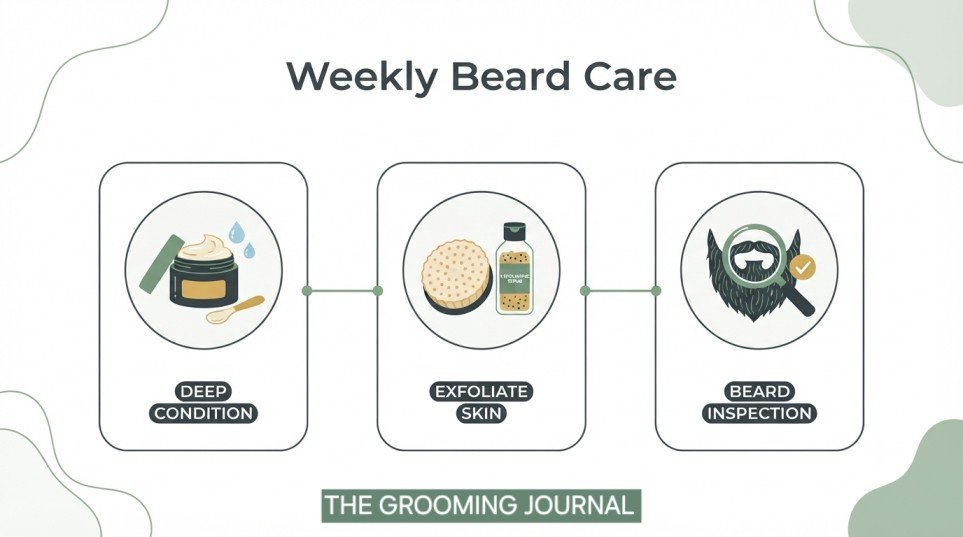
Deep Conditioning Treatment
Once a week, apply a beard conditioner or a light conditioning oil and leave it on for 5 to 10 minutes before rinsing. This can provide additional conditioning for dry, coarse, or brittle beard hair and directly addresses dryness, coarseness, and brittleness at the hair shaft level.
Exfoliation Beneath the Beard
Use a soft facial scrub or a firm-bristle brush once a week to exfoliate the skin beneath the beard. This clears dead skin cells. Use a gentle facial exfoliant occasionally, based on your skin’s tolerance, rather than scrubbing aggressively.
Weekly Beard Inspection
Take a few minutes each week to inspect your beard in good lighting. Check for split ends, dry patches, beard dandruff, ingrown hairs, or areas that need light trimming. Spotting these issues early makes them easier to manage before they become more noticeable.
How Nutrition Affects Your Beard from the Inside Out
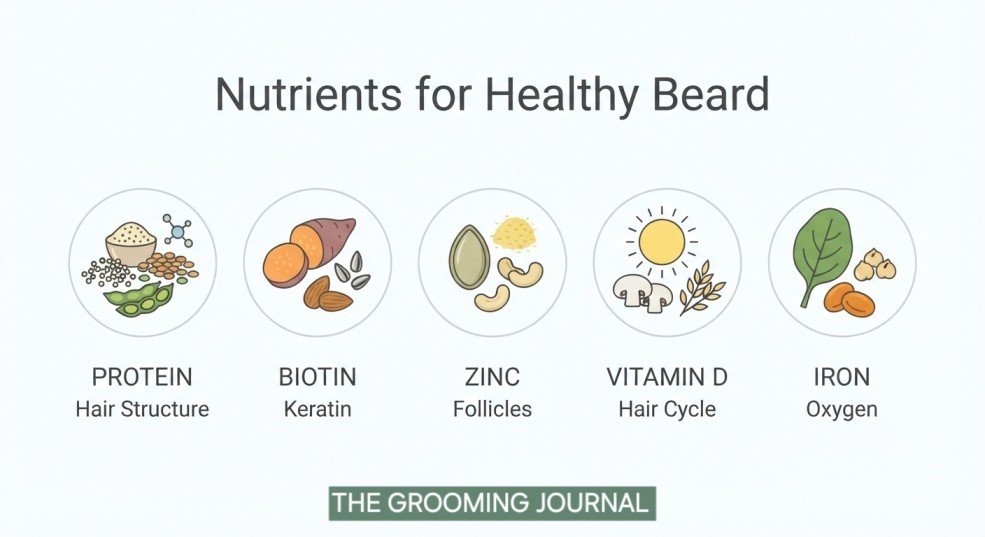
A good beard care routine works best when it’s supported by a balanced diet. While grooming products improve your beard’s appearance and condition, nutrients such as protein, iron, zinc, and certain vitamins help support normal hair growth and overall follicle health.
Biotin (Vitamin B7): supports normal keratin production, which is important for healthy hair. However, most people get enough biotin from their diet, and supplementation is generally useful only when a deficiency is present.
Zinc: supports normal cell growth and repair, including the function of hair follicles. A zinc deficiency may contribute to hair problems, but taking extra zinc won’t improve beard growth if your levels are already normal.
Vitamin D: plays a role in normal hair follicle function, and low vitamin D levels have been associated with some forms of hair loss. However, the evidence does not show that taking extra vitamin D increases beard growth when levels are already adequate.
Iron: is essential for oxygen transport and normal hair growth. Iron deficiency can contribute to hair shedding, but supplementation should only be used when deficiency has been confirmed or advised by a healthcare professional.
Protein (amino acids): provides the amino acids needed to produce keratin, the main structural protein in hair. Adequate protein intake supports normal hair growth, while severe or prolonged nutritional deficiency can contribute to hair shedding.
Consult a healthcare provider before beginning any supplementation. Elevated intake above sufficient levels does not accelerate growth and can create imbalances.
If you notice sudden beard hair loss, patchy hair loss, or other unusual changes, consult a dermatologist or healthcare professional rather than relying on supplements alone.
For men addressing growth from multiple angles, How to Grow a Beard Faster Naturally: Proven Methods That Actually Work connects these internal factors to practical daily habits in a way most guides overlook.
Common Beard Care Mistakes That Stall Progress
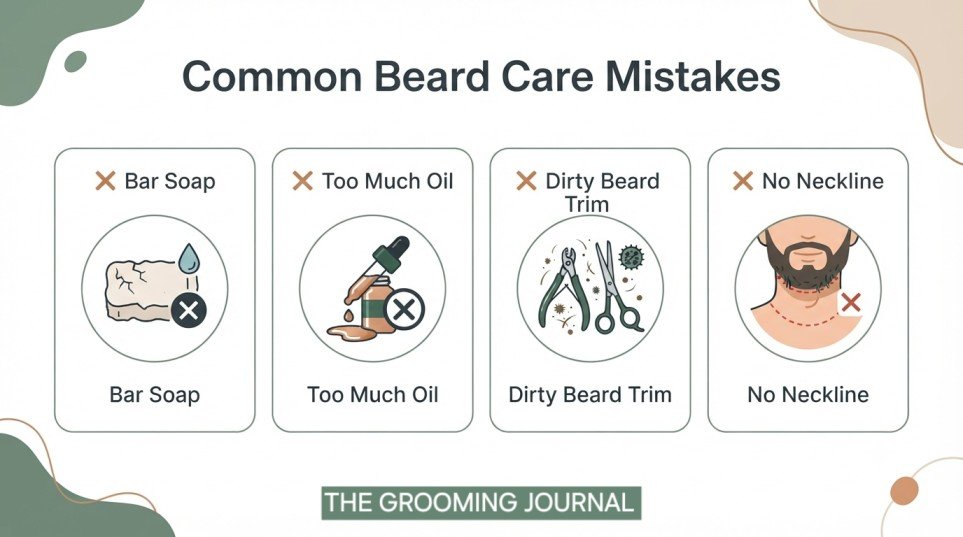
Using bar soap on your beard. Many bar soaps are formulated for the body and can leave both your beard and facial skin feeling dry. A beard wash or a gentle, sulfate-free facial cleanser is usually a better choice for regular use.
Applying too much product. Using too much oil can leave the beard greasy and may contribute to product buildup, especially if the skin is prone to congestion. Use the minimum effective amount and increase only if dryness persists after full absorption.
Ignoring the neckline. An undefined neckline makes even a well-maintained beard look unintentional. It’s also the most common zone for ingrown hairs when not managed consistently.
Trimming a dirty or tangled beard. Before trimming, wash your beard if needed, let it dry completely, and comb it into its natural shape. This helps you trim more evenly and avoid removing more hair than intended.
Stopping during the awkward phase. The 4 to 6 week stage, when the beard is too long to look like stubble but too short to be shaped, is where most men stop. It’s also where consistent care compounds fastest. If you’re navigating this stage, Beginner Beard Grooming Routine for Men That Actually Works addresses exactly what to expect and how to push through it.
Beard Care by Growth Stage
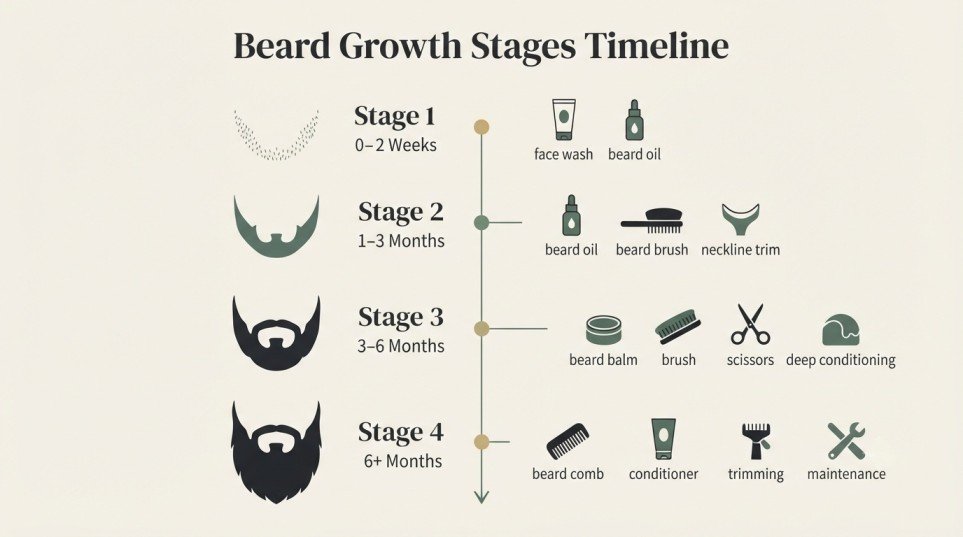
Stage 1: Stubble (0 to 2 Weeks)
Focus on skin care, not beard care. Moisturize daily, and if your skin feels dry or irritated, introduce a small amount of beard oil as needed. Allow the hair to grow through the initial prickle stage before considering any shaping.
Stage 2: Short Beard (1 to 3 Months)
This is where the routine takes full shape. Wash 2 to 3 times per week, apply oil daily, define the neckline and cheek lines for the first time, and begin consistent brushing to start training hair direction.
Stage 3: Medium Beard (3 to 6 Months)
Add beard balm for day-long structure. Begin weekly deep conditioning. Refine trim lines every 2 to 3 weeks and work with any patchiness through strategic styling rather than trying to fight its natural pattern.
For men dealing with visible patchiness during growth, How to Style a Patchy Beard Without Looking Thin or Messy covers techniques that work with uneven growth rather than against it.
Stage 4: Long Beard (6 Months and Beyond)
The focus shifts to protection and longevity. Focus on conditioning, gentle detangling, and protecting the ends from excessive heat and friction. Use a wide-tooth comb when needed, and trim as necessary to maintain your preferred shape and remove damaged ends.
Beard Care Myths vs Facts
| Myth | Fact |
|---|---|
| Shaving makes your beard grow back thicker. | Shaving cuts the hair at the skin’s surface and does not change the follicle, growth rate, or natural beard density. The blunt tip of freshly shaved hair can temporarily make stubble look darker or thicker. |
| Beard oil makes your beard grow faster. | Beard oil conditions the beard and moisturizes the skin underneath, which can reduce dryness, itch, and breakage. It can make an existing beard look healthier and fuller, but it does not create new follicles or significantly increase beard growth. |
| Beard itch means you should shave. | Early beard itch can come from coarse stubble rubbing against the skin, dryness, or irritation. As the hair grows and the skin adapts, the discomfort often becomes easier to manage. Gentle cleansing and appropriate moisturization can also help. |
| Brushing can permanently change the direction your beard grows. | Brushing can help beard hairs sit in a more uniform direction and make the beard easier to style, but it does not permanently change the natural direction or growth pattern of the follicles. |
| More beard products mean better beard growth. | A crowded routine does not make a beard grow faster. Consistent cleansing, conditioning, moisturizing, and gentle grooming are more useful than repeatedly adding new products. |
The bottom line:Good beard care improves the condition and appearance of your beard, but it cannot override genetics or create new follicles.
Quick Action Checklist
- Apply beard oil to a slightly damp beard as needed for conditioning and dryness.
- Brush or comb after oil application to distribute product and train hair direction (daily)
- Apply a lightweight facial moisturizer to the skin around your beard, and use SPF during the day to protect exposed skin (daily)
- Wash beard with a sulfate-free beard wash (2 to 3 times per week)
- Deep condition for 5 to 10 minutes (weekly)
- Gently exfoliate the skin beneath the beard occasionally, based on your skin’s tolerance and needs.
- Trim split ends and redefine neckline and cheek lines based on beard length (every 1 to 4 weeks)
Conclusion
The best beard care routine isn’t about using more products—it’s about using the right products consistently. A simple routine that includes proper cleansing, moisturizing, brushing, and regular trimming can keep your beard healthier, softer, and easier to manage over time.
Remember that beard care is a long-term habit, not a quick fix. While genetics influence your beard’s growth pattern, consistent grooming helps you get the best results from the beard you have.
Start with a gentle beard cleanser, a moisturizer or beard oil as needed, and consistent grooming. Give the routine several weeks before judging the results, then adjust it based on your beard length, skin type, and personal needs. Small habits practiced every day deliver better results than constantly changing products.
Frequently Asked Questions
How long before a beard care routine shows visible results?
You may notice softer, more manageable hair and less dryness or itch within a few weeks. Improvements in appearance and grooming are gradual, while beard density and growth depend largely on genetics and natural growth rate.
Can regular hair conditioner be used on a beard?
Occasionally, yes. However, beard conditioners are generally a better choice because they’re formulated for coarse facial hair and the sensitive skin underneath. If you use a regular hair conditioner, choose a gentle formula and avoid applying it directly to irritated skin.
Why does beard itch persist even with daily beard oil use?
Persistent itch can come from dryness, irritation, product buildup, ingrown hairs, or an underlying skin condition. Beard oil may help with dryness, but it won’t address every cause. If the itch persists despite gentle cleansing and appropriate moisturizing, consider seeing a dermatologist.
What is the practical difference between beard oil and beard balm?
Beard oil is a conditioning and hydration product. Beard balm does the same but adds light hold through ingredients like beeswax or shea butter. Use oil as your primary hydration step and add balm for medium to long beards when shape and control throughout the day matter.
Does sleeping on a cotton pillowcase damage a beard?
A cotton pillowcase can create more friction than smoother fabrics, which may contribute to tangling and dryness, particularly in longer beards. A satin or silk pillowcase can reduce friction, but it isn’t essential for healthy beard growth.
Authoritative Sources
- American Academy of Dermatology (AAD). A Dermatologist’s Top Tips for a Healthy Beard.
https://www.aad.org/public/everyday-care/skin-care-secrets/face/healthy-beard - American Academy of Dermatology (AAD). DIY Treatment for 5 Common Beard Problems.
https://www.aad.org/public/everyday-care/skin-care-secrets/face/diy-treatment-common-beard-problems - National Library of Medicine (PubMed). Nutrition of the Hair: Micronutrient Status and Hair Loss.
https://pubmed.ncbi.nlm.nih.gov/31975553/ - Cleveland Clinic. Ingrown Hair: Symptoms, Causes, Treatment & Prevention.
https://my.clevelandclinic.org/health/diseases/17687-ingrown-hair