TGJ Note: The Grooming Journal does not recommend products simply for the sake of recommending them.

We create buying guides to help you understand your options and make a more informed decision based on your specific grooming concern, needs, and preferences.

The products we feature are not sponsored placements.
We select and assess products based on relevant product information, such as ingredients, formulation, materials, specifications, stated purpose, and how well they fit the specific concern or need discussed in the guide.

We do not physically purchase or test the products featured in our guides. Our assessments are based on publicly available product information, manufacturer details, ingredients or materials, specifications, and other relevant evidence.

Some links in our articles may be affiliate links, which means TGJ may earn a commission if you make a purchase through them. This does not influence which products we include or how we assess them.

If we ever feature a sponsored product or sponsored placement, it will be clearly identified as sponsored. Sponsored content will not be presented as an independent, non-sponsored recommendation.

Our goal is simple: we don’t tell you what to buy. We help you understand what you’re buying.
Quick Summary
Hair oils for hair fall can be useful for conditioning the hair, reducing dryness and helping protect against breakage, but not every oil has evidence for treating hair loss itself. Coconut oil has the strongest evidence in this group for reducing protein loss from the hair shaft, making it more relevant for dry, damaged or breakage-prone hair.
Castor, sesame and bhringraj oils are commonly used for scalp and hair care, but human evidence that they can directly reduce hair loss or stimulate new hair growth is limited. Their potential benefits are better understood as conditioning or traditional hair-care uses rather than proven hair-regrowth effects.
Rosemary oil has some human evidence for pattern hair thinning, including a small randomized trial comparing it with 2% minoxidil. However, the evidence remains limited, and rosemary oil should not be considered a proven replacement for established hair-loss treatments.
Choosing between different hair oils for hair fall depends on what you are actually experiencing. Dryness and breakage may call for a conditioning oil, while persistent shedding or progressive thinning may require attention to the underlying cause rather than simply changing your hair oil. Check the ingredients and formulation instead of relying on “hair fall” or “hair growth” claims on the label. Which hair oil actually makes sense for your kind of hair fall?
That depends on what is going wrong.
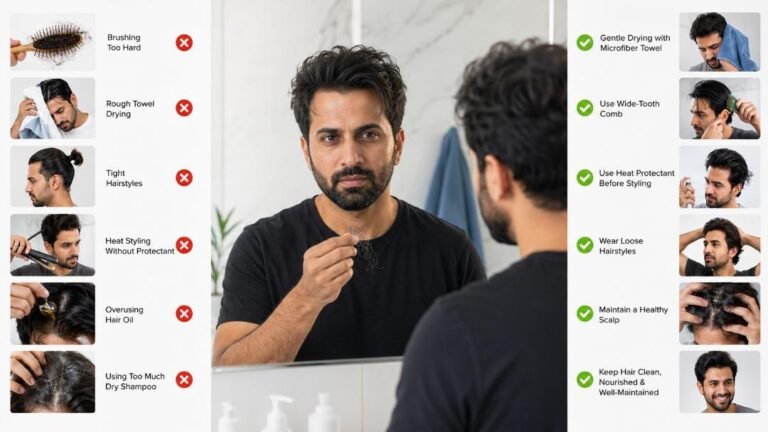
Hair breakage, excessive shedding and gradual hair thinning are not the same problem. An oil may condition the hair shaft, reduce dryness and help limit breakage without treating the cause of hair loss.
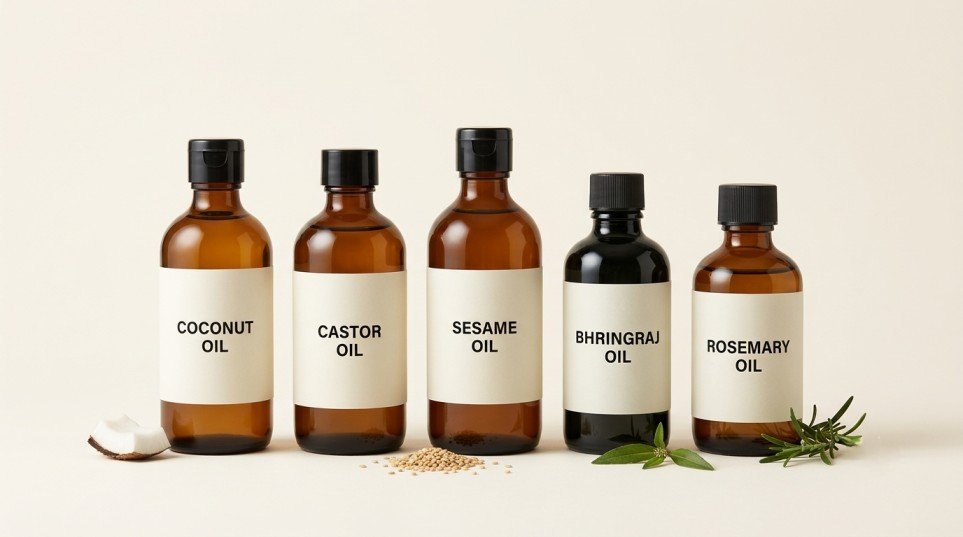
This guide looks at five commonly used oils — coconut, castor, sesame, bhringraj and rosemary — and separates what is supported by research from what is mainly based on traditional use or marketing claims.
It also covers five specific products you can consider based on the ingredient and formulation that fits your concern.
If you are dealing with hair loss, you can also read our guide, How to Stop Hair Fall in Men, which explains the common causes of hair loss and what you can do about them.
Table Of Contents
What Is the Best Oil for Hair Fall?
There is no single best oil for hair fall. Coconut oil may suit dry, damaged or breakage-prone hair, while rosemary essential oil has limited human evidence for mild pattern hair thinning. Castor, sesame and bhringraj oils are mainly used for conditioning and traditional scalp care, with much weaker evidence for hair loss. Choose a hair oil based on your hair and scalp concern rather than marketing claims.
The five oils serve different purposes:
| Oil | Best fit | Evidence for hair fall |
|---|---|---|
| Coconut | Dry, damaged and breakage-prone hair | Good evidence for reducing hair-shaft protein loss; limited evidence for hair growth |
| Castor | Very dry, coarse hair and dry ends | Weak evidence for hair quality; no strong evidence for hair growth |
| Sesame | Dry scalp and traditional oil massage | Mostly traditional/preclinical evidence |
| Bhringraj | Traditional Ayurvedic scalp-oiling routines | Preclinical evidence; limited human evidence |
| Rosemary essential oil | Mild or early pattern thinning as an add-on | One small randomized human trial; evidence remains limited |
Choose the oil based on the problem you are trying to address, not simply the promise written on the bottle.
You can also read our guide to the best hair care routines for men for practical tips on building a simple hair-care routine.
What to Consider Before Buying a Hair Oil
1. Identify the type of “hair fall”
Before buying an oil, work out what you are actually seeing.
Breakage: Hair snaps along the shaft during brushing, styling or washing.
Shedding: Complete hairs fall from the follicle.
Thinning: Hair density gradually decreases, often around the temples, hairline or crown.
An oil that improves the condition of damaged hair cannot automatically treat a problem originating inside the follicle.
You can also read our guide to hair fall solutions for men for a more detailed look at the different approaches to managing hair fall.
2. Look at the main ingredient
A simple formula makes it easier to understand what you are buying.
- Coconut oil is mainly used for conditioning and reducing hair-shaft damage.
- Castor oil is thick and mainly functions as a conditioning/sealing oil.
- Sesame oil is commonly used for massage and conditioning.
- Bhringraj products are often herbal infusions rather than pure bhringraj oil.
- Rosemary essential oil needs to be diluted before topical use.
3. Consider your scalp type
A heavy oil may feel useful on dry hair but uncomfortable on an oily scalp.
If your scalp is already greasy, itchy or flaky, applying more oil directly to the scalp may not be useful.
For dry or damaged hair, applying a small amount to the mid-lengths and ends may make more sense.
See our guide on how often you should wash your hair and find the best shampoos for hair fall based on your scalp and hair concerns.
4. Don’t confuse natural with risk-free
Natural ingredients can still cause irritation or allergic reactions.
This is particularly relevant with essential oils and complex herbal formulations.
Check the ingredient list if you already know that you react to certain plants, fragrances or oils.
What to Avoid in Hair-Oil Marketing
Be cautious when a product claims:
- “Stops hair fall overnight”
- “Regrows lost hair”
- “Grows new hair in weeks”
- “Activates dormant follicles”
- “Clinically proven” without identifying the clinical study
- “100% natural, so completely safe”
- “More oil means more growth”
A product can be useful for conditioning without being a treatment for hair loss.
Choose a Hair Oil Based on Your Concern
The right oil depends on what you are trying to address. The sections below briefly explain why each oil is relevant and what the research says.
Coconut Oil
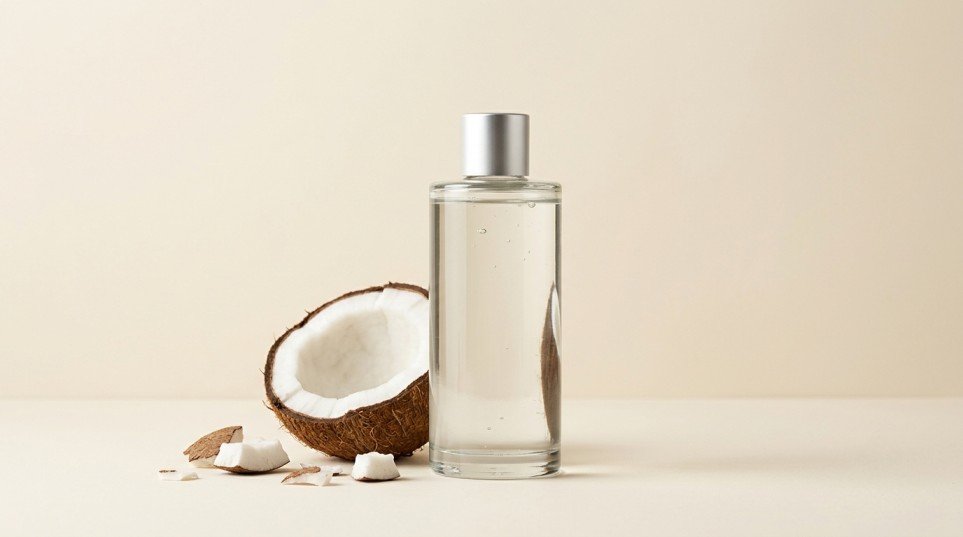
Good for: Dry, damaged or breakage-prone hair.
Why: Coconut oil has an affinity for hair proteins and can penetrate the hair shaft, which makes it relevant for reducing damage and protein loss.
What research says: Research supports its ability to reduce protein loss from the hair shaft, but evidence for treating hair loss itself is limited.
Castor Oil
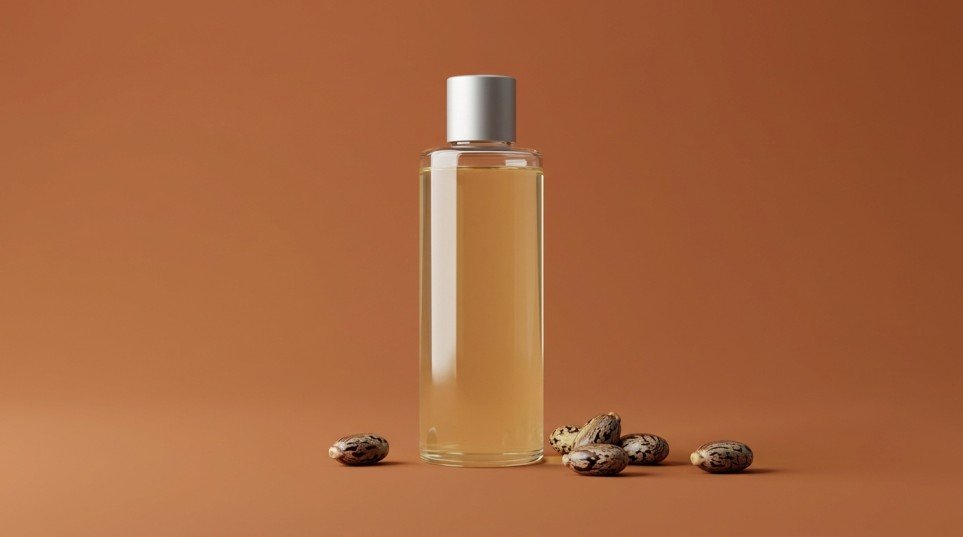
Good for: Very dry, coarse hair and dry ends.
Why: Castor oil is rich in ricinoleic acid and has a thick, occlusive texture, making it more relevant to conditioning and reducing dryness than to treating hair loss.
What research says: Evidence for improving hair quality is limited, and there is no strong human evidence that castor oil promotes hair growth.
Sesame Oil
Good for: Dry scalp and traditional scalp-oiling routines.
Why: Sesame oil is widely used as a carrier oil in traditional scalp-oiling practices and Ayurvedic formulations.
What research says: Evidence for treating hair loss is mainly traditional or preclinical, with limited human evidence.
Bhringraj Oil
Good for: Traditional Ayurvedic scalp-oiling routines.
Why: Bhringraj (Eclipta) is traditionally used in Ayurvedic hair care and has been investigated for potential hair-growth effects in preclinical research.
What research says: Some preclinical research suggests potential hair-growth effects, but human evidence is limited.
Rosemary Essential Oil
Good for: Pattern hair thinning as an optional add-on.
Why: Rosemary oil is one of the few essential oils to have been directly studied in humans for pattern hair thinning.
What research says: A small randomized human trial found increased hair counts after six months, but the overall evidence remains limited.
Dilution and safe use
Never apply rosemary essential oil directly to the scalp undiluted.
A commonly used aromatherapy starting range is around 1–2% dilution, roughly 6–12 drops per 30 ml of carrier oil.
5 Products You Can Consider
These listings were checked on September 19, 2026. Product formulations can change, so always confirm the current ingredient list on the pack you receive.
1. Phalada Pure & Sure Organic Cold Pressed Coconut Oil
| Key Ingredient → | Organic coconut oil |
| Suitable for → | Dry, damaged and breakage-prone hair; pre-wash treatment on lengths |
| Avoid if → | Oily, flaky or dandruff-prone scalp; coconut allergy |
| Full Ingredient list → | Official product information |
A simple cold-pressed coconut oil suited to dry, damaged or breakage-prone hair. Its main relevance here is conditioning and helping reduce hair-shaft protein loss rather than treating hair loss itself.
See price and latest deal ➞
2. Rey Naturals Cold Pressed Castor Oil
| Key Ingredient → | Cold-pressed castor oil |
| Suitable for→ | Dry, coarse hair or dry ends |
| Avoid if→ | Oily scalp or preference for lightweight oils |
| Full Ingredient list → | Official product information |
A thick, single-ingredient castor oil that may suit very dry, coarse hair and dry ends. It is included for its conditioning properties, not as a proven hair-growth treatment.
See price and latest deal ➞
3. Baidyanath Mahabhringraj Tel
| Key ingredients→ | Bhringraj infused in sesame oil with milk and other herbs |
| Suitable for→ | Traditional Ayurvedic scalp-massage routines |
| Avoid if→ | Sesame or daisy-family allergy; sensitivity to herbal ingredients |
| Full Ingredient list → | Official product information |
A traditional Ayurvedic hair oil containing bhringraj along with other herbal ingredients. It may suit traditional scalp-oiling routines, although human evidence for directly treating hair loss remains limited.
See price and latest deal ➞
4. Puvi Cold Pressed Gingelly / Sesame Oil
| Key Ingredient→ | Sesame oil |
| Suitable for → | Dry-scalp massage and traditional oiling |
| Avoid if → | Sesame allergy; oily or dandruff-prone scalp |
| Full Ingredient List → | Official Product information |
A simple sesame oil that can be used for scalp massage and conditioning. Its relevance is mainly traditional and cosmetic rather than based on strong evidence for treating hair loss.
See price and latest deal ➞
5. Rey Naturals Rosemary Essential Oil
| Key Ingredients → | Rosemary essential oil |
| Suitable for → | Making a diluted scalp-oil preparation for mild thinning |
| Avoid if → | Sensitive scalp |
| Full Ingredient list → | Official product information |
A concentrated rosemary essential oil intended for dilution before scalp application. Rosemary has limited human research for pattern hair thinning, making this more relevant to those looking for an optional diluted scalp-oil preparation.
See price and latest deal ➞
Disclaimer: Product formulas can change or be updated by the manufacturer over time. Our product assessments are based on the formulation and product information available to us at the time of writing or updating this guide.
Always check the current ingredient list and product details on the product packaging or the manufacturer’s official website before purchasing. Do not assume that an older formula is identical to the current one.
If a product’s formula changes and the change comes to our attention, we will make reasonable efforts to review and update our assessment and product list where appropriate. However, we cannot guarantee that every formulation change will come to our attention immediately—or at all.
Our assessment therefore reflects the information available to us at the time of the latest update.
Conclusion
There is no universal best oil for hair fall.
Match the oil to the problem:
- Coconut oil → dry, damaged and breakage-prone hair
- Rosemary essential oil → limited evidence for mild pattern thinning
- Castor oil → heavy conditioning for dry or coarse hair
- Sesame oil → traditional massage and conditioning
- Bhringraj oil → traditional herbal oiling, with limited human evidence
The evidence differs substantially between these oils.
Most importantly, an oil that improves hair condition does not automatically treat hair loss.
If hair loss is sudden, patchy, persistent or significant, finding the underlying cause is more important than finding another oil.
Frequently Asked Questions
1. Which oil is best for hair fall?
None is best for everyone.
Coconut oil makes more sense for dry, breakage-prone hair. Rosemary has limited human evidence relevant to pattern thinning. Castor, sesame and bhringraj are mainly conditioning or traditional-use oils.
2. Is coconut oil good for hair fall?
It can reduce protein loss from the hair shaft and may help reduce breakage.
There is not good evidence that it reduces follicular shedding or regrows lost hair.
3. Does castor oil actually grow hair?
Not reliably.
The available evidence does not show a strong hair-growth effect from castor oil.
4. Is rosemary oil proven to help hair growth?
Not conclusively.
The Panahi et al. 2015 trial found increased hair counts after six months in both the rosemary and 2% minoxidil groups, but the lack of a placebo group means the result cannot establish rosemary as an effective equivalent to established treatment.
5. Can I mix different hair oils?
Yes.
If you add rosemary essential oil, dilute it in a carrier oil.
Introducing one new ingredient at a time can also make it easier to identify irritation or allergy.
6. How often should I oil my hair?
There is no established evidence-based schedule.
Once or twice a week before washing is a practical routine for many people.
More frequent oiling is not automatically better.
7. Should I leave hair oil overnight?
You do not need to.
The coconut-oil research examined pre-wash and post-wash use rather than requiring overnight application.
Longer contact can also mean more buildup or irritation, particularly if your scalp is oily.
8. Is hair oil suitable for an oily scalp?
Usually, avoid heavy oils directly on an oily or dandruff-prone scalp.
If your hair lengths are dry, you can use a small amount on the mid-lengths and ends instead.
9. Can hair oil stop genetic hair loss?
Hair oils should not be treated as a proven way to stop genetic hair loss.
Androgenetic alopecia involves changes in the hair follicles influenced by androgen activity.
Oils do not have established evidence showing that they can reverse this process.
Rosemary has limited clinical research, but that evidence is not strong enough to treat it as a substitute for established medical treatment.
10. When should I see a dermatologist for hair loss?
Consider professional evaluation if hair loss is:
The cause matters more than the oil.
1. Sudden
2. Patchy
3. Accompanied by scalp pain,
4. inflammation or scarring
5. Continuing for several months
6. Significantly greater than usual
7. Appearing after an illness, major stress or a new medication
Authoritative Sources
1. Rele AS, Mohile RB. Effect of mineral oil, sunflower oil, and coconut oil on prevention of hair damage. Journal of Cosmetic Science. 2003;54(2):175–192.
View source
2. Phong CH, Lee VW, Yale K, Sung CT, Mesinkovska NA. Coconut, Castor, and Argan Oil for Hair in Skin of Color Patients: A Systematic Review. Journal of Drugs in Dermatology. 2022;21(7):751–757. doi:10.36849/JDD.6972.
View source
3. Panahi Y, Taghizadeh M, Marzony ET, Sahebkar A. Rosemary Oil vs Minoxidil 2% for the Treatment of Androgenetic Alopecia: A Randomized Comparative Trial. Skinmed. 2015;13(1):15–21.
View source
4. Gupta AK, Talukder M, Bamimore MA. Natural products for male androgenetic alopecia. Dermatologic Therapy. 2022;35(4):e15323.
View source
5. Hay IC, Jamieson M, Ormerod AD. Randomized Trial of Aromatherapy: Successful Treatment for Alopecia Areata. Archives of Dermatology. 1998;134(11):1349–1352.
View source
6. Roy RK, Thakur M, Dixit VK. Hair growth promoting activity of Eclipta alba in male albino rats. Archives of Dermatological Research. 2008;300:357–364.
View source
7. Roy RK, Thakur M, Dixit VK. Development and evaluation of polyherbal formulation for hair growth-promoting activity. Journal of Cosmetic Dermatology. 2007;6(2):108–112.
View source
8. Kim Y, Kong M. Promotion effect of black sesame oil on hair growth in an alopecia model of C57BL/6 mice. Journal of Biomedical Research. 2010;11(2):103–116.
View source