Quick Summary
A solid hair care routine for men isn’t about buying more products — it’s about doing the right things in the right order. This guide breaks down washing frequency, scalp care, conditioning, drying, and styling into one practical routine, grounded in dermatology guidance rather than trends, with honest expectations about what results you can actually expect and when.
Most men don’t need a complicated hair care routine — they need one that matches their hair and scalp. Using too many products, washing incorrectly, or ignoring scalp health can lead to problems like dryness, excess oil, frizz, and breakage.
The best hair care routine for men is built around simple habits: choosing the right products, following the correct order of steps, and understanding what your hair actually needs. In this guide, you’ll learn a practical routine you can maintain long-term, along with common mistakes that may be affecting your results.
Table Of Contents
What Is the Best Hair Care Routine for Men?
The best hair care routine for men includes washing with a sulfate-free shampoo suited to your scalp type, conditioning every wash to reduce breakage, gentle towel-drying, minimal heat styling, and regular scalp checks for flaking, itching, or excess oil. Frequency and products should be adjusted based on hair type, activity level, and any underlying scalp conditions.
Why Most Men’s Hair Routines Fail
Before covering the steps themselves, it helps to understand why so many routines don’t produce results. It’s rarely about using the “wrong” shampoo brand. It’s usually one of three things: washing too often or not often enough, ignoring the scalp entirely and only focusing on the hair, or applying heat and styling products without any protective step in between.
Dermatologists generally frame this around one underlying principle: hair grows from follicles in the scalp, so if that environment is inflamed, overly oily, or dry and flaking, hair quality suffers regardless of what products touch the strands afterward.
Step-by-Step Hair Care Routine for Men
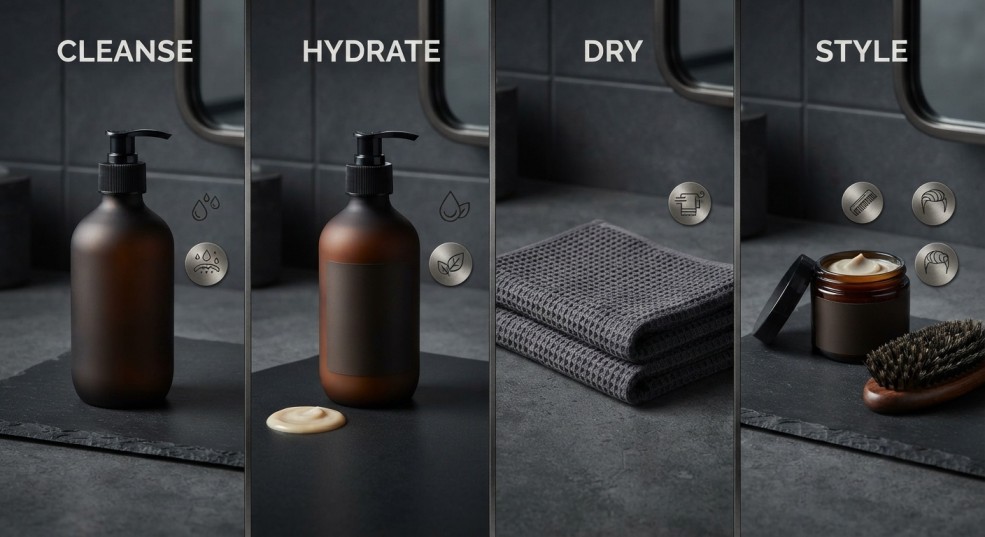
Step 1: Wash Based on Your Scalp Type, Not a Fixed Schedule
There’s no single correct washing frequency — it depends on hair texture, scalp oil production, climate, and activity level. As a practical starting point:
- Fine or straight hair with an oily scalp: daily or every other day, since oil travels down smooth hair shafts quickly
- Normal to medium-thickness hair: 2–4 times a week
- Thick, coarse, or curly hair: once a week, sometimes every 10–14 days, since tighter curl patterns physically slow oil from traveling down the strand
Even for men who wash infrequently, most dermatology guidance still recommends shampooing at least once a week. A yeast called Malassezia lives naturally on everyone’s scalp and feeds on scalp oils — left unchecked for too long, it can cause the kind of greasy flaking and itching often mistaken for dandruff. On the other end, research measuring water loss through scalp skin has found that more frequent washing measurably increases that loss, a sign of a damaged moisture barrier, usually caused by sulfate detergents stripping the scalp’s natural lipid layer.
Use lukewarm water rather than hot. Hot water can strip more of the scalp’s natural oils than lukewarm water, leaving the scalp and hair feeling drier. For most people, lukewarm water is a gentler choice for regular washing.
Step 2: Choose a Shampoo That Matches a Real Concern
Skip shampoos marketed with vague terms like “volumizing” or “power boost” and instead pick based on an actual concern:
- Dandruff or flaking → shampoo with zinc pyrithione, ketoconazole, or salicylic acid
- Oily scalp → clarifying, sulfate-free shampoo
- Dry or color-treated hair → moisturizing, sulfate-free formula
- Thinning hair → look for options with clinical backing rather than marketing claims, and consult a dermatologist before relying on any product alone
Massage shampoo into the scalp with fingertips, not nails, for about 30–60 seconds. This helps loosen buildup without causing micro-abrasions that can worsen irritation.
If you work out daily, that doesn’t necessarily mean daily shampooing. Sweat is mostly water and salt — a water-only rinse after a lighter workout removes most of it without stripping oils, so save the shampoo for days your hair actually feels oily or after more intense sessions.
Step 3: Condition Every Time You Shampoo
Conditioner isn’t just for longer hair. It reduces friction between strands, which lowers breakage during towel-drying, brushing, and styling — this is especially relevant for men with thicker or curlier hair textures, where breakage from friction is more common.
Apply conditioner mid-length to ends, avoiding the scalp unless using a specifically formulated scalp conditioner, and rinse with cooler water to help smooth the hair cuticle.
Step 4: Dry Gently and Avoid High Heat
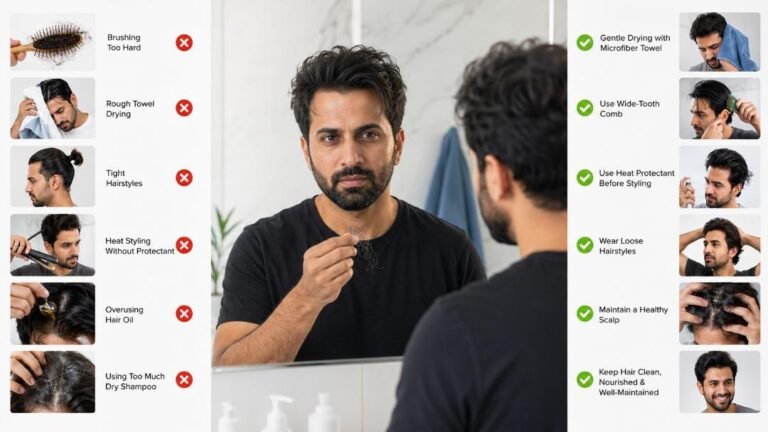
Rubbing hair vigorously with a towel roughens the cuticle and increases frizz and breakage. Instead:
- Blot or squeeze hair with a microfiber towel or soft cotton t-shirt
- Let hair air-dry when possible
- If using a blow dryer, keep it on a low or medium heat setting and hold it at least 6 inches from the scalp
This step matters more than most men realize — repeated high-heat drying is one of the more preventable causes of dryness and split ends over time.
Step 5: Style with Purpose, Not Habit
Apply styling products to damp, towel-dried hair rather than soaking wet hair, since wet hair dilutes product effectiveness and can lead to buildup from overuse. Choose lightweight products for fine hair and stronger-hold formulas for thick or coarse hair, and avoid layering multiple heavy products, which is a common cause of scalp clogging — particularly around the hairline on short, faded haircuts where buildup is more visible.
Step 6: Protect Your Scalp Long-Term
A hair routine isn’t complete without ongoing scalp maintenance. This includes:
- A weekly scalp exfoliation if you notice buildup or flaking
- Sun protection for the scalp if you have thinning hair or spend long hours outdoors
- Watching for early signs of excessive shedding, since catching this early gives more options than addressing it later
If you’re noticing more hair on your pillow or in the shower drain than usual, it’s worth reading our breakdown of hair fall solutions for men to understand whether it’s a routine issue or something that needs a dermatologist’s input.
Adjust Your Hair Care Routine Based on Your Hair Type
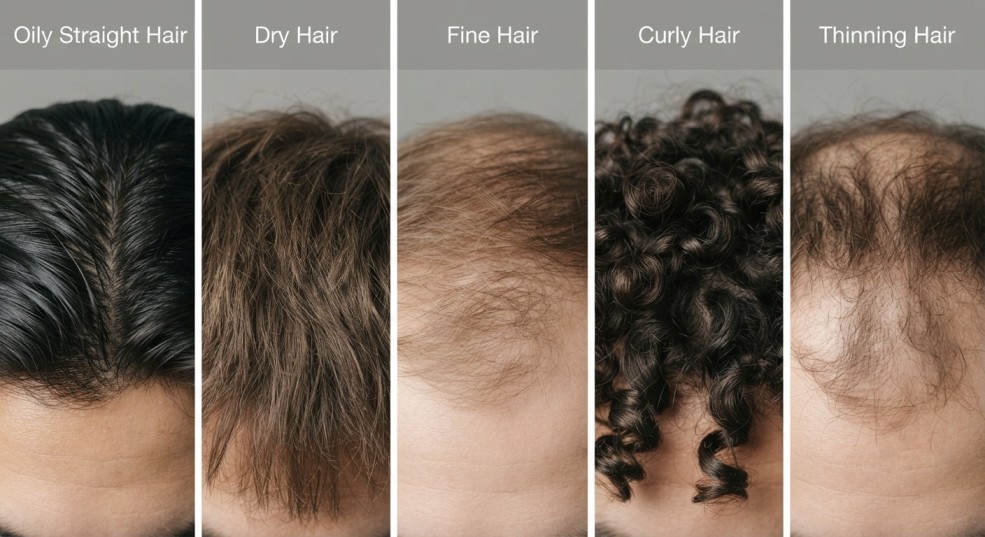
The best hair care routine isn’t the same for everyone. Your ideal routine depends on your scalp’s oil production, hair texture, and lifestyle. Use this table as a practical starting point, then adjust based on how your hair responds over time.
| Hair Type | Wash Frequency | Best Approach |
|---|---|---|
| Oily Hair | Daily or every other day | Use a gentle shampoo for oily scalps, avoid applying conditioner to the scalp, and choose lightweight styling products. |
| Dry Hair | 2–3 times per week | Use a moisturizing shampoo and conditioner, avoid hot water, and add a weekly deep-conditioning treatment if needed. |
| Fine Hair | 2–4 times per week | Choose lightweight products that won’t weigh hair down, and use styling products sparingly to maintain volume. |
| Curly Hair | 1–2 times per week | Focus on hydration with a moisturizing conditioner, detangle gently, and air-dry whenever possible. |
| Thinning Hair | Based on your scalp type | Keep the scalp clean, avoid excessive heat and harsh styling, and consult a dermatologist if thinning continues or worsens. |
Remember: These are general guidelines, not strict rules. Factors such as climate, exercise, styling habits, and your scalp's condition may mean your ideal routine differs slightly.
Myth vs Fact
| Myth | Fact |
|---|---|
| Washing your hair every day is always bad. | Not necessarily. Washing frequency should match your scalp type, oil production, hair texture, and activity level. |
| Washing your hair more often makes it grow faster. | No. Washing mainly affects scalp cleanliness and comfort. Hair growth is controlled by the follicles, genetics, hormones, and overall health. |
| Cutting your hair regularly makes it grow faster or thicker. | No. Trimming removes damaged or split ends but does not change how quickly hair grows from the follicle. |
| Conditioner is only necessary for men with long hair. | No. Conditioner reduces friction, which can help limit breakage and frizz even when hair is short. |
| Hot water cleans the scalp better than lukewarm water. | Hot water is not necessary for effective cleansing and can leave the scalp and hair feeling dry. Lukewarm water is a gentler choice for regular washing. |
| Expensive shampoo is automatically better for your hair. | No. The right formula for your scalp and hair type matters more than the price of the product. |
Realistic Expectations: What This Routine Can and Can’t Do
A consistent routine can noticeably improve scalp comfort, reduce flaking, and cut down on breakage within 2–4 weeks. Improvements in hair thickness, density, or growth rate take significantly longer — typically 3–6 months at minimum — because hair growth cycles are slow and influenced by genetics, hormones, and overall health, not just topical care. There’s no strong evidence that washing frequency itself speeds up or slows down hair growth; its main role is scalp condition, not follicle output.
If you’re aiming to actively grow hair faster naturally, a good routine supports that goal but won’t override genetic factors or underlying conditions like androgenetic alopecia. In those cases, a routine is a supporting piece, not a standalone fix, and it’s worth reviewing common routine errors in 10 hair care mistakes that cause hair fall to rule out anything working against you.
Quick Action Checklist
- Wash based on your scalp type, not a fixed daily habit
- Use a shampoo chosen for a specific concern, not marketing claims
- Condition every time you shampoo
- Rinse with lukewarm to cool water
- Air-dry or use low heat, holding dryers away from the scalp
- Apply styling products to towel-dried hair only
- Check your scalp weekly for flaking, redness, or excess oil
Conclusion
The best hair care routine for men isn’t complicated — it’s consistent. Matching your wash frequency and products to your actual scalp type, conditioning every time, minimizing heat damage, and paying attention to early scalp signals will do more for your hair over six months than any single “miracle” product. Start by auditing your current routine against the steps above, adjust one habit at a time, and give it at least a month before judging results. If shedding or thinning is part of what’s driving you to fix your routine, pair this guide with a closer look at how to stop hair fall naturally so you’re addressing the full picture, not just the surface.
Frequently Asked Questions
How often should men wash their hair?
It depends on hair type and scalp oiliness rather than a fixed number — fine, oily hair may need daily washing, while thick or curly hair can often go a week or longer, though most dermatologists suggest not going past two weeks without any wash.
Does a hair care routine actually help with hair loss?
A good routine supports scalp health and reduces breakage, which helps hair look fuller, but it won’t reverse genetic hair loss on its own. Persistent shedding should be evaluated by a dermatologist.
Is conditioner necessary for short hair?
Yes. Conditioner reduces friction and breakage regardless of hair length, and it’s especially useful for men with thick or coarse textures.
What’s the biggest mistake men make in their hair routine?
Washing too frequently regardless of hair type, and skipping conditioner, are the two most common issues — both lead to dryness, breakage, and a scalp that overcorrects with more oil.
How long before I see results from a new hair routine?
Scalp comfort and reduced flaking can improve within 2–4 weeks. Visible changes in hair thickness or growth typically take 3–6 months.
Authoritative Sources
- American Academy of Dermatology (AAD) – Healthy Hair Tips
https://www.aad.org/public/everyday-care/hair-scalp-care/hair/healthy-hair-tips - American Academy of Dermatology (AAD) – Hair Loss: Diagnosis and Treatment
https://www.aad.org/public/diseases/hair-loss/treatment - National Institutes of Health (NIH) / PubMed Central – The Impact of Shampoo Wash Frequency on Scalp and Hair Conditions
https://pmc.ncbi.nlm.nih.gov/articles/PMC8138261/ - Mayo Clinic – Hair Loss: Symptoms and Causes
https://www.mayoclinic.org/diseases-conditions/hair-loss/symptoms-causes/syc-20372926 - NHS – Dandruff
https://www.nhs.uk/conditions/dandruff/