Quick Summary
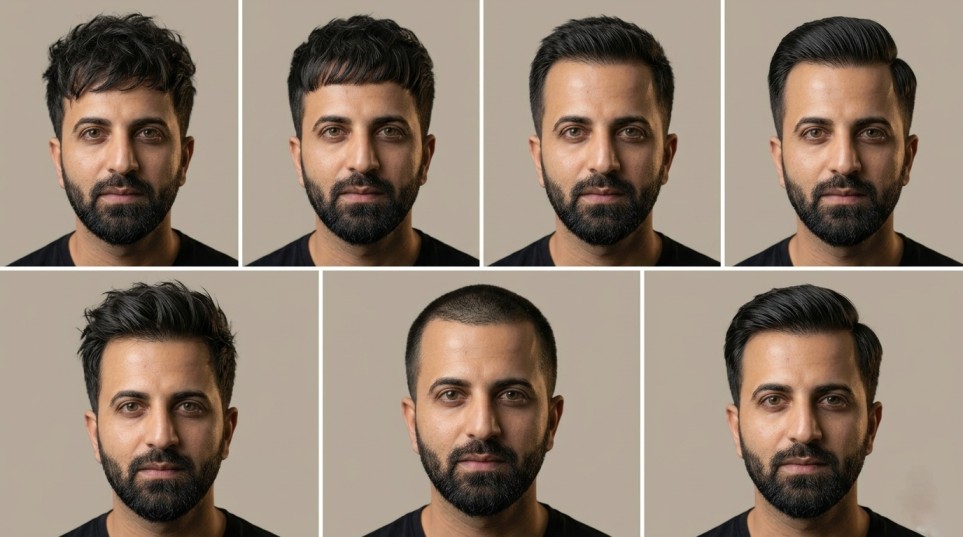
Thin hair does not mean you have to settle for a limited range of hairstyles. The right haircut can improve the way your hair looks by creating better shape, texture, and visual fullness, even though it cannot increase the actual number of hair follicles. In this guide, we look at seven hairstyles that can work well for men with thin or thinning hair, along with practical styling tips and common mistakes that can make sparse areas more noticeable. The best choice depends on where your hair is thinner, your natural hair texture, and how much daily maintenance you want.
Finding the right hairstyles for thin hair men can make a noticeable difference when your hair is naturally fine, low in density, or starting to thin. A haircut cannot increase hair density, but the right length, shape, and texture can make the hair look more balanced and help reduce the appearance of sparse areas.
The problem is that many popular hairstyles are designed around fuller hair. Growing your hair longer, using more styling product, or copying a haircut that works well on someone with thick hair can sometimes make thin areas more noticeable instead.
The better approach is to choose a style that works with your hair rather than trying to disguise it. This guide covers seven hairstyles for men with thin or thinning hair, along with practical styling tips and common mistakes that can make hair appear flatter or less dense.
Table of Contents
What Are the Best Hairstyles for Thin Hair Men?
The best hairstyles for men with thin hair are usually cuts that control excess length, add texture, or create a balanced shape without forcing the hair into a style that exposes sparse areas. Textured crops, French crops, crew cuts, side parts, messy quiffs, buzz cuts, and Ivy League cuts can all work, but the right choice depends on your hairline, where the hair is thinner, your hair texture, and how much styling you want to do.
A haircut can change the appearance of your hair, but it cannot increase the number of follicles or treat the underlying cause of progressive hair loss.
What Is Thin Hair?
Thin hair and thinning hair are related, but they are not the same thing.
Thin hair can refer to naturally fine strands or lower overall hair density. Some men have always had relatively fine or less dense hair without experiencing active hair loss.
Thinning hair usually describes a reduction in density over time. It may appear as a widening part, increased scalp visibility, a receding hairline, or a thinning crown. Male pattern hair loss, for example, commonly develops gradually and can involve the hairline or crown.
This distinction matters when choosing a hairstyle. A haircut can help you manage the appearance of naturally fine hair or early thinning, but progressive hair loss may need a different approach.
If your hair is changing noticeably rather than simply being naturally fine, styling should not be the only thing you consider.
Why the Right Hairstyle Matters
A haircut cannot create new hair follicles or increase your actual hair density.
What it can do is change the way your existing hair is arranged.
Length, texture, shape, and direction can affect how much scalp is visible and how full the overall hairstyle appears. A controlled haircut can also prevent fine hair from becoming weighed down by excessive length.
The wrong style can have the opposite effect. Long, separated strands, heavy product, or a hairstyle that exposes a naturally sparse area may make the difference between dense and thin sections more obvious.
The goal is not to make thin hair look like thick hair. It is to choose a shape that makes the most of the hair you have.
How to Choose the Right Hairstyle for Thin Hair
Before choosing a haircut, look at where your hair is thinner and how your hair naturally behaves.
If Your Hairline Is Receding
A textured front or a shorter fringe can soften the transition between the hairline and the rest of the hairstyle. Styles that keep the front controlled are often easier to manage than trying to push long hair straight back.
If you are noticing a progressively receding hairline rather than simply a naturally high hairline, the haircut can improve appearance, but it will not address the underlying hair loss.
If Your Crown Is Thinning
A shorter, textured style can reduce the contrast between the crown and surrounding hair. Excessive length may separate around the crown and make the area easier to see.
If You Want Low Maintenance
Shorter styles generally require less daily styling. A crew cut or buzz cut may make more sense than choosing a style that needs regular blow-drying and product to hold its shape.
If Your Hair Is Fine and Easily Falls Flat
Texture and controlled volume can help more than simply adding length. Lightweight styling products and a haircut that keeps unnecessary weight off the hair can make it easier to maintain shape.
The best haircut is not necessarily the trendiest one. It is the one that works with your density, texture, hairline, and daily routine.
7 Best Hairstyles for Thin Hair Men
1. Textured Crop
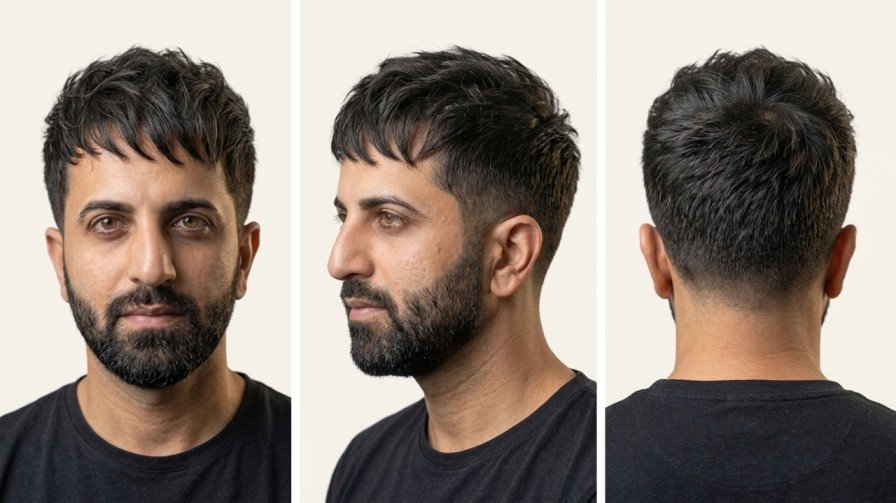
The textured crop is one of the most practical choices for men with fine or low-density hair.
The top is kept relatively short, with texture cut into the hair rather than leaving it as one heavy, flat layer. This gives the hairstyle more movement and can make sparse areas less visually obvious.
The finish matters too. A small amount of matte styling product can add separation without creating the shiny, clumped effect that often makes the scalp easier to see.
Best for: Fine hair that tends to fall flat, mild overall thinning, and men who want a modern low-maintenance cut.
2. French Crop
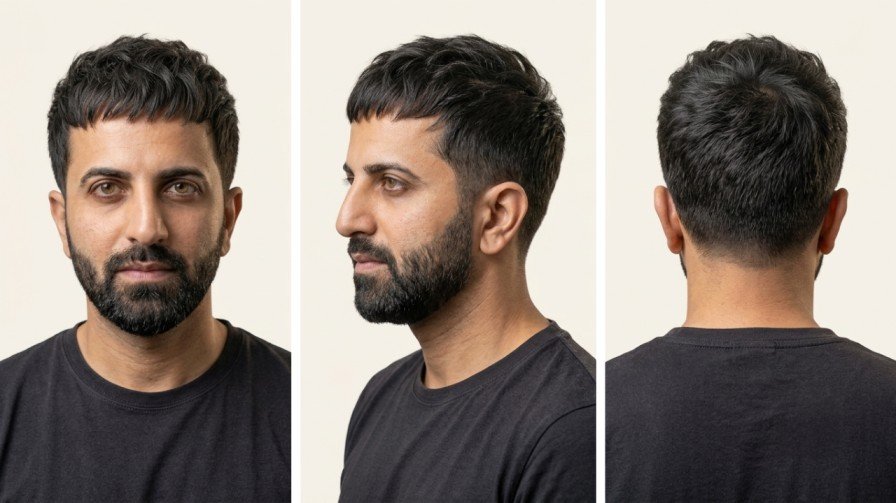
The French crop is particularly useful when thinning is more noticeable around the front.
Its short fringe gives the hairline a defined shape without requiring the hair to be pushed backward. That can make a receding hairline look less exposed without trying to cover it with excessive length.
It is also relatively easy to style and does not require a complicated routine.
Best for: Men with a receding or uneven hairline who prefer a short, structured style.
3. Crew Cut
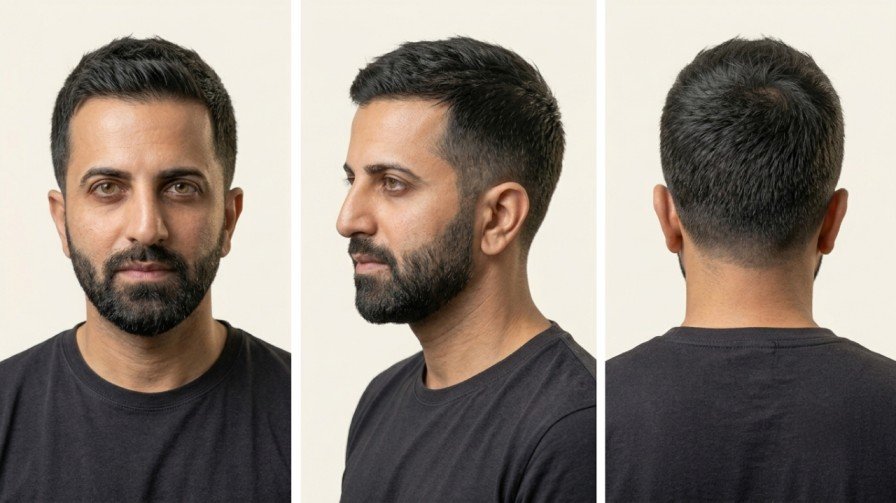
The crew cut is a straightforward option when you want a clean appearance with minimal maintenance.
Keeping the sides short and leaving slightly more length on top creates a controlled shape without relying on long hair for coverage. It can also reduce the visual contrast between different areas of density.
The main advantage is consistency: the hairstyle generally keeps its shape without requiring much product.
Best for: Men who want a classic, professional haircut with little daily styling.
4. Side Part
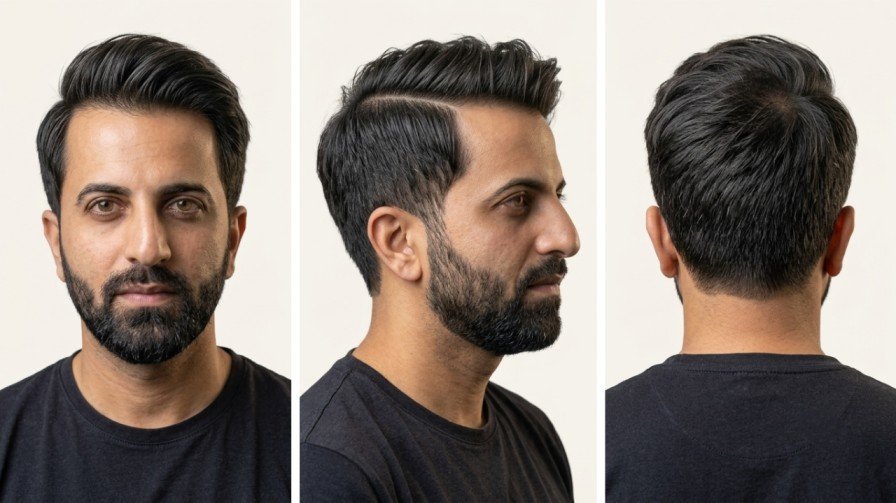
A side part can work well with thin hair when it is kept relatively natural.
An extremely sharp part can separate the hair too clearly and expose more scalp along the parting. A softer part gives the hair direction while allowing some natural movement.
The exact position also matters. Moving the part slightly can sometimes give one side more lift or make a sparse area less obvious.
Best for: Fine hair that still has enough length and density to hold a natural part.
5. Messy Quiff
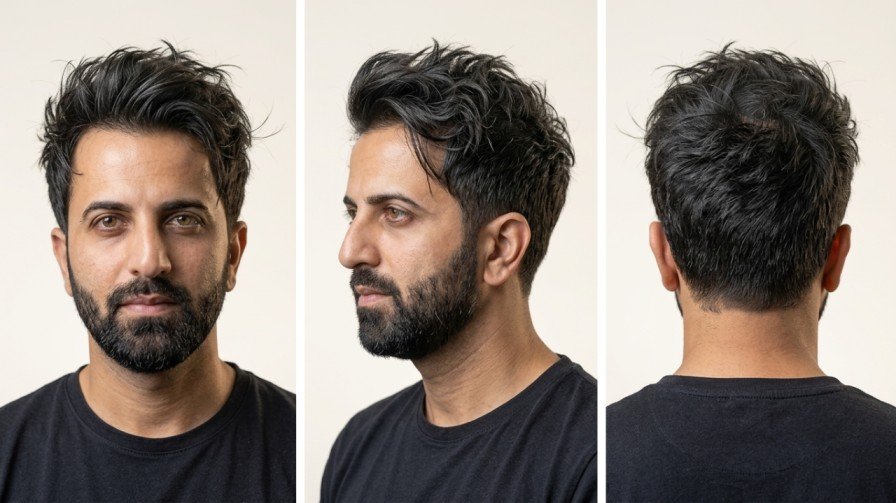
The messy quiff uses controlled height and texture rather than trying to make the hair look perfectly dense.
Lifting the front can give the hairstyle more vertical shape, which may make the hair appear fuller than when it sits completely flat against the scalp.
Keep the finish relaxed. A stiff quiff covered in heavy product can separate the hair into visible sections and work against the effect you want.
Best for: Men with enough hair at the front to create some lift and who do not mind spending a few minutes styling.
6. Buzz Cut
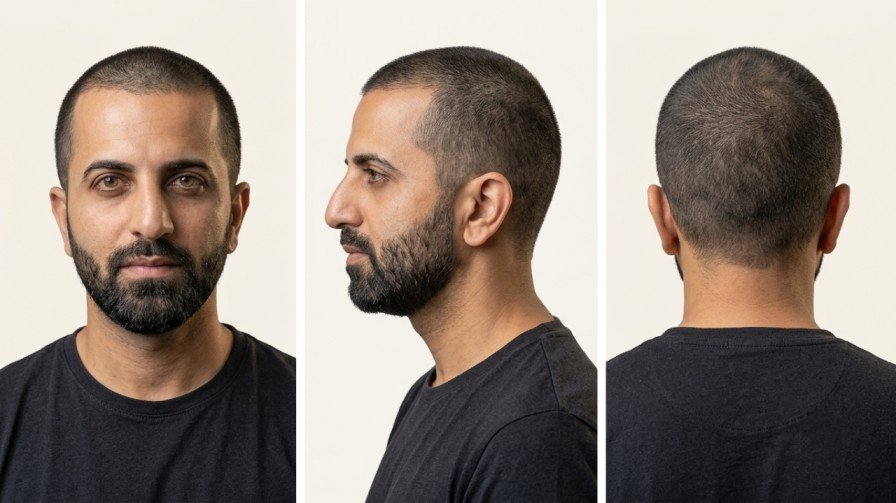
A buzz cut takes a different approach: instead of trying to create the appearance of coverage, it minimizes the contrast created by different hair lengths.
When thinning is more advanced, longer hair can sometimes make sparse areas stand out because the surrounding strands remain longer. Cutting the hair close and evenly can create a more consistent overall appearance.
It is also one of the easiest styles to maintain.
Best for: More noticeable thinning, visible scalp, or men who prefer an extremely low-maintenance haircut.
7. Ivy League Cut
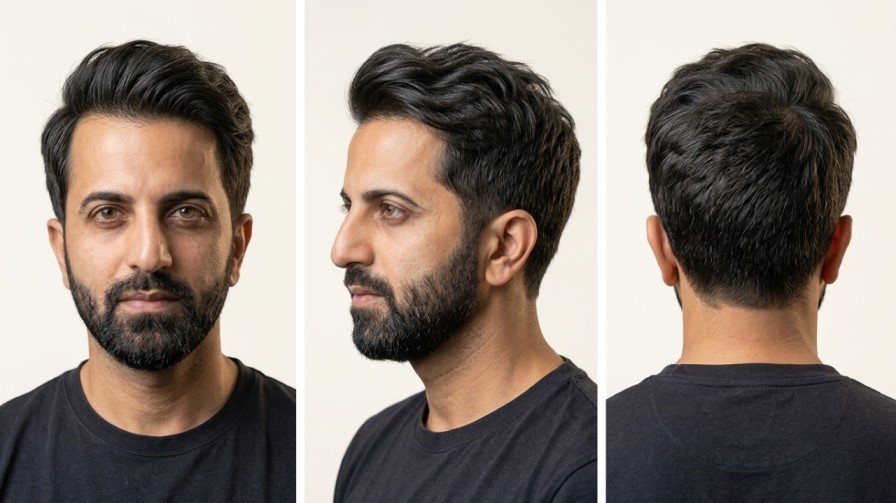
The Ivy League combines the neat shape of a crew cut with enough length on top to allow some styling.
It can be worn with a soft side part or a little texture, giving you more flexibility than a very short cut while still keeping the overall shape controlled.
For professional settings, it offers a polished appearance without depending on excessive volume.
Best for: Men who want a traditional, professional hairstyle with some styling flexibility.
Hairstyles That Can Make Thin Hair Look Thinner
There are no universal hairstyles that every man with thin hair must avoid. The effect depends on your density, texture, face shape, and where the thinning occurs.
However, some styling choices can make sparse areas more noticeable.
1. Very Long, Slicked-Back Hair
Long hair does not automatically provide better coverage. When fine or thinning hair is pulled tightly backward, the strands can separate and expose more scalp.
2. Heavy Middle Parts
A pronounced middle part can divide the hair into two sections and make the scalp more visible along the parting, particularly when the hair is fine.
3. Wet-Look Styles
Wet-look products can cause individual strands to clump together. More scalp can then show between those groups of hair.
4. Excessive Gel or Pomade
More product does not necessarily mean more volume. Heavy amounts can weigh fine hair down, reduce movement, and leave it looking flatter.
The better approach is usually controlled texture rather than trying to build as much volume as possible.
Styling Tips That Make Thin Hair Look Thicker
- Lift the roots when blow-drying: Use moderate heat and lift the hair at the roots to add temporary volume.
- Choose lightweight, matte products: They add texture without the heavy, shiny finish that can make fine hair look flatter.
- Use less product: Start with a small amount and add more only if needed.
- Keep the haircut maintained: Regular trims help prevent excess length from weighing fine hair down.
- Style gently: Avoid excessive heat, aggressive brushing, and repeated pulling that can contribute to hair damage.
- Work with your natural texture: Choose a finish that supports how your hair naturally falls instead of forcing it into an unnatural shape.
Common Hairstyling Mistakes for Thin Hair
- Relying on styling products for volume: Products can improve texture and hold, but they cannot increase hair density.
- Growing the hair too long for coverage: Extra length can make fine hair separate and expose sparse areas.
- Copying styles made for thick hair: A haircut that works on dense hair may not suit fine or low-density hair.
- Using too much product: Excess gel, pomade, or wax can weigh the hair down and make it look flatter.
- Trying to hide every sparse area: Constantly rearranging the hair can make the style look unnatural.
- Ignoring progressive thinning: If your hair is becoming noticeably thinner over time, consider finding out why rather than treating it only as a styling issue.
Myth vs Fact
| Myth | Fact |
|---|---|
| Cutting your hair makes it grow back thicker. | Cutting changes the length and shape of the hair shaft, not the number of follicles producing hair. |
| Longer hair always gives better coverage. | Extra length can sometimes help, but it can also separate and expose sparse areas. |
| More styling product creates more volume. | Too much product can weigh fine hair down and make it look flatter or more separated. |
| Men with thin hair should always keep their hair very short. | Short cuts work well for many men, but the best length depends on density, texture, hairline, and personal preference. |
| A good haircut can fix thinning hair. | A haircut can improve appearance, but progressive hair loss may require evaluation and treatment beyond styling. |
When to Consider Seeing a Dermatologist
A hairstyle can improve how thinning hair looks, but it cannot diagnose or treat the cause of hair loss.
Consider seeing a dermatologist if you notice sudden or rapidly progressing thinning, clearly defined bald patches, a rapidly changing hairline, or persistent scalp symptoms such as significant redness, pain, itching, or scaling.
Hair loss can have different causes, and identifying the cause is an important part of choosing the appropriate treatment.
Quick Action Checklist
- Identify whether your hair is naturally fine/low-density or becoming thinner over time.
- Look at where the hair is thinnest: hairline, crown, or overall.
- Choose a haircut that works with that pattern rather than trying to hide it completely.
- Consider a textured crop, French crop, crew cut, side part, messy quiff, buzz cut, or Ivy League based on your needs.
- Use a small amount of lightweight, preferably matte styling product.
- Avoid excessive product that leaves the hair heavy, shiny, or clumped.
- Use moderate heat and avoid aggressive styling habits.
- Keep the haircut maintained so excess length does not overwhelm fine hair.
- If thinning is progressing quickly or appears suddenly, consider a dermatology evaluation.
Conclusion
The best hairstyles for thin hair men are not necessarily the ones that create the most height or use the most product. They are the ones that work with your natural density, texture, hairline, and lifestyle.
Textured crops and French crops can work well around the front, while crew cuts and buzz cuts offer simpler options when you want less maintenance. Side parts, messy quiffs, and Ivy League cuts provide more styling flexibility when your hair can support the extra length.
The goal is not to disguise every sign of thin hair. A well-chosen haircut should make your hair look intentional, balanced, and easy to manage.
If your hair is becoming progressively thinner rather than simply being naturally fine, treat the haircut as part of the solution—not the whole solution.
Frequently Asked Questions
What is the best haircut for thin hair men?
There is no single best haircut for everyone. Textured crops, French crops, and crew cuts are practical starting points because they control length and can work well with fine or low-density hair. Your hairline, thinning pattern, texture, and preferred maintenance level should determine the final choice.
Does long hair make thin hair look thicker?
Usually not. Longer hair can provide some coverage in certain situations, but fine or thinning hair may separate more easily as it gets longer. That can make the scalp more visible rather than less.
Should men with thin hair use gel?
You can use styling products, but heavy gels may not be the best choice if they leave your hair stiff, shiny, or clumped. A lightweight matte product can provide texture and hold without emphasizing separation between strands.
Is a buzz cut good for thinning hair?
It can be. A buzz cut reduces the contrast between areas with different densities and is especially practical when thinning is already noticeable. Whether it looks best depends on your hairline, scalp shape, and personal preference.
What haircut works best for a receding hairline?
Shorter styles with a controlled or textured front can work well. A French crop is one option because its short fringe gives the front of the hairstyle a defined shape. If the hairline is progressively receding, however, the haircut only changes appearance and does not address the underlying hair loss.
Can a haircut actually make thin hair look thicker?
Yes, visually. A haircut can change length, shape, texture, and how the strands sit, which can make the hair appear fuller. It does not increase the number of follicles or permanently increase hair density.
When should I worry about thinning hair?
Pay more attention when the change is new, progressive, sudden, or accompanied by bald patches or scalp symptoms. Hair loss has many possible causes, so persistent or unusual changes are worth discussing with a dermatologist rather than treating only with styling products.
Authoritative Sources
- American Academy of Dermatology (AAD) — Hair Loss: Overview
- American Academy of Dermatology (AAD) — Hair Styling Without Damage
- American Academy of Dermatology (AAD) — Hair Loss: Tips for Managing
- American Academy of Dermatology (AAD) — Hair Loss: Diagnosis and Treatment