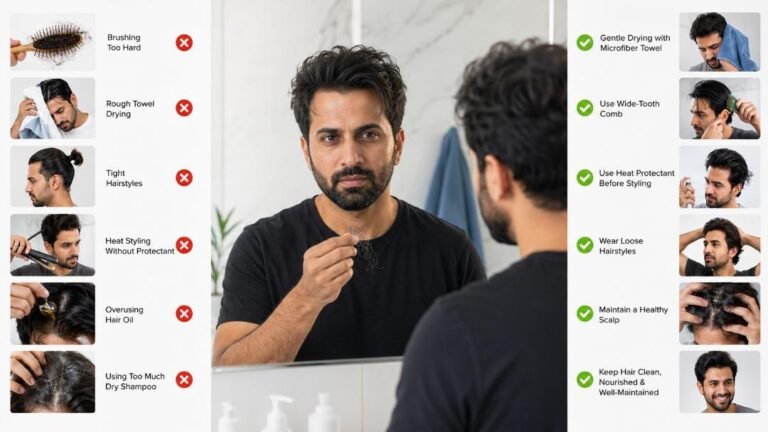
Quick Summary
Dandruff is not a hygiene problem, and not every flaky scalp is dandruff, since dry skin, dermatitis and psoriasis can look similar. There is no single best anti-dandruff shampoo for every man: the active ingredient matters more than the marketing, and different actives do different jobs, from controlling yeast to loosening scale. Results also depend on how you use the product, including contact time, thorough rinsing and following the label, and on your scalp and hair type. If symptoms persist, spread or become painful, a medical evaluation is the better next step than another bottle.
You notice flakes on your shoulders, or an itch you cannot ignore. You search for the best anti dandruff shampoo for men and land on dozens of bottles, each promising “advanced” control, “deep” cleansing or “natural” relief.
This guide does not rank bottles. It explains what dandruff actually is, what each active ingredient does, how to choose based on your scalp and hair, how to use a medicated shampoo without wrecking your hair, and when shampoo is no longer the right tool.
Table Of Contents
What Is the Best Anti-Dandruff Shampoo for Men?
There is no single best anti-dandruff shampoo for every man. The right choice depends on the active ingredient and your scalp condition: ketoconazole, selenium sulfide, zinc pyrithione and salicylic acid each do different jobs. Choosing an anti dandruff shampoo for men starts with matching the ingredient to your symptoms, then following the label directions.
First: Is It Actually Dandruff?
Flakes are a symptom, not a diagnosis. Several conditions produce them, and the right approach differs. The table below is a guide to what you might be seeing, not a way to diagnose yourself.
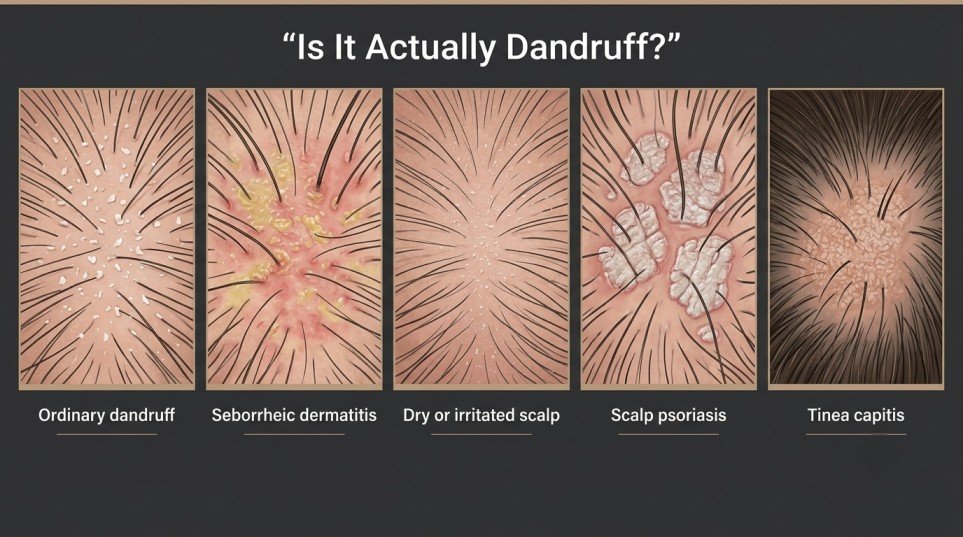
| What you notice | What it may suggest |
|---|---|
| Small, white or off-white flakes, mild itch, no obvious redness | Can be associated with ordinary dandruff |
| Greasy, yellowish scales with redness, often around the scalp edge, eyebrows, sides of the nose or behind the ears | May suggest seborrheic dermatitis, which is a more inflamed form of the same process |
| Tight, dry skin with fine flaking, worse in cold or low-humidity weather, often on other body areas too | May suggest a dry or irritated scalp rather than dandruff |
| Burning, stinging or sudden flaking after starting a new product | Can be associated with contact dermatitis from an ingredient |
| Thick, well-defined, silvery plaques that may extend beyond the hairline | May suggest scalp psoriasis and needs professional evaluation |
| Round, scaly patches with hair breakage or loss | Possible fungal infection (such as tinea capitis); needs professional evaluation |
If your picture does not clearly match simple dandruff, a doctor can sort it out faster than a series of shampoo experiments.
Why Does Dandruff Happen?
The scalp skin renews itself continuously, and the old cells normally shed unnoticed. In dandruff, that shedding becomes visible as flakes. Researchers link this to a combination of factors rather than a single cause.
The main one is Malassezia, a yeast that lives on almost everyone’s scalp. It feeds on sebum, the scalp’s natural oil, and its by-products can irritate the skin of people who are susceptible, triggering inflammation, itching and faster, messier shedding. That is why dandruff is more common where sebum production is higher, and why two men with similar habits can have very different scalps: susceptibility varies from person to person.
What this does not mean is that you are dirty. Washing more often does not remove the underlying tendency, which is why dandruff can come back even in people who wash regularly.
What Each Anti-Dandruff Active Ingredient Actually Does
Different ingredients solve different parts of the problem. The order below is not a ranking.
Ketoconazole
An antifungal that reduces Malassezia on the scalp. It is widely used for dandruff and seborrheic dermatitis, and clinical reviews support topical antifungals for seborrheic dermatitis. It suits flaky, itchy scalps where yeast and inflammation are the likely drivers. The main limitations are concentration and access: strengths and availability differ by country (for example, 1% versus 2% products), and some people experience scalp irritation or dryness. Check the label, and if you have a known allergy to azole antifungals, ask a pharmacist first.
Selenium sulfide
Used to control yeast and slow scaling. It tends to be chosen for stubborn flaking and oily, scaly scalps. Limitations: it can have a noticeable smell, may irritate some scalps, and can discolour light, grey or chemically treated hair if not rinsed out thoroughly.
Zinc pyrithione
An antimicrobial with antifungal activity that is one of the most common actives in over-the-counter dandruff shampoos. It is generally suited to mild to moderate dandruff and regular use. Its limitation is that some men with more inflamed scalps find it is not enough on its own, which is a reason to reassess the diagnosis rather than keep escalating products.
Salicylic acid
A keratolytic, meaning it helps loosen and remove scale. It makes thick flakes easier to wash away, but it does not treat the yeast. It is therefore not a substitute for an antifungal like ketoconazole. It can be useful when scale is heavy, often alongside another active. Limitation: it can be drying and irritating, especially on an already sensitive scalp.
Sulfur
Has mild antifungal and keratolytic effects and appears in some traditional and medicated formulas. It can suit scaly scalps, but the smell can be strong and it may dry or irritate the skin.
Coal tar
Slows excessive skin-cell turnover and reduces scaling, and is also used in scalp psoriasis products. It is mostly useful for heavy scale. Limitations: odour, possible staining of light or grey hair, and labels commonly advise taking care with sun exposure. It is not suited to everyone, and some people find it irritating.
Piroctone olamine
An antifungal and antimicrobial found in many European and increasingly in Indian formulations, often marketed as a gentler option. The research base is smaller than for ketoconazole, selenium sulfide or zinc pyrithione, so it should not be assumed to have identical evidence behind it. Many people tolerate it well, which matters when irritation is the problem.
How to Choose an Anti-Dandruff Shampoo
1. Start with the active ingredient.
Read the ingredient panel before the front label. Phrases like “advanced dandruff technology”, “deep scalp cleansing” or “natural dandruff control” describe nothing measurable. Look for a recognised active and, where disclosed, its concentration.
2. Consider your scalp symptoms.
- Oily scalp with dandruff: the yeast has plenty of sebum to work with, so an antifungal-type active is usually the logical starting point.
- Dry or easily irritated scalp with dandruff: tolerance matters more. A gentler formulation and less frequent use may be needed, and a simple dry scalp may not be dandruff at all.
- Itchy and flaky: itching alongside redness is more typical of seborrheic dermatitis. Anti dandruff shampoo for seborrheic dermatitis commonly uses the same antifungal actives, but this is a condition worth discussing with a doctor if it persists.
- Persistent or stubborn dandruff: before switching brands again, check technique (see below) and consider whether the diagnosis is right.
3. Consider your hair type.
- Fine or straight hair gets weighed down and oily quickly, so lightweight formulas and thorough rinsing help.
- Thick hair makes it harder for shampoo to reach the scalp. Part the hair and work it in.
- Curly or coily hair is naturally drier, because oil travels less easily down the strand. Medicated shampoos can worsen that dryness if they reach the lengths.
- Dry or chemically treated hair is more vulnerable to stripping and colour or texture changes from some actives.
4. Check the directions
Frequency, contact time and application method vary by product and active. They are written for that formulation, so they matter more than general advice.
5. Consider formulation tolerance
An effective active can still be hard to tolerate if the whole formula irritates your scalp or dries your hair. Some people find certain sulfates, alcohols, fragrances or preservatives may irritate, particularly on an inflamed scalp, but none of these is universally bad, and individual tolerance varies. If a product consistently stings or makes the scalp tighter, that is useful information about your scalp.
In India, shampoos sold as medicated products and those sold as ordinary cosmetics often sit side by side on the same shelf. The active ingredient and directions on the label are the most reliable way to tell them apart.
How to Use Anti-Dandruff Shampoo Without Over-Drying Your Hair
Most of the benefit comes from technique, not from using more product.
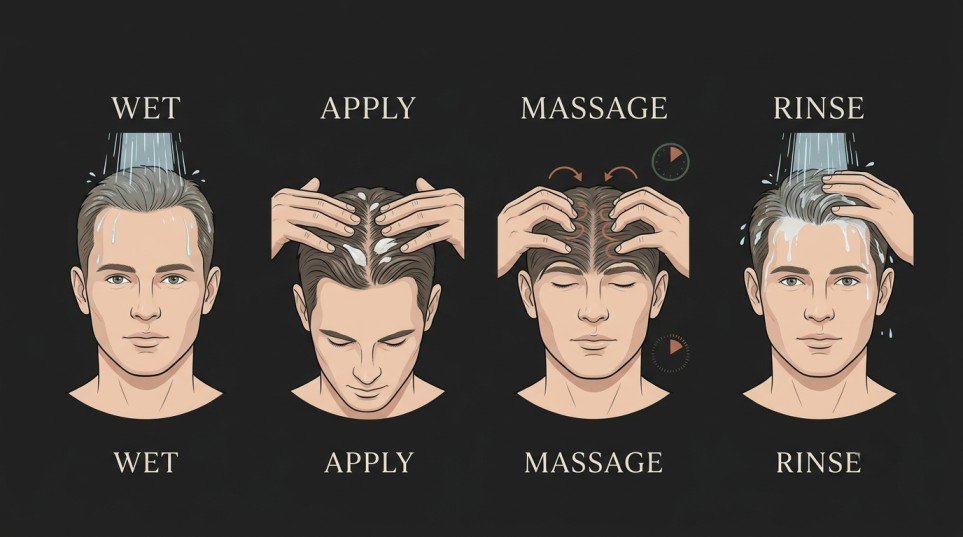
- Wet your hair and apply the shampoo mainly to the scalp, not the lengths.
- Massage gently with the pads of your fingers. Scrubbing with nails can break the skin and make things worse.
- Leave it on for the contact time on the label. Many medicated shampoos need a few minutes to work, and rinsing immediately wastes the active.
- Rinse thoroughly. Residue can irritate and, with some actives, discolour hair.
- Apply conditioner to the lengths and ends when your hair needs it, avoiding the scalp if you have oily skin.
- Follow the frequency on the label or from your doctor. Do not increase it just because some flakes remain.
How often to use it can depend on scalp oiliness, hair texture and the active ingredient. For general guidance on how often you should wash your hair, see our separate guide, then adjust within the limits of your product’s instructions.
Hair Type and Scalp Care: Treat the Scalp, Protect the Lengths
Dandruff happens on the skin, so the shampoo needs to reach the skin. It does not need to coat the whole strand. This distinction is especially important for curly, coily or dry hair, where repeated medicated shampoo use on the lengths can contribute to dryness and breakage. Concentrate the product at the roots, let the rinse-off carry it down, and keep moisture in the lengths with a conditioner. If you want a wider framework, our men’s hair care routine guide covers the full routine without repeating it here.
Oily Scalp and Dandruff
Excess sebum can contribute to the scalp environment associated with dandruff, because it feeds the yeast involved. But an oily scalp does not mean you should wash as aggressively as possible. Over-cleansing can irritate some scalps, and an irritated scalp can flake more. If greasiness is your main frustration, our article on oily scalp and excess sebum goes into the causes in detail.
Why Your Anti-Dandruff Shampoo May Not Be Working
Stubborn dandruff is rarely a sign that you are doing something wrong. Common reasons include:
- It may not be dandruff. Dry skin, dermatitis and psoriasis look similar and respond differently.
- The active may not address the problem. A salicylic acid shampoo, for example, loosens scale but does not target yeast.
- The shampoo may not be reaching the scalp, particularly with thick hair or long hair.
- It is rinsed too quickly when the label asks for contact time.
- Use is inconsistent, which is common with something that works gradually.
- Overuse may be irritating the scalp, which produces its own flaking.
- Products are changed too often, so no single one gets a fair trial.
- The condition may need medical treatment beyond what OTC shampoos can provide.
- Symptoms improved and then returned. Dandruff and seborrheic dermatitis can be recurrent, and returning symptoms do not automatically mean the shampoo stopped working.
Switching brands is not always the answer. Sometimes it is a technique fix, and sometimes it is a diagnosis question.
Treatment vs Maintenance
Think in two phases. In the control phase, when flakes and itch are active, you use the appropriate shampoo according to the product or medical directions until symptoms settle. In the maintenance phase, some people find they need to continue less often to keep recurrence down, while others can stop for a while and restart if it returns.
There is no universal maintenance schedule, and your doctor or the label is the right guide. What is worth accepting is that dandruff tends to come and go. A flare-up after months of calm does not mean the approach failed.
Brand Claims vs Ingredient List: What Actually Matters
Marketing language is designed to sound scientific without committing to anything. This table shows what to check behind common claims, without singling out any brand.
| Marketing claim | What the reader should check |
|---|---|
| “Anti-dandruff technology” | Which active ingredient is responsible, and at what concentration if disclosed? |
| “Natural dandruff control” | Which specific ingredient is doing the work? “Natural” does not mean gentler or more effective. |
| “Deep scalp cleansing” | Does it contain a recognised anti-dandruff active, or is it simply a cleanser? |
| “Soothes itchy scalp” | Does it treat the cause of the dandruff, or only provide temporary soothing? |
| “Chemical-free” | This is not a meaningful scientific claim, since water and every ingredient are chemicals. Read the ingredient list instead. |
| “Dermatologist tested” | Testing for skin tolerance does not prove the product treats dandruff. |
| “Controls hair fall” | Is the product actually supported for hair-loss treatment, or is the claim about reducing breakage during washing? |
When you pick up a bottle, check:
- the active ingredient
- the concentration, when it is disclosed
- the directions for use
- what the product actually claims to do, not what the packaging implies
- formulation and likely tolerance for your scalp
- whether it is sold as a cosmetic or as a medicated product, where that distinction applies
Anti-Dandruff Shampoo and Hair Fall
Four different things are often lumped together:
- Dandruff and scalp inflammation: flaking and itching of the scalp skin.
- Hair shedding: increased loss of hairs from the root, often related to stress, illness, nutrition or hormones.
- Hair breakage: strands snapping along the length, often from rough handling, heat or chemical treatment.
- Male pattern hair loss: a gradual, genetically influenced thinning, which is a separate condition.
An anti-dandruff shampoo is not automatically a hair-loss treatment. Heavy scratching and a severely inflamed scalp can contribute to some hair loss, and vigorous scrubbing can cause breakage, but dandruff itself is not established as a direct cause of permanent male pattern baldness. If your main concern is thinning, our guide on hair fall in men covers the causes properly.
When Should You See a Dermatologist?
Self-treatment with an OTC product has limits. Seek professional evaluation if you have:
- persistent dandruff despite appropriate OTC treatment
- significant redness or inflammation
- a painful scalp
- thick plaques or heavy scale
- bleeding or broken skin
- pus or unusual lesions
- significant or unexplained hair loss alongside scalp symptoms
- symptoms spreading to your face, ears or beard
- recurrent severe symptoms
- uncertainty about whether this is actually dandruff
A doctor can tell whether you are dealing with seborrheic dermatitis, psoriasis, eczema or contact dermatitis, or a fungal infection, and can prescribe stronger or more targeted treatment than OTC shampoos allow.
Conclusion
The best anti-dandruff shampoo is not simply the one with the strongest marketing claim. Start by identifying the likely scalp problem, then look at the active ingredient, formulation, directions and how your own scalp and hair tolerate it. Choosing an anti dandruff shampoo for men becomes much easier once you stop searching for a universal winner and start reading the label.
Frequently Asked Questions
What is the best anti-dandruff shampoo for men?
There is no universal best. A shampoo with an antifungal such as ketoconazole may suit a yeast-driven, itchy scalp, while one with salicylic acid or coal tar may be more useful for heavy scale. Scalp type, severity, hair type and tolerance all affect which product works for you.
How often should I use anti-dandruff shampoo?
It depends on the product, its active ingredient, your scalp condition and your hair type. The label or your doctor’s instructions set the limits, and those are more reliable than a general rule.
Can anti-dandruff shampoo cause hair fall?
Usually not directly. Irritation from harsh use can cause flaking and discomfort, rough scrubbing can break hair, and shedding or male pattern hair loss have separate causes. If you notice thinning, treat it as a separate question rather than blaming the shampoo by default.
Can I use anti-dandruff shampoo every day?
Daily use is not automatically appropriate. Some mild formulas are designed for frequent use, while many medicated ones are meant for limited weekly use. Follow the product directions.
Does anti-dandruff shampoo dry out hair?
Some formulations can, especially on dry, curly or chemically treated hair. Keeping the product on the scalp and conditioning the lengths reduces unnecessary exposure.
Is dandruff caused by a dry scalp?
Not usually. Dandruff is associated with yeast, sebum and individual susceptibility, and the flakes tend to be larger and oilier. A dry scalp has finer, drier flaking and often tightness, and treating it with a medicated shampoo can make it worse.
Does shaving your head get rid of dandruff?
No. Shaving removes hair, not the underlying scalp condition. It may make flakes less visible or make shampoo easier to apply, but it does not automatically stop dandruff.
Authoritative Sources
This article is based on the following types of sources. We recommend verifying the current wording of each page before relying on a specific detail.
- American Academy of Dermatology (AAD): public guidance on dandruff treatment, including recognised anti-dandruff shampoo ingredients and when to see a dermatologist.
- NHS: Dandruff and NHS: Seborrhoeic dermatitis: symptoms, causes, treatment and when to seek medical advice.
- Borda LJ, Wikramanayake TC. Seborrheic Dermatitis and Dandruff: A Comprehensive Review. Journal of Clinical and Investigative Dermatology, 2015;3(2). DOI: 10.13188/2373-1044.1000019.
- Naldi L, Rebora A. Seborrheic Dermatitis. New England Journal of Medicine, 2009;360:387–396. DOI: 10.1056/NEJMcp0806464.
- Okokon EO et al. Topical antifungals for seborrhoeic dermatitis. Cochrane Database of Systematic Reviews, 2015;Issue 5:CD008138. DOI: 10.1002/14651858.CD008138.pub3.
- U.S. FDA: Final Administrative Order OTC000021 (M032) — current OTC monograph framework for drug products for the control of dandruff, seborrheic dermatitis and psoriasis.