Quick Summary
Hair can get greasy quickly because of scalp oil production, hair type, sweat, humidity, washing habits, and heavy styling products. Washing more aggressively is not always the solution and can irritate the scalp. The better approach is to wash according to your scalp and hair type, use products that do not weigh down the roots, and pay attention to persistent itching, redness, or flaking.
Few things are more frustrating than washing your hair in the morning and finding it greasy again by the afternoon.
Greasy hair does not necessarily mean your hair is dirty. Your scalp naturally produces sebum, an oil that helps protect the skin and hair. The problem is that some scalps produce more oil, while certain hair types, products, washing habits, heat, and sweating can make that oil much more noticeable.
Trying to remove every trace of oil can also backfire if it leaves the scalp irritated or the hair overly dry.
The goal is not to keep your scalp completely oil-free. It is to find a routine that keeps oil under control without unnecessarily irritating the scalp.
Table of Contents
Why Does My Hair Get Greasy So Fast?
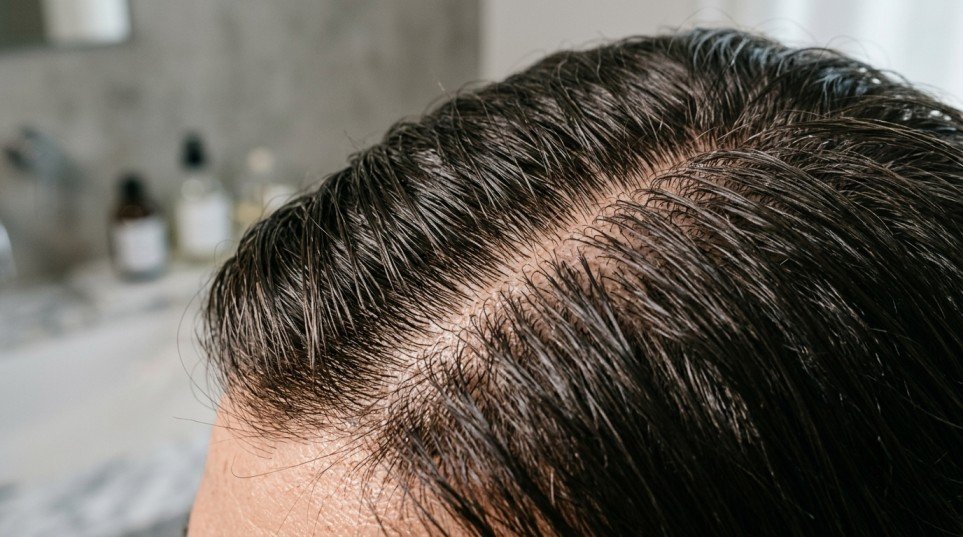
Hair gets greasy when sebum from the scalp builds up on the hair and becomes noticeable. How quickly this happens varies between people and can be influenced by scalp oil production, hair texture, washing frequency, sweat, humidity, styling products, and other scalp factors.
Straight or fine hair may appear greasy sooner because oil can make the strands look flatter and more separated. Heat and sweating can also make oily roots more noticeable, while heavy styling products can add a greasy or weighed-down appearance even when the scalp itself is not producing excessive oil.
What Makes Your Hair Greasy So Quickly?
Several factors can make hair look greasy faster than expected. Some are related to how much oil your scalp naturally produces, while others come from your hair type, washing routine, environment, or the products you use.
1. Your Scalp Naturally Produces Oil
Sebum is produced by sebaceous glands in the skin and helps protect the scalp and hair.
The amount produced varies from person to person. Genetics, hormones, age, and individual scalp characteristics can all influence how oily your scalp becomes.
This means some men will naturally need to wash their hair more frequently than others.
Having an oily scalp does not automatically mean you have poor hygiene.
2. Overwashing or Harsh Washing Can Irritate the Scalp
If your scalp feels tight, dry, sore, or irritated after washing, your routine may be too harsh.
Common problems include using very strong cleansers unnecessarily, washing with very hot water, scratching the scalp with your nails, or aggressively scrubbing the skin.
However, there is no universal rule that oily hair should never be washed daily. Men with oily scalps may need frequent washing to remove excess oil. The right frequency depends on how quickly your scalp becomes oily and how your hair responds.
The goal is effective cleansing without unnecessary irritation.
3. Hot Weather, Sweat, and Humidity Can Make Greasy Hair More Noticeable
Heat and humidity can change how your hair looks and feels.
Sweating adds moisture to the scalp, while humidity can make hair lose volume and become flatter. If you spend long periods outdoors, exercise frequently, or wear a helmet or cap while sweating, your roots may look greasy sooner.
This does not necessarily mean your scalp has suddenly started producing much more oil. Sweat, oil, and reduced volume can simply make existing greasiness more noticeable.
4.Heavy Hair Products Can Weigh Down the Roots
Sometimes what looks like greasy hair is partly a styling-product problem.
Heavy creams, oily serums, waxes, and high-shine products can make the hair look flat or shiny, especially when applied close to the scalp.
If your roots become greasy soon after styling, try using less product and keeping heavier products away from the scalp.
Depending on your hairstyle and hair type, a lightweight styling product may give you better control without making the roots look overloaded.
5. Dry Shampoo Can Hide Oil, But It Does Not Clean the Scalp
Dry shampoo can absorb some oil and make the hair look fresher between washes.
The problem starts when it becomes a replacement for regular washing. Repeatedly layering dry shampoo can leave product residue on the scalp and hair.
Use it as an occasional styling or oil-control tool rather than treating it as a substitute for washing with shampoo and water.
6. Your Hair Type Can Make Greasiness More Visible
Hair texture affects how quickly oil becomes noticeable.
Straight hair often shows oil more clearly because the strands lie closer together and oil can spread along them more easily. Fine hair can also lose volume quickly, making oily roots more obvious.
Curly or textured hair may not show oiliness as quickly because the shape of the strands can make the roots and lengths appear less uniformly coated.
This does not mean one hair type is healthier than another. It simply means your routine may need to account for how your hair displays oil.
7. Touching Your Hair Frequently Can Add More Oil and Product Residue
Constantly running your fingers through your hair can transfer oils, sweat, and residue from your hands onto the hair.
It can also disturb your hairstyle and reduce volume, making oily roots more noticeable.
If you regularly push your hair back, adjust your fringe, or reshape your hairstyle throughout the day, try leaving it alone unless it actually needs fixing.
8. Hard Water May Affect How Your Hair Feels
Hard water contains higher levels of minerals that can leave deposits on hair over time.
This may contribute to hair feeling rough, heavy, or difficult to manage. It is not, however, a primary explanation for every case of greasy hair.
If your hair consistently feels coated or difficult to rinse despite using suitable products, the water quality in your area may be worth considering alongside other factors.
How to Wash Greasy Hair Properly
Good washing technique matters just as much as the shampoo you choose.
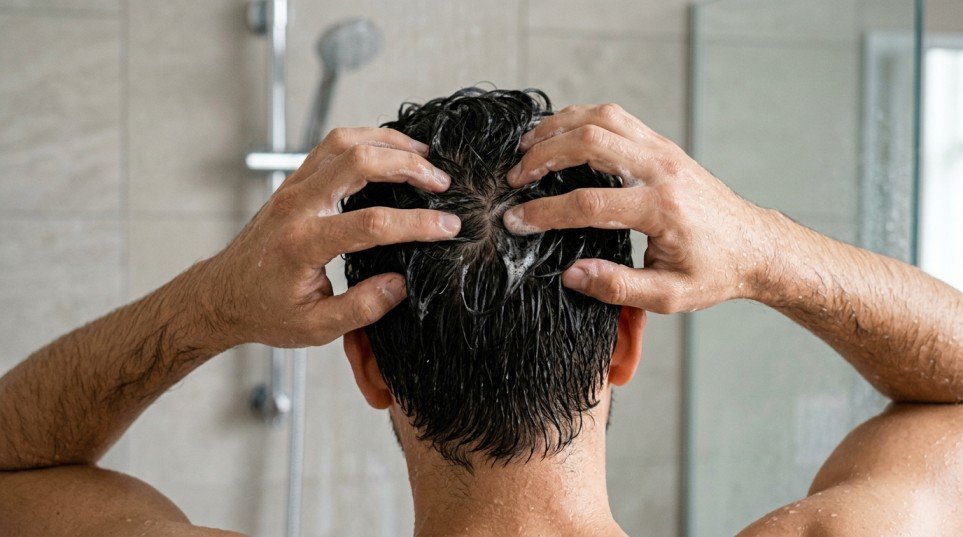
1. Focus Shampoo on the Scalp
Apply shampoo primarily to the scalp and roots rather than aggressively scrubbing the entire length of the hair.
The scalp is where oil, sweat, and product residue accumulate. As you rinse, the shampoo and water will also clean the lengths.
2. Use Your Fingertips, Not Your Nails
Massage the scalp gently with your fingertips.
Scratching aggressively with your nails can irritate the skin and may cause small scratches, especially if the scalp is already sensitive.
3. Rinse Thoroughly
Take enough time to rinse the scalp and hair properly.
Leftover shampoo or styling-product residue can make the hair feel coated or heavy.
4. Choose Washing Frequency Based on Your Scalp
Do not follow a fixed washing schedule simply because someone else does.
If your scalp becomes oily quickly, more frequent washing may be appropriate. If your scalp remains comfortable and relatively clean for several days, you may not need to wash as often. For more guidance on finding the right washing frequency for your hair and scalp, see our guide on How Often you Should Wash your Hair.
Your scalp—not a universal rule—should determine the routine.
What to Do If Your Hair Gets Greasy Quickly
If your hair becomes greasy within a few hours of washing, start with the basics rather than immediately buying stronger products.
- Wash according to how quickly your scalp becomes oily.
- Use a shampoo that cleans effectively without leaving your scalp irritated.
- Apply shampoo mainly to the scalp and roots.
- Rinse thoroughly.
- Reduce the amount of heavy styling product you use.
- Keep styling products away from the scalp when possible.
- Avoid constantly touching or reshaping your hair.
- Wash after heavy sweating when your scalp needs cleansing.
- Use dry shampoo occasionally rather than relying on it between every wash.
- Consider whether your hairstyle is making oily roots more noticeable.
If your hair still feels unusually greasy despite a sensible routine, look for other signs such as persistent itching, redness, scaling, or irritation.
When Greasy Hair May Be a Scalp Problem
Greasy hair by itself is usually a grooming concern. But persistent oiliness combined with other scalp symptoms may point to an underlying scalp condition.
Pay attention if you regularly experience:
- Persistent itching
- Redness or irritation
- Greasy or stubborn flakes
- Thick scaling
- Soreness or inflammation
- Symptoms that do not improve with a suitable hair-care routine
Conditions such as seborrheic dermatitis can affect oily areas of the scalp and may cause greasy scales, itching, and inflammation.
If these symptoms persist or become severe, a dermatologist can help determine whether you are dealing with simple oiliness or a scalp condition that needs treatment.
Common Mistakes That Can Make Hair Look Greasier
- Washing with very hot water
- Scrubbing the scalp aggressively
- Assuming daily washing is always bad for oily hair
- Using more styling product whenever hair loses volume
- Applying heavy products directly to the roots
- Using dry shampoo as a replacement for regular washing
- Constantly touching or reshaping the hair
- Ignoring persistent itching, redness, or flaking
- Choosing products based only on marketing instead of your hair and scalp needs
Myth vs Fact
| Myth | Fact |
|---|---|
| Washing oily hair every day always makes it oilier. | Washing frequency should depend on your scalp’s oil production and how your hair responds. |
| Greasy hair always means poor hygiene. | Sebum production, hair type, products, sweat, and scalp conditions can all affect how oily hair looks. |
| Stronger shampoo is always better for oily hair. | Effective cleansing matters, but overly harsh washing can irritate the scalp. |
| Dry shampoo actually cleans greasy hair. | It can absorb oil temporarily, but it does not replace washing the scalp with shampoo and water. |
| Greasy hair means you should stop using all hair products. | The better approach is to use suitable products in smaller amounts and avoid unnecessarily heavy products on the roots. |
Quick Action Checklist
- Identify how quickly your scalp becomes oily.
- Wash according to your scalp and hair type.
- Focus shampoo on the scalp.
- Massage gently with your fingertips.
- Rinse thoroughly.
- Use less heavy styling product.
- Avoid applying oily products directly to the roots.
- Limit unnecessary touching and reshaping.
- Use dry shampoo only as an occasional oil-control option.
- Watch for persistent itching, redness, or flaking.
Conclusion
Greasy hair is not always a sign that you are washing poorly or not washing enough.
Your scalp naturally produces sebum, and factors such as hair type, washing habits, heat, sweat, humidity, styling products, and scalp conditions can affect how quickly that oil becomes noticeable.
Instead of trying to strip every trace of oil from your scalp, focus on consistent cleansing, appropriate washing frequency, lighter product use, and gentle scalp care.
If excessive oiliness comes with persistent itching, redness, or scaling, it is worth looking beyond your grooming routine and considering whether a scalp condition may be involved.
Frequently Asked Questions
Why does my hair get greasy so fast after washing?
Your scalp naturally produces sebum, but hair type, washing frequency, sweat, humidity, and styling products can make oiliness more noticeable. Fine or straight hair may also look greasy sooner because it loses volume quickly.
Is it bad to wash oily hair every day?
Not necessarily. Men with oily scalps may need frequent washing to keep the scalp clean. The important point is to use an appropriate shampoo and avoid unnecessarily harsh washing.
Why is my hair greasy a few hours after washing?
Your scalp may naturally produce oil quickly, or sweat, humidity, hair texture, and styling products may be making the oil more noticeable. If the problem is persistent, review both your washing routine and the products you use.
Does dry shampoo help with greasy hair?
Dry shampoo can temporarily absorb oil and improve the appearance of greasy hair. However, it does not clean the scalp and should not replace regular washing with shampoo and water.
Does hard water cause greasy hair?
Hard water is not a universal cause of greasy hair, but mineral deposits can affect how hair feels and behaves. If your hair consistently feels coated, rough, or difficult to rinse, water quality may be one factor worth considering.
Why does my hair look greasy even when my scalp is not very oily?
Heavy styling products, high-shine products, sweat, humidity, and fine or straight hair can make hair look greasy even when scalp oil production is not unusually high.
When should I see a dermatologist about greasy hair?
Consider seeing a dermatologist if greasy hair is accompanied by persistent itching, redness, stubborn flakes, thick scaling, inflammation, or symptoms that do not improve with a suitable hair-care routine.
Authoritative Sources
- American Academy of Dermatology (AAD) — How to Treat Dandruff
- American Academy of Dermatology (AAD) — Dry Shampoo: Dermatologists’ Tips for Getting Your Best Results
- Cleveland Clinic — How Often Should You Really Wash Your Hair?
- DermNet — Shampoos