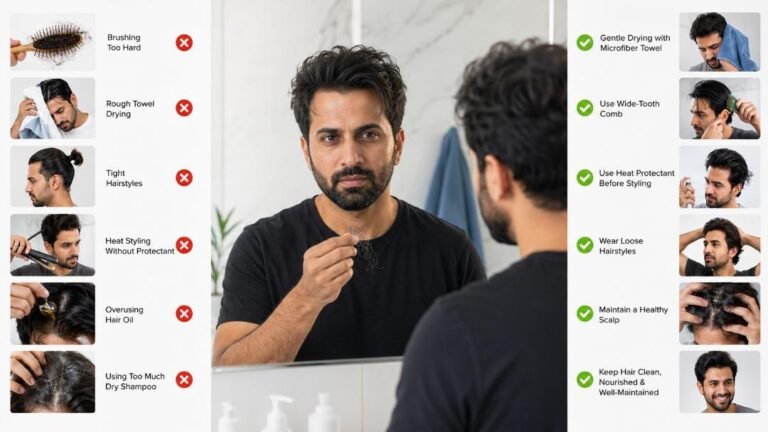

Quick Summary
There is no single number of washes that works for every man. Your ideal hair-washing frequency depends mainly on your scalp type, hair type, sweating, styling products, and daily environment. Oily scalps may need more frequent shampooing, while dry or curly hair often needs less. The goal is simple: keep your scalp clean and comfortable without leaving it excessively dry, irritated, or coated with buildup.
For many men, washing their hair is just part of the morning routine: shower, shampoo, rinse, done.
But hair washing isn’t something that has to follow a fixed seven-day schedule. A man who works in an air-conditioned office all day has very different washing needs from someone who spends hours outdoors, wears a helmet every day, or works in a hot, polluted environment.
Your scalp continuously produces sebum, the natural oil that helps protect the skin and hair. Sweat, dead skin cells, pollution, styling products, and environmental debris can also accumulate on the scalp.
The right routine is therefore less about following a universal rule and more about understanding what your scalp and hair actually need.
This guide explains how often men should wash their hair based on scalp type, hair type, lifestyle, environment, and common signs that their routine needs adjusting. If you’re building a complete routine, our Best Hair Care Routine for Men guide covers the other essential steps as well.
Table of Contents
How Often Should Men Wash Their Hair?
Most men can start with shampooing about 2–3 times per week, then adjust based on their scalp, hair type, sweating, product use, and environment. Men with an oily scalp may need more frequent washing, while men with a dry scalp or very curly/coarse hair may need less frequent shampooing.
There is no medically required number of washes that applies to everyone. The better approach is to watch how your scalp behaves between washes.
If your scalp becomes greasy, itchy, uncomfortable, or visibly coated with buildup, you may need to wash more often. If it becomes tight, excessively dry, irritated, or your hair feels consistently brittle after washing, your routine may be too aggressive.
Why Hair-Washing Frequency Matters
Your scalp is skin, and it naturally produces sebum, an oily substance that helps protect the scalp and hair.
Shampoo removes sebum, sweat, dead skin cells, environmental debris, and styling-product residue. That is useful because allowing excessive oil and buildup to accumulate can leave the scalp greasy, itchy, or uncomfortable.
But more washing isn’t automatically better.
A shampoo that is too harsh, very hot water, aggressive scrubbing, or washing more frequently than your scalp needs can contribute to dryness and irritation.
The goal isn’t to remove every trace of oil.
It’s to keep the scalp clean, comfortable, and free from excessive buildup without unnecessarily stripping it.
How Often Should Men Wash Their Hair Based on Scalp Type?
Your scalp is one of the most useful factors when deciding how frequently to shampoo.
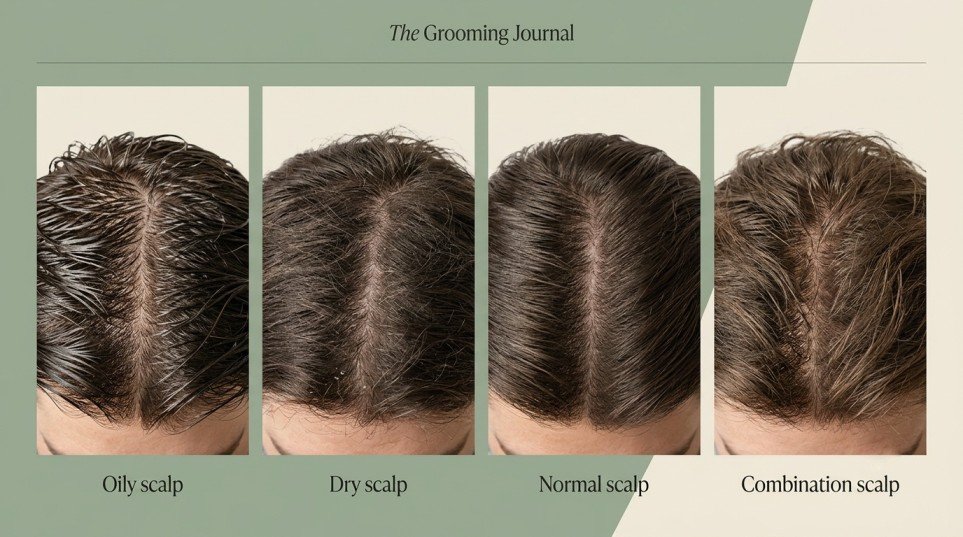
Oily Scalp
If your scalp becomes visibly greasy within a day or your hair quickly looks flat and oily at the roots, you may need to shampoo more frequently. Our guide on Why Your Hair Gets Greasy So Fast explains the other factors that can contribute to excessive scalp oiliness.
A practical starting point: every 1–2 days.
Some men with very oily scalps may need daily shampooing, particularly if they sweat heavily or use styling products regularly. There is no need to force yourself to wait several days simply because you’ve heard that daily washing is always harmful.
What matters is how your scalp responds.
Try this:
- Use a gentle shampoo rather than an unnecessarily harsh cleanser.
- Concentrate shampoo on the scalp and roots.
- Rinse thoroughly.
- Use conditioner mainly on the lengths and ends if your hair needs it.
- Increase washing frequency if oil and buildup are appearing quickly.
- Reduce frequency if your scalp becomes persistently dry or irritated.
Target: Every 1–2 days, adjusted according to oiliness and buildup.
Dry Scalp
A dry scalp can feel tight, uncomfortable, or flaky, particularly after washing.
If your scalp is genuinely dry, washing too frequently with a harsh shampoo can make that discomfort worse.
A practical starting point: around 1–2 shampoo washes per week.
Choose a gentle shampoo and avoid very hot water. Conditioner can help the hair lengths, although it shouldn’t be used as a substitute for treating an underlying scalp condition.
One important distinction: dry scalp and dandruff are not automatically the same thing. Persistent flakes accompanied by redness, significant itching, or greasy scale may indicate a scalp condition such as seborrheic dermatitis rather than simple dryness.
Target: Around 1–2 times per week, adjusted for sweat, buildup, and comfort.
Normal Scalp
If your scalp doesn’t become excessively oily or dry between washes, you have more flexibility.
A practical starting point: every 2–3 days.
There is no benefit in changing a comfortable routine simply because another person washes more or less frequently.
Use a shampoo that cleans effectively without leaving your scalp feeling stripped, and condition the hair lengths when needed.
Target: Every 2–3 days, adjusted according to your routine.
Combination Scalp
Some men have oily roots but noticeably drier lengths and ends. This is particularly common with longer hair.
The solution isn’t necessarily to wash the entire hair aggressively.
Instead, focus shampoo on the scalp and roots, allowing the lather to travel through the lengths as you rinse. Apply conditioner mainly from the mid-lengths to the ends.
A practical starting point: every 1–2 days or every 2 days, depending on how quickly your roots become oily.
Target: Around every 2 days, with shampoo focused mainly on the scalp.
How Often Should Men Wash Their Hair Based on Hair Type?
Scalp type tells you a lot, but the physical characteristics of your hair matter too.
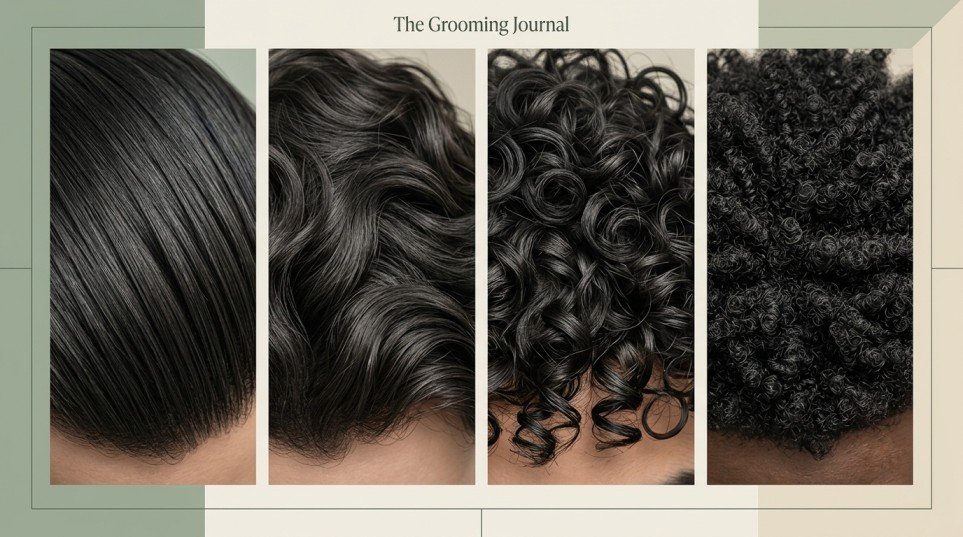
Straight and Fine Hair
Straight, fine hair often shows oil more quickly because sebum can spread along the hair shaft relatively easily.
If your roots become greasy quickly, you may need more frequent washing than someone with very curly hair.
Typical range: Every 1–2 days for men who become oily quickly; less often if the scalp remains comfortable and clean.
Avoid using a very heavy conditioner at the roots if your hair becomes flat easily.
Wavy Hair
Wavy hair sits between straight and curly hair.
Sebum doesn’t always travel down the hair as easily as it does with straight hair, so the lengths can become drier even when the roots are oily.
Typical range: Around 2–3 times per week, adjusted for scalp oiliness and product buildup.
Focus shampoo on the scalp and use conditioner on the lengths when needed.
Curly and Coarse Hair
Curly and tightly coiled hair can be more prone to dryness because the natural oils from the scalp do not travel down the bends of the hair shaft as easily.
That means frequent shampooing can be unnecessarily drying for some men with curly or tightly coiled hair.
Typical range: About once a week may work for some men, while others may need more or less frequent washing depending on scalp oiliness, sweat, buildup, and hair-care practices.
Some people also use conditioner-based cleansing between shampoo washes, but this isn’t essential for everyone.
The important point is not to follow a rigid schedule simply because it works for someone with straight hair.
Use a moisturizing shampoo when appropriate, avoid aggressive scrubbing of the lengths, and condition regularly.
Very Thick or Dense Hair
Thick hair doesn’t automatically require fewer washes.
The important question is whether the scalp is becoming oily or accumulating buildup.
Because dense hair can make it harder to thoroughly clean and rinse the scalp, take enough time to distribute shampoo through the scalp rather than simply coating the outer layer of hair.
Your washing frequency should still be based primarily on scalp condition, sweat, buildup, and hair characteristics.
How Lifestyle, Work, and Environment Affect Hair-Washing Frequency
Your daily environment can change how quickly your scalp becomes sweaty, oily, dirty, or coated with product.
This is why two men with similar hair can have completely different washing routines.

If You Work in an Air-Conditioned Office
Spending most of the day indoors in air conditioning usually means less sweating than working outdoors.
If your scalp stays comfortable and doesn’t become greasy quickly, you may not need daily shampooing.
A reasonable starting point: around 2–3 washes per week.
Adjust upward if you use styling products heavily or become sweaty during your commute.
If You Work in a Non-AC or Hot Environment
Heat can increase sweating, and frequent sweating can make the scalp feel uncomfortable.
You may need to wash more frequently than someone who spends the entire day in an air-conditioned room.
If you sweat heavily every day, washing every 1–2 days may be more practical.
If You Work Outdoors
Outdoor workers are exposed to heat, sweat, dust, and environmental pollution for longer periods.
In this situation, a rigid “wash only twice a week” rule doesn’t make much sense.
If your scalp becomes sweaty or visibly dirty, wash it.
A gentle shampoo used as needed is preferable to allowing substantial sweat, oil, and debris to accumulate simply to follow an arbitrary schedule.
If You Wear a Helmet Every Day
A helmet can trap heat and sweat around the scalp, especially during long commutes in warm weather.
If you regularly wear a helmet for several hours, pay attention to whether your scalp becomes sweaty, oily, itchy, or uncomfortable.
You may need more frequent washing than someone who rarely wears headgear.
Also keep the helmet liner clean. A dirty liner can repeatedly expose your scalp to accumulated sweat and debris.
If You Live or Work in a High-Pollution Environment
Pollution doesn’t automatically mean you need to shampoo every day.
However, frequent exposure to dust and particulate matter can contribute to surface contamination, particularly when combined with sweat and styling products.
If your scalp feels dirty or your hair accumulates visible residue, wash as needed.
If you spend most of your day indoors in a relatively clean environment, you may be able to wash less frequently.
If You Go to the Gym Frequently
Sweating doesn’t always mean you need to shampoo immediately.
After a light workout, a thorough water rinse can remove sweat from the scalp without requiring shampoo every time.
But if your workouts are intense, you sweat heavily, or your scalp remains greasy or uncomfortable afterwards, shampooing may be appropriate.
The same principle applies here: respond to the condition of your scalp rather than following a fixed rule.
If You Use Styling Products Every Day
Hair wax, clay, pomade, gel, hairspray, and other styling products can accumulate on the hair and scalp.
If you use several products every day, you may need more frequent cleansing than someone who uses nothing.
Don’t automatically reach for an aggressive clarifying shampoo every day. Instead, use an effective regular shampoo and introduce a clarifying wash only when your hair genuinely has persistent product buildup.
How Hair Length and Hairstyle Affect Washing
Hair length and hairstyle can also influence how often you need to wash.
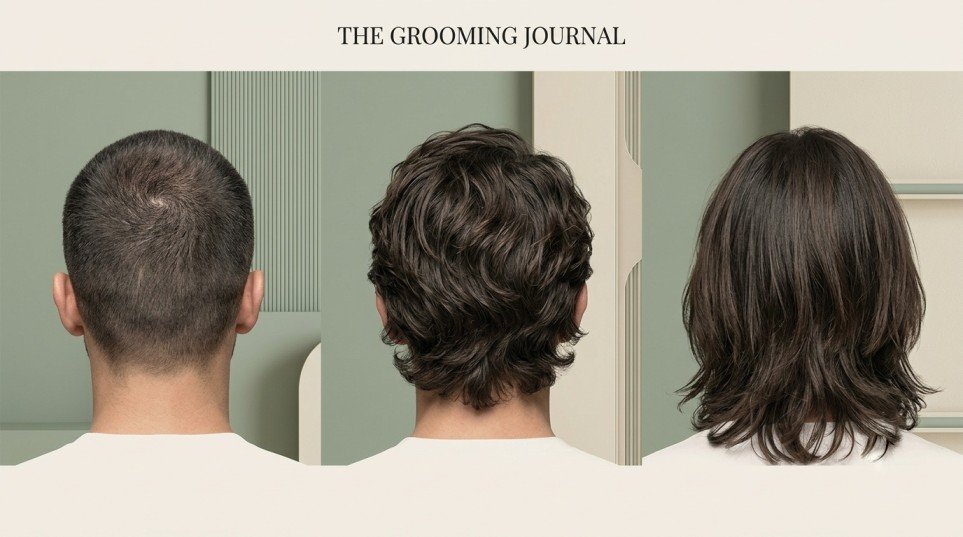
Short cuts such as buzz cuts and fades are generally easier to clean and dry quickly. Longer hair can hold more oil, sweat, and styling product, while the lengths may also become drier than the scalp.
If you’re using a hairstyle to make thinning hair look fuller, avoid choosing a style that requires heavy daily product buildup. Our guide to Best Hairstyles for Thin Hair Men covers practical styling options for men dealing with thinner-looking hair.
7 Common Hair-Washing Mistakes Men Make
1. Washing Every Day Because It’s a Habit
Daily shampooing isn’t automatically wrong, but doing it simply because you’ve always done it may not be necessary.
If your scalp remains comfortable for two or three days, you don’t need to shampoo just because the calendar says so.
2. Using Very Hot Water
Very hot water can increase dryness and irritation.
Use comfortably warm or lukewarm water instead.
3. Scrubbing the Scalp Too Aggressively
Your scalp doesn’t need to be scratched clean.
Use your fingertips to gently massage the shampoo through the scalp rather than using your fingernails or aggressive friction.
4. Applying Too Much Shampoo
More shampoo doesn’t necessarily mean a better clean.
Use enough to distribute across the scalp and rinse thoroughly.
5. Putting Conditioner Directly on an Oily Scalp
For many men, conditioner works better on the mid-lengths and ends rather than directly at oily roots.
This is particularly useful if your hair becomes flat or greasy quickly.
6. Changing Your Routine Too Quickly
If you change from daily washing to washing twice a week overnight, your hair may feel different simply because you’re changing a familiar routine.
Make adjustments gradually and evaluate your scalp over several weeks.
7. Following Someone Else’s Washing Schedule
Your friend’s routine may work perfectly for him and be completely wrong for you.
Scalp oiliness, hair texture, sweating, styling products, climate, and work environment all matter. These everyday habits can affect more than just how often you wash. For more common mistakes that can affect your hair and scalp, see our guide to 10 Hair Care Mistakes That Cause Hair Fall.
Signs You’re Washing Too Often or Not Enough
Your scalp can give you useful feedback.
You May Be Washing Too Often If:
- Your scalp repeatedly feels tight or uncomfortable after washing.
- Your hair becomes excessively dry or brittle.
- You notice persistent irritation after shampooing.
- Your hair feels stripped even when the scalp isn’t oily.
- You are using harsh shampoo simply to maintain a fixed schedule.
You May Not Be Washing Often Enough If:
- Your scalp becomes consistently greasy.
- You develop noticeable product or oil buildup.
- Your scalp feels persistently itchy or uncomfortable.
- Sweat remains on the scalp after repeated workouts.
- Your hair develops a persistent stale or oily smell.
These signs aren’t a diagnosis by themselves, but they’re useful signals that your routine may need adjustment.
Myth vs Fact
| Myth | Fact |
|---|---|
| Myth: Every man should wash his hair every day. | Fact: Washing frequency should depend on scalp oiliness, hair type, sweating, product use, and environment. |
| Myth: Daily shampooing always causes the scalp to produce more oil. | Fact: There isn’t a simple “wash more, produce more oil” rule. Some oily scalps genuinely need frequent washing. |
| Myth: The longer you go without shampooing, the healthier your hair becomes. | Fact: Excessive oil, sweat, and product buildup can make the scalp uncomfortable. Less washing isn’t automatically healthier. |
| Myth: Sweat means you must shampoo immediately. | Fact: A water rinse may be enough after some workouts, while heavy sweating or buildup may justify shampooing. |
| Myth: Dry scalp and dandruff are the same thing. | Fact: Dandruff and conditions such as seborrheic dermatitis can cause flaking and need to be distinguished from simple dryness. |
| Myth: Expensive shampoo lets you wash less often. | Fact: Washing frequency depends much more on your scalp, hair, and daily conditions than on the price of the shampoo. |
Quick Action Checklist
- Start by considering how quickly your scalp becomes oily or dry.
- Use your hair type to adjust how often you shampoo.
- Consider sweat, gym sessions, helmet use, pollution, and your workplace.
- Shampoo the scalp rather than aggressively scrubbing the hair lengths.
- Use lukewarm rather than very hot water.
- Apply conditioner mainly to the lengths and ends when appropriate.
- Reduce washing if your scalp is repeatedly dry or irritated.
- Increase washing if oil, sweat, or product buildup is accumulating.
- Don’t change your routine based on a fixed internet rule alone.
- If persistent itching, redness, heavy flaking, or other scalp problems continue, consider professional evaluation.
Conclusion
The right hair-washing routine isn’t about finding one perfect number.
For many men, 2–3 shampoo washes per week is a useful starting point, but that number can move up or down depending on your scalp type, hair type, sweating, styling products, work environment, pollution, and daily habits.
An oily scalp may need frequent washing. Dry or curly hair may need less. A man who spends eight hours in an air-conditioned office has different needs from someone working outdoors in heat and pollution.
So instead of asking whether you should wash your hair every day, ask a better question:
What does my scalp actually need?
Once you pay attention to oil, sweat, buildup, dryness, and irritation, your washing routine becomes much easier to figure out.
Frequently Asked Questions
Is it bad to wash your hair every day?
Not necessarily. Daily shampooing can be appropriate for some men, particularly those with an oily scalp, frequent sweating, or substantial product buildup. The problem is assuming that every man needs to wash daily or that daily washing is automatically harmful.
How many times a week should a man wash his hair?
There is no universal number. Around 2–3 shampoo washes per week is a reasonable starting point for many men, but oily scalps may need more frequent washing while dry or curly hair may need less.
Can I wash my hair with just water between shampoo days?
Yes. A thorough water rinse can remove sweat and some surface debris between shampoo washes. However, water alone won’t remove all oil or styling-product buildup, so shampoo is still useful when the scalp needs deeper cleansing.
Should men with oily hair shampoo every day?
They can if their scalp genuinely becomes oily enough to need it. Daily shampooing isn’t automatically harmful. Choose a suitable shampoo and reduce frequency if you experience persistent dryness or irritation.
How often should men with dry hair wash their hair?
Many men with dry hair or a dry scalp can start around 1–2 shampoo washes per week and adjust based on sweat, buildup, and comfort. Hair type and scalp condition should both be considered.
Does wearing a helmet mean I need to wash my hair every day?
Not necessarily. A helmet can increase heat and sweating around the scalp, so some men may need more frequent washing. If you regularly sweat heavily under your helmet, washing more often may be appropriate.
Should I shampoo after every workout?
Not always. A water rinse may be enough after a lighter workout. If you sweat heavily or your scalp remains oily, sticky, or uncomfortable, shampooing is reasonable.
Does pollution mean I should wash my hair every day?
Not automatically. Pollution can contribute to hair and scalp buildup, but washing frequency should also consider sweat, oil production, styling products, and your overall environment.
How do I know if I’m washing my hair too much?
Repeated tightness, dryness, irritation, or brittle-feeling hair can indicate that your routine is too aggressive. If these problems persist, consider reducing frequency or switching to a gentler shampoo.
What if my scalp is itchy and heavily flaky?
Don’t automatically assume you simply need to wash more or less. Persistent itching, redness, heavy flaking, or greasy scale can be associated with scalp conditions such as dandruff or seborrheic dermatitis. If the problem continues, a dermatologist can help identify the cause and appropriate treatment.
Authoritative Sources
- American Academy of Dermatology — Tips for Healthy Hair — Dermatologist guidance on washing frequency, shampooing the scalp, conditioner use, and adjusting hair care to hair type.
- American Academy of Dermatology — How to Treat Dandruff — Guidance on dandruff, washing frequency, and how shampooing can differ for straight, fine, curly, coily, and oily hair.
- American Academy of Dermatology — 6 Curly Hair Care Tips from Dermatologists — Dermatologist guidance on washing, moisturizing, and caring for curly and coily hair.
- American Academy of Dermatology — 10 Hair-Care Habits That Can Damage Your Hair — Evidence-based guidance on shampooing technique, conditioner use, towel drying, heat, and other common hair-care mistakes.