Quick Summary
Oily skin is mainly influenced by genetics and hormones, but a well-chosen routine can help control excess shine, clogged pores, and breakouts.
For most men, the basics are simple: cleanse gently, use targeted ingredients when needed, moisturize with a lightweight non-comedogenic formula, and wear sunscreen every morning. The key is controlling excess oil without stripping or irritating the skin.
If your skin looks shiny within a few hours of washing, feels greasy around the nose and forehead, or frequently develops clogged pores, you probably need a routine designed for oily skin—not more aggressive cleansing.
The goal is to remove excess oil without damaging the skin barrier. This guide covers the essential daily steps, useful ingredients, common mistakes, and a few optional treatments that can help you manage oily skin without turning your routine into a long list of products.
Table Of Contents
What Is an Oily Skin Care Routine for Men?
An oily skin care routine for men is designed to remove excess oil, keep pores clear, and maintain a healthy skin barrier without over-drying the skin. The foundation is simple: gentle cleansing, lightweight moisturization, and daily sunscreen, with targeted ingredients such as salicylic acid or niacinamide added when needed.
The best routine is not the one with the most products. It is the one you can use consistently without irritating your skin.
Why Men’s Skin Gets Oilier
Men generally produce more sebum than women, largely because androgens such as testosterone influence the activity of the sebaceous glands. This is one reason men are more likely to have oilier skin, particularly during adolescence and early adulthood. It has little to do with poor hygiene.
Genetics, hormones, climate, stress, and skincare products can all influence how oily your skin feels. The goal is not to remove every trace of oil. Sebum is part of the skin’s natural protective barrier; the aim is to control excess oil without leaving the skin dry or irritated.
Your skin type can also change over time. If your skin becomes drier in colder weather or your cheeks feel noticeably drier than your forehead and nose, you may have combination skin rather than consistently oily skin. In that case, our Dry Skin Care Routine for Men or Combination Skincare Routine for Men may be more appropriate.
The Daily Oily Skin Care Routine
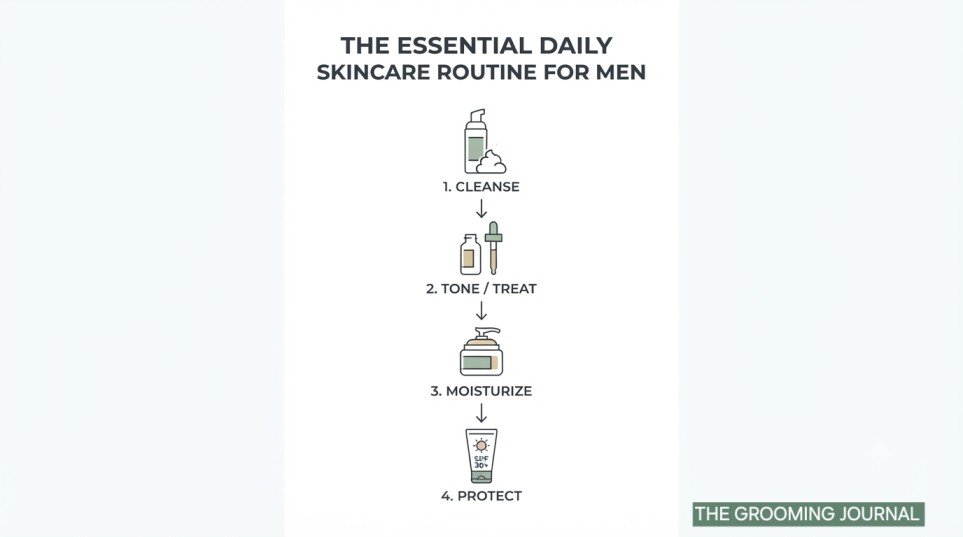
A good oily skin routine does not need to be complicated. Start with three essentials—cleanser, moisturizer, and sunscreen—and add a targeted treatment only when there is a specific reason to use one.
Step 1 — Cleanse
Wash your face with a gentle cleanser in the morning and evening. If your skin is very oily or prone to breakouts, a cleanser containing salicylic acid can help remove excess oil and keep pores clearer.
Use lukewarm water and massage the cleanser gently over the skin before rinsing. Avoid harsh scrubbing or washing repeatedly throughout the day, as this can irritate the skin and make it harder to maintain a healthy skin barrier.
If you want help choosing a cleanser specifically for oily skin, see our Best Face Wash for Oily Skin guide.
If your skin rarely becomes oily and you do not struggle with clogged pores or frequent breakouts, you may not need an oil-control routine. Compare it with our Normal Skin Care Routine for Men to see which approach better matches your skin.
Step 2 — Moisturize
Oily skin still needs moisturizer. Choose a lightweight, non-comedogenic formula that hydrates without leaving a heavy or greasy finish.
Gel or lightweight lotion formulas are often comfortable for oily skin. Apply moisturizer after cleansing, while your skin is slightly damp.
For specific product guidance, see our Best Moisturizer for Oily Skin guide.
If your skin regularly feels tight, flaky, or rough, excess oil may not be the only issue. Our Dry Skin Care Routine for Men explains how to focus on hydration and barrier support.
Step 3 — Sunscreen
Apply a broad-spectrum SPF 30 or higher every morning. Sunscreen protects against UV damage and helps prevent dark marks from becoming more noticeable after breakouts.
For oily skin, look for a lightweight, non-comedogenic or oil-free formula with a finish you are comfortable wearing every day. The best sunscreen is one you will apply consistently and in an adequate amount.
Apply sunscreen as the final step of your morning skincare routine and reapply when appropriate, particularly after sweating, swimming, or prolonged outdoor exposure.
If hot and humid weather makes your usual products feel heavy, our Simple Summer Skincare Routine for Men covers the adjustments that can make a warm-weather routine more comfortable.
Optional — Add a Targeted Treatment
Once the basic routine is working well, you can add an ingredient that addresses a specific concern.
Salicylic acid (BHA) can help with excess oil, clogged pores, blackheads, and breakouts. Niacinamide may help regulate sebum and support the skin barrier.
You do not need to use both. Start with one treatment and give your skin time to adjust before adding anything else.
Habits That Help Keep Oily Skin Under Control
A good skincare routine works better when your everyday habits support it. You do not need to constantly wash your face or add more products to keep oily skin under control.
- Cleanse consistently: Wash your face according to your skin’s needs rather than repeatedly cleansing whenever it looks shiny.
- Clean up after exercise: Sweat does not automatically cause acne, but leaving sweat, oil, and product residue on the skin for long periods can contribute to clogged pores. Wash your face after exercising when practical.
- Keep your hands off your face: Frequent touching can transfer oil, dirt, and other substances onto the skin and may contribute to breakouts.
- Give products time: Avoid changing your entire routine every few days. Many skincare products need several weeks of consistent use before you can properly judge their effect.
- Pay attention to irritation: Persistent stinging, redness, tightness, or peeling is a sign to simplify your routine rather than adding stronger products.
How to Read a Skincare Label for Oily Skin
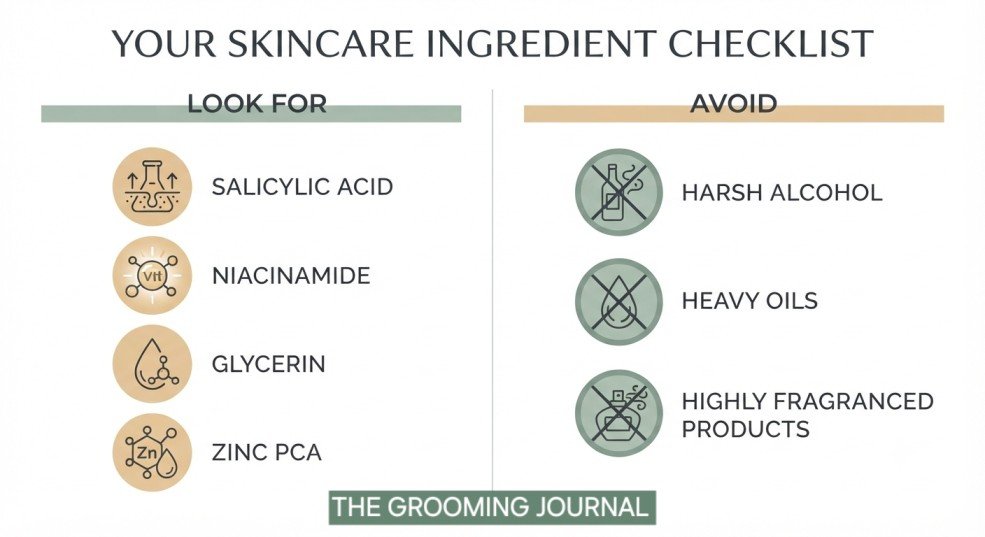
The front of a skincare product can tell you what the brand wants you to notice. The ingredient list gives you a better idea of what the formula is actually designed to do.
Ingredients Worth Looking For
Salicylic Acid (BHA): A useful ingredient for oily and acne-prone skin. It helps exfoliate inside pores and can reduce the buildup of oil and dead skin that contributes to blackheads and breakouts.
Niacinamide: Can help reduce the appearance of excess oil and support the skin barrier. It is generally well tolerated and can be useful in products designed for oily or combination skin.
Glycerin and Hyaluronic Acid: Lightweight humectants that help attract and retain water in the skin. Oily skin can still benefit from hydration.
Non-comedogenic formulas: Products labelled non-comedogenic are formulated with a lower likelihood of clogging pores, although the label is not a guarantee that a product will work for every person.
Ingredients and Formulas to Be Careful With
Very drying or irritating products can make oily skin uncomfortable and may weaken the skin barrier. If a product consistently causes burning, excessive dryness, redness, or peeling, it is probably not a good fit for your skin.
Fragrance is not automatically harmful, but heavily fragranced products may be more irritating if your skin is sensitive. Similarly, you do not need to avoid every oil simply because you have oily skin; the overall formula and how your skin responds matter more.
Do not choose a product solely because the front label says “oil-free,” “deep cleansing,” or “dermatologist tested.” Look at the formula, consider your specific skin concerns, and pay attention to how your skin responds over time.
If you’re still unsure whether your skin is truly oily or another skin type, read How to Find Your Skin Type before choosing your routine.
Optional Treatments for Oily Skin
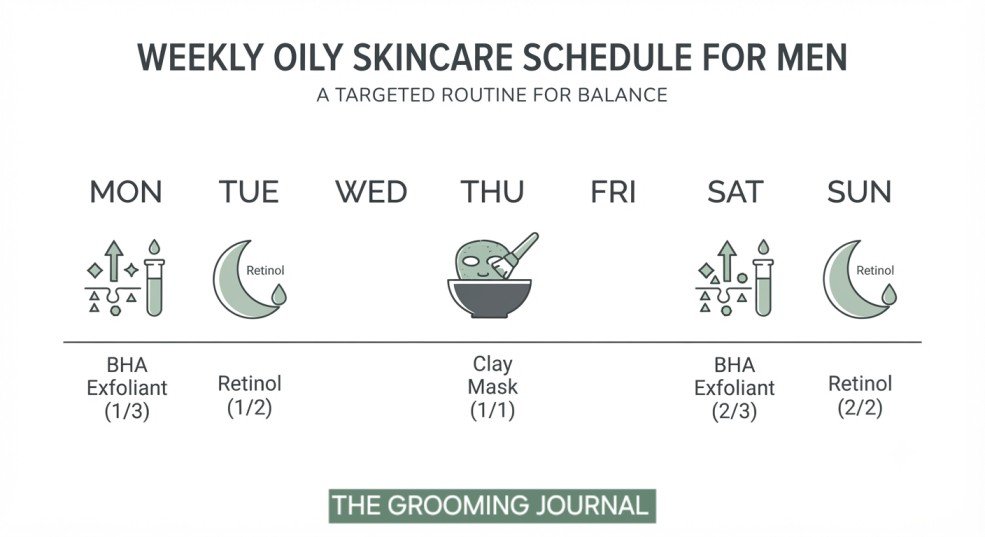
Once your basic routine is working well, you can add a targeted treatment if you have a specific concern such as clogged pores, breakouts, uneven texture, or excess shine. These are optional—not requirements for everyone with oily skin.
Salicylic Acid for Clogged Pores
Salicylic acid (BHA) can help loosen the buildup of oil and dead skin inside pores, making it useful for blackheads, congestion, and some breakouts.
If you are already using a salicylic acid cleanser, you may not need a separate leave-on BHA product. If you add one, start slowly and reduce use if your skin becomes dry, irritated, or unusually sensitive.
Retinoids for Texture and Breakouts
Retinoids can help with clogged pores, acne, and uneven skin texture. They are more of an active treatment than a simple weekly add-on, so introduce them gradually and follow the instructions for the specific product.
Do not add a retinoid at the same time as several other strong actives. Giving your skin time to adjust makes it easier to identify irritation and maintain the routine consistently.
Clay Masks
Clay masks can temporarily absorb excess oil and reduce shine, but they are not essential for managing oily skin. If you enjoy using one, apply it according to the product instructions and moisturize afterwards.
If your skin feels tight, irritated, or excessively dry after a clay mask, use it less often or skip it.
The goal of these treatments is to address a specific concern—not to remove as much oil as possible. More frequent exfoliation or more active ingredients will not necessarily produce better skin.
Oily Skin Myths vs Facts
| Myth | Fact |
|---|---|
| Washing your face more often will control oil. | Cleansing removes surface oil, but washing too frequently or using harsh products can irritate and dry the skin. A gentle cleanser used consistently is usually a better approach. |
| Oily skin does not need moisturizer. | Oily skin still needs hydration. A lightweight, non-comedogenic moisturizer can help maintain the skin barrier without adding a heavy or greasy feel. |
| Sun exposure dries out oily skin and improves it. | Sun exposure may temporarily make skin feel less oily, but UV radiation damages the skin and can worsen pigmentation and inflammation. Sunscreen remains essential. |
| Natural oils are always better for oily skin. | “Natural” does not automatically mean suitable for oily or acne-prone skin. Some oils and heavy formulas may contribute to clogged pores, while others may be well tolerated. The overall formula matters. |
| Oily skin does not need anti-aging care. | Oily skin still experiences UV damage, pigmentation, and changes in texture and elasticity. Daily sunscreen is one of the most important long-term steps for protecting the skin. |
Quick Action Checklist
- Use a gentle cleanser suited to your skin, usually morning and evening.
- Apply a lightweight, non-comedogenic moisturizer after cleansing.
- Wear a broad-spectrum SPF 30 or higher every morning.
- If clogged pores or breakouts are a concern, consider adding salicylic acid as a targeted treatment.
- Introduce active ingredients gradually rather than starting several at once.
- Clean your face after exercise when practical, especially if you have oily or acne-prone skin.
- Avoid repeatedly washing, scrubbing, or using irritating products to remove every trace of oil.
- Give your routine several weeks of consistent use before deciding whether it is working.
- If you have painful acne, persistent irritation, or no meaningful improvement after consistent care, see a dermatologist.
When to See a Dermatologist
When to See a Dermatologist
A consistent skincare routine can help manage mild oily skin, clogged pores, and occasional breakouts. But some skin problems need professional treatment rather than more products.
Consider seeing a dermatologist if you have:
- Severe or painful acne
- Deep or cystic breakouts
- Acne that is leaving scars or persistent dark marks
- Ongoing redness, burning, itching, or irritation
- Breakouts that are not improving despite consistent skincare
- A skin problem that is getting worse or affecting your daily life
A dermatologist can determine whether you are dealing with acne, another skin condition, or irritation from your skincare routine and recommend treatment when over-the-counter products are not enough.
If your breakouts have healed but left persistent marks, our Dark Spots vs Acne Scars: What’s the Difference and How to Treat Them guide explains how to distinguish between the two.
Conclusion
Managing oily skin is not about removing every trace of oil. The goal is to control excess sebum while keeping the skin barrier comfortable and healthy.
For most men, that starts with a simple routine: cleanse gently, moisturize with a lightweight non-comedogenic formula, and use sunscreen every morning. Add targeted ingredients only when you have a specific concern such as clogged pores or breakouts.
Give your routine enough time to judge how your skin responds, and avoid changing several products at once. If you continue to have painful acne, persistent irritation, or breakouts that do not improve with consistent care, a dermatologist can help identify the cause and recommend appropriate treatment.
frequently Asked questions
How many times a day should men with oily skin wash their face?
For many men, cleansing once in the morning and once at night works well. If your skin becomes very oily during the day, you can adjust your routine, but repeatedly washing or scrubbing your face is not necessary and may cause irritation.
Do I really need moisturizer if my skin is already oily?
Yes. Oily skin still needs hydration and barrier support. Choose a lightweight, non-comedogenic moisturizer that feels comfortable on your skin rather than skipping moisturizer altogether.
Can diet make oily skin worse?
Diet can influence acne for some people, but it is not the main explanation for oily skin in everyone. Some research has linked high-glycemic diets with acne, while the relationship between individual foods and skin oiliness is more complicated. Focus first on a balanced diet and an appropriate skincare routine.
What sunscreen works best for oily skin?
Look for a broad-spectrum SPF 30 or higher with a lightweight, non-comedogenic formula. Gel, fluid, matte, mineral, and chemical sunscreens can all work; the best choice is the one that feels comfortable enough for you to apply consistently.
How long does an oily skin routine take to work?
There is no single timeline. Some people notice changes in oiliness relatively quickly, while clogged pores, breakouts, and uneven texture can take longer to improve. Give your routine consistent use and avoid changing several products at once.