Quick Summary
Korean skincare is better understood as an approach to skincare rather than a mandatory 10-step routine. Its popularity comes from an emphasis on hydration, gentle cleansing, skin barrier support, and consistent daily care. You do not need ten products to benefit from these principles. A simple routine built around your skin’s needs can be just as effective.
Korean skincare has become one of the biggest trends in the beauty world. Some people treat it like the secret behind perfect skin, while others dismiss it as clever marketing wrapped in attractive packaging. Neither view is completely accurate.
The idea behind Korean skincare is less about following a fixed number of steps and more about building consistent habits around cleansing, hydration, skin barrier care, and sun protection.
But does it actually work, or is it just another trend?
The answer depends less on where a product comes from and more on what the routine contains, how well it suits your skin, and whether you use it consistently.
Let’s break it down.
Table of Contents
Does Korean Skincare Actually Work?
Yes, Korean skincare can work, but there is nothing inherently more effective about a product simply because it is Korean.
The useful parts of Korean skincare—regular cleansing, moisturization, sun protection, and carefully selected active ingredients—are supported by established skincare principles. The traditional 10-step routine is not necessary for healthy skin, and adding more products does not automatically produce better results.
What matters most is choosing products that suit your skin and using them consistently.
What Is Korean Skincare?
Many people think Korean skincare means following a strict 10-step routine every day.
That idea is one of the biggest reasons people misunderstand it.
Korean skincare is better described as an approach to skincare rather than a fixed routine. It often emphasizes maintaining hydration, supporting the skin barrier, and using products consistently instead of constantly chasing aggressive treatments.
The idea of layering several lightweight products became particularly associated with Korean skincare. However, layering is an option, not a requirement.
A routine should ultimately be built around what your skin needs. Someone with oily skin may need very different products from someone with dry or sensitive skin.
The country where a product is made does not determine whether it will work for you. Its ingredients, formulation, concentration, and how your skin responds to it matter far more.
Why Is Korean Skincare So Popular?
One reason Korean skincare became popular worldwide is its focus on lightweight, comfortable formulations.
Korean beauty brands were also influential in making products such as essences, sheet masks, and lightweight hydrating layers more familiar to consumers outside Korea.
Hydration became another major part of the trend. Rather than treating moisture as something only dry skin needs, Korean skincare helped popularize the idea of maintaining comfortable, well-hydrated skin across different skin types.
Then came the rise of “glass skin”—a term used to describe exceptionally smooth, hydrated and luminous-looking skin.
The aesthetic attracted enormous attention online, but the images associated with it are not necessarily realistic standards for everyday skin. Lighting, makeup, filters, and image editing can all affect how skin appears.
At its core, Korean skincare became popular because it combined enjoyable product experiences with a routine-based approach to daily skincare.
The Traditional 10-Step Korean Skincare Routine
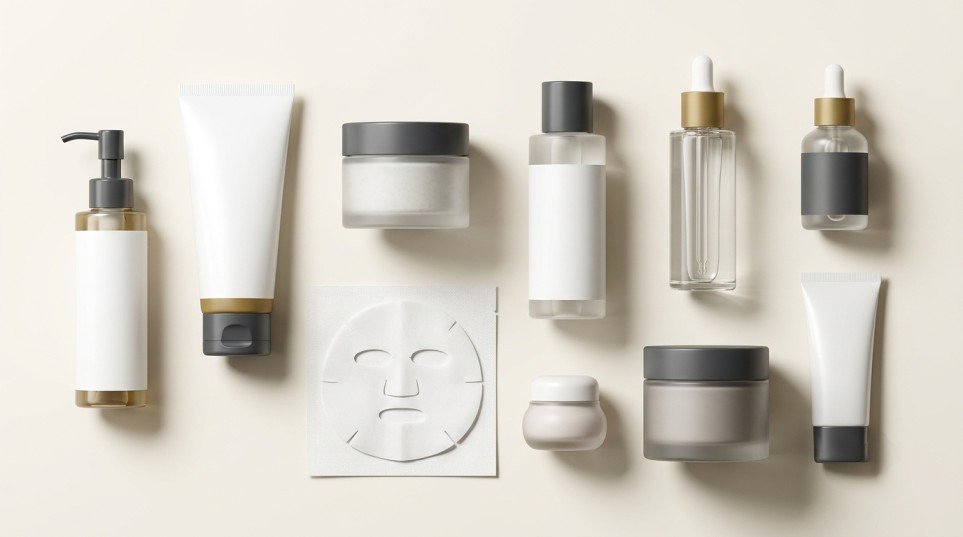
The famous Korean skincare routine is often presented as a 10-step system:
- Oil Cleanser — Helps remove sunscreen, makeup, and oil-based impurities.
- Water-Based Cleanser — Cleans away remaining impurities and water-soluble residue.
- Exfoliator — Helps remove excess dead skin cells. This is generally not an everyday step.
- Toner — Can provide hydration or deliver specific ingredients depending on the formulation.
- Essence — Usually a lightweight hydrating or treatment-focused product.
- Serum or Ampoule — Concentrated product designed around a particular skin concern.
- Sheet Mask — Primarily provides temporary hydration and a pleasant skincare experience.
- Eye Cream — Formulated specifically for the eye area, although it is not essential for everyone.
- Moisturizer — Helps reduce water loss and supports the skin barrier.
- Sunscreen — Protects skin from ultraviolet radiation and should generally be the final morning skincare step.
The important point is that this list represents the traditional or popularized 10-step routine, not a rule that everyone needs to follow every day.
Some steps may be used only occasionally, while others may not be necessary at all.
Do You Really Need All 10 Steps?
No.
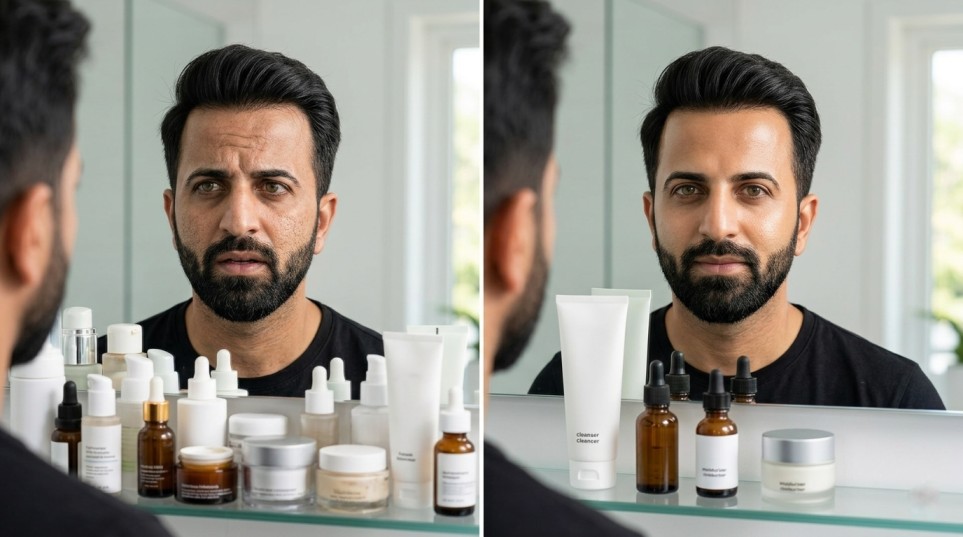
Most people can build an effective skincare routine with considerably fewer products.
A basic routine may include:
- A cleanser appropriate for your skin
- A moisturizer when needed
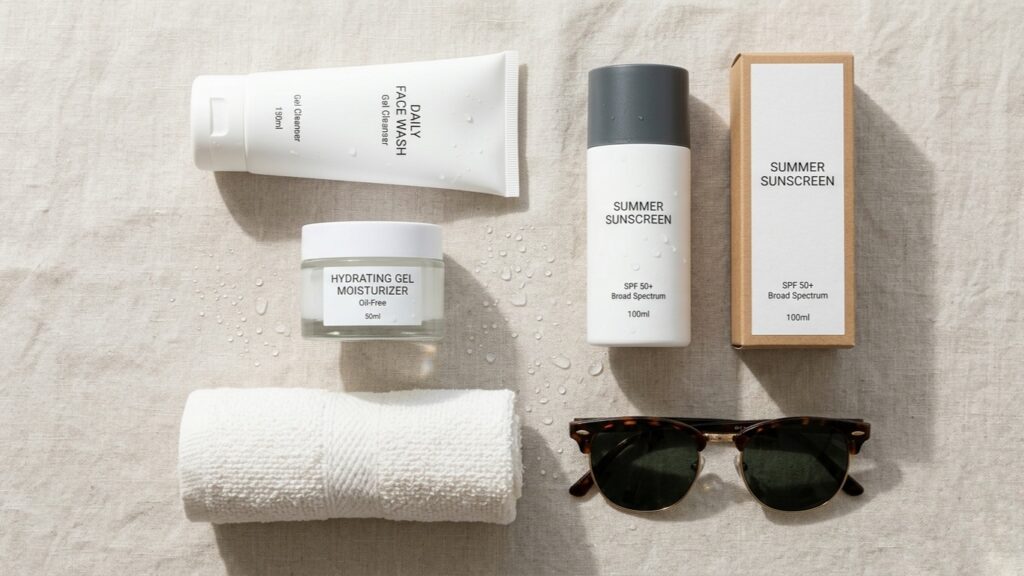
- Sunscreen during the day
A targeted treatment can then be added if there is a specific concern, such as acne, uneven pigmentation, or signs of photoaging.
The important question is not how many products you use. It is whether each product has a clear purpose and whether your skin tolerates the routine.
Adding several new products at once also makes it difficult to identify which product is helping—or which one may be causing irritation.
A shorter routine that you can maintain consistently is often more practical than a complicated routine you abandon after a few weeks.
Does Korean Skincare Actually Work?
Yes—but the effectiveness comes from the skincare practices and ingredients involved, not from the label “Korean skincare” itself.
Daily sunscreen can reduce cumulative UV damage. Moisturizers help reduce water loss and improve skin hydration. Gentle cleansing can remove dirt, oil, sunscreen, and other substances without unnecessarily disrupting the skin.
Certain active ingredients can also help with specific concerns when appropriately formulated and used.
None of these principles are exclusive to Korean skincare.
That is why it is useful to separate the routine philosophy from the marketing surrounding it.
Korean skincare cannot override basic skin biology. No skincare routine can permanently eliminate pores, erase years of sun damage overnight, or transform your skin within a few days.
Visible improvement also depends on the concern being treated, the products used, and how consistently they are applied. Skincare generally requires patience rather than dramatic overnight results.
Korean Skincare for Different Skin Types
There is no single Korean routine that works equally well for every skin type.
Oily Skin
Oily skin can still become dehydrated. Lightweight moisturizers and hydrating products may be useful without relying on harsh products that aggressively strip oil from the skin.
Dry Skin
Dry skin often benefits from a moisturizer that helps reduce water loss. Hydrating layers can be added if they provide a noticeable benefit, but several layers are not automatically necessary.
Acne-Prone Skin
Acne-Prone SkinAcne-prone skin usually benefits from a straightforward routine that avoids unnecessary irritation. If you want to understand why men get acne, it is also important to consider factors such as hormones, excess oil, clogged pores, and inflammation. Products should be selected according to the acne concern rather than simply because they are trending.
Sensitive Skin
Sensitive skin often requires a more cautious approach. Introduce new products gradually and avoid changing several parts of the routine at the same time.
The goal is not to copy someone else’s Korean skincare routine. It is to build a routine your skin can tolerate and that you can maintain consistently.
Korean Skincare Ingredients Worth Knowing
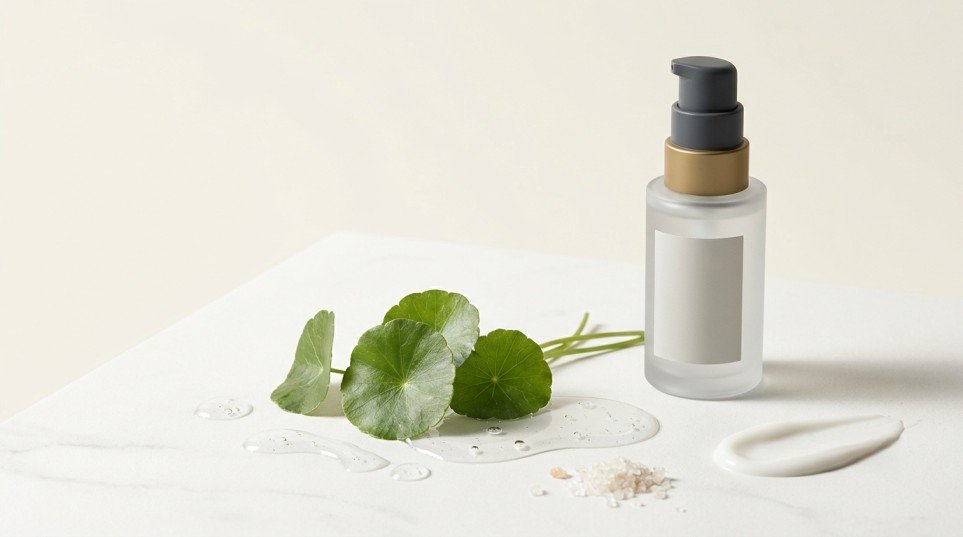
Korean skincare products commonly feature a wide range of ingredients. A few that you are likely to encounter include:
1. Centella Asiatica
Often used in products designed to soothe or support irritated-looking skin. Its popularity comes from its association with calming skincare formulations.
2. Niacinamide
A form of vitamin B3 that has several established cosmetic uses, including supporting the skin barrier and helping improve the appearance of uneven skin tone and excess oil.
3. Hyaluronic Acid
A humectant that helps attract and retain water, making it a common ingredient in hydrating products.
4. Rice Extract
Frequently included in Korean skincare formulations, particularly products marketed around hydration and brightening. Its presence in a product does not automatically make the product more effective than alternatives.
5. Snail Mucin
A popular cosmetic ingredient used primarily for its hydrating and conditioning properties. Its popularity is strongly associated with Korean beauty, but it should not be treated as a miracle ingredient.
The important point is to evaluate ingredients according to what they are actually formulated to do—not simply because they are popular in Korean skincare.
Common Mistakes People Make
- Using Too Many Products: More products do not automatically mean better results.
- Introducing Everything at Once: Adding several new products together makes it difficult to identify what is helping or causing irritation.
- Following Trends Instead of Skin Needs: A product that works for someone else may not suit your skin type or concerns.
- Neglecting Sunscreen: Serums and masks cannot replace regular daytime sun protection.
- Chasing Glass Skin: “Glass skin” is an aesthetic ideal, not a necessary standard for healthy skin.
Myth vs Fact
| Myth | Fact |
|---|---|
| Korean skincare means using 10 products every day. | The 10-step routine is a popular framework, not a daily requirement. |
| More skincare products produce better results. | Every additional product should have a clear purpose and be tolerated by your skin. |
| Korean products are automatically gentler. | Product formulation matters more than the country where the product is made. |
| You need glass skin to have healthy skin. | Healthy skin can naturally have pores, texture, pigmentation, and other normal variations. |
| Korean skincare works because it is Korean. | Its useful principles are based on skincare practices and ingredients that are not exclusive to Korea. |
When to See a Dermatologist
Skincare can help manage many everyday concerns, but persistent or worsening problems may require professional evaluation.
Consider seeing a dermatologist if you have:
- Persistent or severe acne
- Skin irritation that does not improve after stopping a suspected product
- Persistent redness, itching, or inflammation
- A skin condition that continues to worsen despite a simple routine
- A concern that you cannot identify or manage with over-the-counter skincare
A dermatologist can help determine whether the problem is cosmetic or requires medical treatment.
Quick Action Checklist
If you want to take a Korean-inspired approach without building a 10-step routine:
- Start with a simple routine.
- Choose products according to your skin type and concerns.
- Cleanse without unnecessarily stripping the skin.
- Use a moisturizer if your skin needs one.
- Apply broad-spectrum sunscreen during the day.
- Introduce new products one at a time.
- Avoid adding products simply because they are trending.
- Give your routine enough time before judging the results.
- Stop or reassess products that consistently cause irritation.
- Focus on healthy, comfortable skin rather than chasing “glass skin.”
Conclusion
Korean skincare is worth considering—but not because it is Korean, and not because it promises glass skin.
Its most useful lessons are fairly straightforward: maintain the skin barrier, avoid unnecessary irritation, keep the skin appropriately hydrated, use effective products for specific concerns, and protect your skin from UV exposure.
You also do not need a 10-step routine to follow those principles.
The best skincare routine is the one that suits your skin, has a clear purpose, and is simple enough for you to use consistently.
Frequently Asked Questions
Is Korean skincare really better than other skincare?
Not necessarily. Korean skincare offers many well-formulated products and has popularized certain approaches to hydration and product layering, but effectiveness depends on the individual formulation and your skin’s needs—not simply where the product was made.
Do I need to follow the Korean 10-step routine?
No. The 10-step routine is a popular framework rather than a requirement. A much shorter routine can provide the fundamentals of effective skincare.
Can men use Korean skincare products?
Yes. Skincare products are not inherently gender-specific. Men can use Korean skincare products if the formulation suits their skin type and concerns.
Is Korean skincare good for acne-prone skin?
It can be, but not every Korean skincare product is suitable for acne-prone skin. Focus on products appropriate for your specific concern and avoid unnecessarily complicated routines that may increase irritation. If you are unsure whether a mark is acne or pigmentation left behind after a breakout, learning how to tell the difference between dark spots and acne can help you understand what you are actually treating.
How long does Korean skincare take to show results?
There is no single timeline. It depends on the product and the concern being addressed. Hydration can sometimes improve the feel and appearance of skin relatively quickly, while concerns such as acne, pigmentation, or photoaging generally require more time and consistent care.
Can Korean skincare give you glass skin?
It may help create a more hydrated and luminous appearance, but “glass skin” is an aesthetic ideal rather than a guaranteed or necessary result of skincare. Skin naturally has pores, texture, and variation.
Is the 10-step Korean skincare routine meant to be done every day?
No. Some steps, particularly exfoliation and sheet masks, may be used less frequently, and several steps are optional depending on individual needs.
Authoritative Sources
- American Academy of Dermatology — Skin Care Basics
- American Academy of Dermatology — Basic Skin Care
- American Academy of Dermatology — Skin Care for Acne-Prone Skin
- American Academy of Dermatology — How to Apply Sunscreen
- American Academy of Dermatology — Acne: Diagnosis and Treatment
- National Library of Medicine — Pharmacological Effects of Centella asiatica on Skin Diseases