
Quick Summary
Hair fall can have many causes, from stress and poor nutrition to dandruff, hair-care habits, or an underlying condition. The right solution depends on what is causing the shedding.
This guide covers practical ways to manage common causes of hair fall and explains when it’s time to see a dermatologist.
Seeing more hair than usual on your pillow, in the shower, or on your comb can be worrying. But hair fall is not always caused by the same thing. Stress, nutritional deficiencies, scalp problems, damaging hair-care habits, and certain medical conditions can all lead to increased shedding.
That is why trying random oils, supplements, or shampoos rarely solves the problem. The first step is to understand what may be causing the hair fall, then choose an approach that makes sense for that cause.
If you’re not sure what’s behind your shedding, start with our guide to How To Stop Hairfall before choosing a solution. In this guide, we’ll then look at practical ways to deal with the most common causes and when persistent shedding needs professional attention.
Table Of Contents
What Are the Best Hair Fall Solutions for Men?
The best hair fall solution depends on what is causing the shedding. Common steps include improving nutrition when a deficiency is present, managing stress, treating dandruff or other scalp conditions, avoiding excessive heat and tension, and maintaining a healthy hair-care routine. If hair fall is sudden, severe, persistent, or causing bald patches, a dermatologist should assess the cause before treatment is chosen.
How to Manage Stress-Related Hair Fall
Periods of significant physical or emotional stress can push more hairs into the resting phase of the growth cycle. The extra shedding often becomes noticeable weeks to months after the stressful period, rather than immediately.
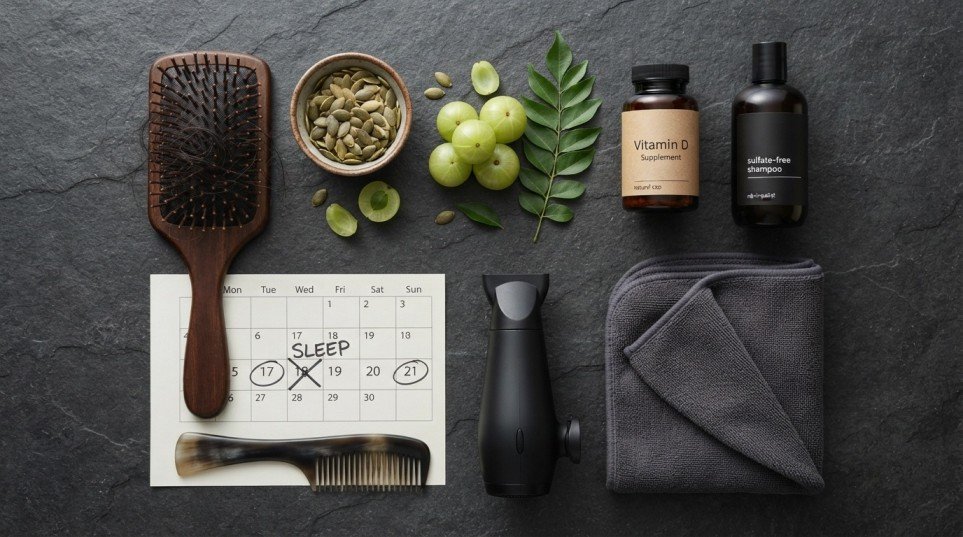
If stress appears to be contributing to your hair fall, the goal is not to find a single cortisol-lowering trick. Focus on the basics that support recovery: regular sleep, adequate nutrition, moderate physical activity, and a manageable daily routine.
Focus on Consistent Sleep
Aim for a regular sleep schedule and enough sleep to feel rested. Poor sleep can affect stress regulation and overall health, so improving sleep is a sensible part of managing stress-related shedding.
Stay Physically Active
Regular moderate exercise can support overall health and help with stress management. Walking, cycling, strength training, or another activity you enjoy is enough; there is no need for an extreme training routine.
Give the Hair Cycle Time
Stress-related shedding does not usually stop as soon as the stressful period ends. Hair cycles move slowly, so improvement can take several months. Avoid changing multiple hair products or starting several supplements at once while waiting for the shedding to settle.
If shedding is heavy, continues for several months, or you are unsure whether stress is actually the cause, a dermatologist can check for other possible reasons.
Nutrition and Hair Fall: What to Check First
Check for Nutritional Deficiencies First
Nutritional deficiencies can contribute to hair shedding, but taking a long list of supplements without knowing what you actually need is rarely a good approach. If your diet is limited or you have signs that suggest a deficiency, speak with a doctor about whether blood tests are appropriate. Once a deficiency is confirmed, correcting it with food, supplements, or both can help support normal hair growth.
Iron
Iron deficiency can contribute to hair shedding, particularly when iron stores are low. Ferritin is a useful marker of the body’s stored iron, although the right tests and interpretation depend on the individual.
If you think low iron may be contributing to your hair fall, speak with a doctor before taking an iron supplement. Eating iron-rich foods such as meat, eggs, beans, lentils, and leafy greens can also help maintain adequate intake. Pairing plant sources of iron with vitamin C can improve iron absorption.
Zinc
Zinc is important for normal hair and skin function, and severe zinc deficiency can contribute to hair loss. However, taking extra zinc when you already get enough does not make hair grow faster and excessive intake can cause problems.
Focus on zinc-rich foods such as meat, shellfish, eggs, dairy products, beans, and seeds. If a deficiency is suspected, discuss supplementation with a healthcare professional rather than choosing a high-dose supplement on your own.
Vitamin D
Low vitamin D levels have been associated with several types of hair loss, although the relationship is not fully understood and low vitamin D is not necessarily the cause of every case.
If you spend little time outdoors, have other risk factors for deficiency, or have persistent hair loss, ask your doctor whether testing is appropriate. If your levels are low, correcting the deficiency can support overall health and may help when it is contributing to the problem.
Protein
Hair is largely made of keratin, a protein. Consistently eating too little protein can affect normal hair growth and contribute to shedding.
Make sure your diet regularly includes protein-rich foods such as eggs, fish, poultry, dairy, beans, lentils, tofu, or other suitable sources. You do not need a special hair-growth diet; the priority is meeting your overall nutritional needs consistently.
Foods That Support Healthy Hair

No single food can stop hair fall, but a balanced diet provides the nutrients your hair needs to grow normally. If poor nutrition is contributing to shedding, improving your overall diet matters far more than relying on one so-called superfood.
Some foods are worth including regularly because they provide protein, iron, zinc, healthy fats, and other nutrients involved in normal hair growth.
1. Fenugreek Seeds
Fenugreek seeds contain protein, iron, fiber, and several plant compounds. They are traditionally used for hair care, and some preliminary research suggests they may have potential benefits for hair health. However, there is not enough human evidence to consider fenugreek a proven treatment for hair fall.
You can add soaked or cooked fenugreek seeds to your regular diet. There is no established amount or timing specifically proven to improve hair growth.
2. Curry Leaves
Curry leaves are commonly used in Indian diets and provide several micronutrients and plant compounds. They are often promoted as a natural remedy for hair fall, but there is currently limited human evidence that eating curry leaves directly reduces shedding or increases hair growth.
Use fresh curry leaves in curries, dals, chutneys, or other meals as part of a varied diet.
3. Amla
Amla is a good source of vitamin C and other plant compounds. Vitamin C helps the body absorb iron from plant foods, making amla a useful addition to a balanced diet, particularly when combined with iron-rich foods.
Fresh amla or unsweetened amla preparations can be included according to your preference.
4. Pumpkin Seeds
Pumpkin seeds provide zinc, magnesium, healthy fats, and plant-based protein. Zinc is important for normal hair and skin function, although eating extra zinc-rich foods will not improve hair fall if you already get enough zinc.
A small serving can be added to meals or eaten as a snack.
Other Nutrient-Rich Foods
Lentils, beans, leafy greens, nuts, seeds, whole grains, and other minimally processed plant foods can help provide the protein, iron, zinc, and other nutrients needed for a balanced diet.
You do not need to rely on any single food for better hair. Consistently meeting your nutritional needs is far more important.
If a confirmed nutrient deficiency is contributing to your hair fall, food alone may not always be enough and appropriate supplementation may be needed.
Scalp Care Routine That Reduces Hair Fall
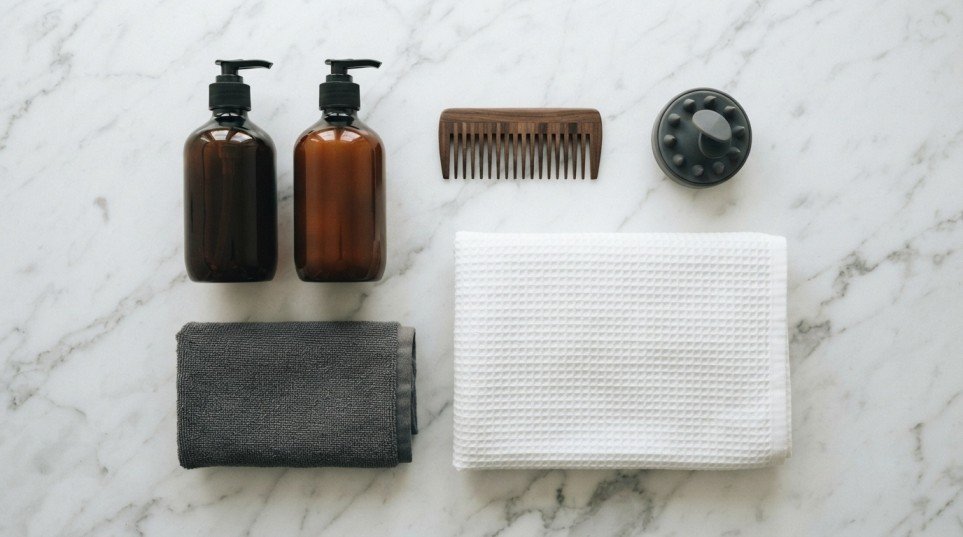
A healthy scalp supports healthy hair, but scalp care is not a treatment for every type of hair loss. If dandruff, irritation, or excess oil is contributing to shedding or breakage, getting the scalp condition under control can help.
Keep Your Scalp Clean and Comfortable
There is no single washing schedule that works for every man. Oily scalps may need more frequent washing, while dry or sensitive scalps may be more comfortable with less frequent washing.
Use a gentle shampoo suited to your scalp and adjust how often you wash based on oiliness, buildup, and irritation. If you have persistent dandruff or an itchy, inflamed scalp, an anti-dandruff shampoo with an appropriate active ingredient may be more useful than simply washing more often.
A Simple Scalp Care Routine
1. Choose the right shampoo
For dandruff or persistent flaking, shampoos containing ingredients such as ketoconazole, zinc pyrithione, or other established anti-dandruff actives can help control the underlying scalp condition. Follow the product instructions rather than assuming that stronger or more frequent use is better.
2. Wash the scalp, not just the hair
Apply shampoo mainly to the scalp and massage gently with your fingertips. Avoid scratching with your nails, which can irritate the skin.
3. Rinse thoroughly
Make sure shampoo is properly rinsed out. Lukewarm water is generally more comfortable than very hot water, particularly if your scalp is dry or irritated.
4. Condition the hair
Apply conditioner mainly to the lengths and ends, especially if your hair is dry or prone to breakage. This helps improve manageability and reduce friction during grooming.
5. Be gentle after washing
Wet hair is more vulnerable to stretching and breakage. Pat your hair dry rather than rubbing it aggressively with a towel, and use a wide-tooth comb if you need to detangle it while damp.
If you have persistent dandruff, redness, itching, scalp pain, or noticeable hair loss despite improving your routine, see a dermatologist rather than repeatedly changing shampoos.
Hair Styling Habits That Can Cause Breakage
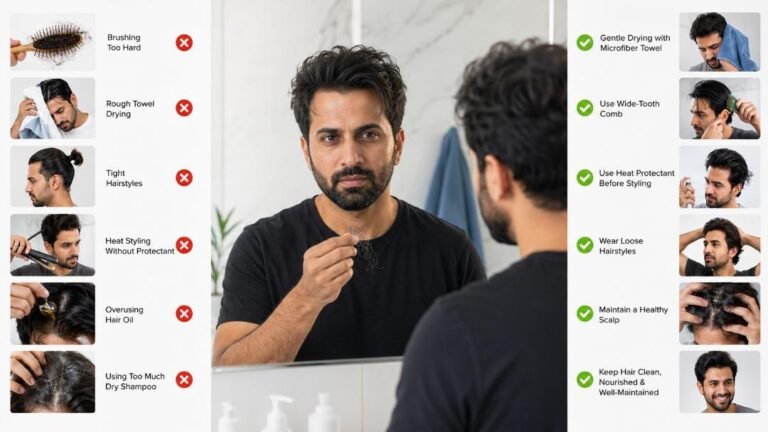
Not all hair that falls out is coming from the follicle. Hair can also break along the shaft, making it look thinner or as though you are shedding more than usual. Heat, chemical treatments, tight hairstyles, and rough handling can all contribute to breakage over time.
Be Careful With Heat
Frequent use of high heat can weaken the hair shaft and increase breakage. Keep heat settings as low as practical, avoid holding a hot tool over the same section for too long, and use a heat-protectant product when using styling tools.
Handle Wet Hair Gently
Wet hair stretches more easily and can break when it is pulled or brushed roughly. Pat your hair dry instead of aggressively rubbing it with a towel, and use a wide-tooth comb if you need to detangle damp hair.
Avoid Excessive Tension
Regularly pulling the hair into tight hairstyles can cause breakage and, over time, contribute to traction alopecia. Keep hairstyles comfortable and avoid putting constant tension on the same areas of the scalp.
Use Styling Products Sensibly
Wax, clay, gel, and other styling products do not automatically cause hair loss. The main concern is how you use them. Avoid excessive buildup, wash your scalp regularly, and choose products that suit your hair and scalp.
If you notice broken hairs, shorter pieces of hair, or thinning around areas that are repeatedly pulled or exposed to heat, reducing the source of damage can help prevent further breakage. Persistent thinning or shedding should be assessed separately because it may have another cause.
How Often Should Men Wash Their Hair?
There is no perfect washing schedule for every man. How often you should wash your hair depends mainly on your scalp, how oily or dry it gets, your hair type, and how much styling product you use. If you’re unsure how often you should wash your hair, our guide to how often men should wash their hair explains how to choose a routine based on your scalp type.
Oily Scalp
If your scalp becomes greasy quickly, you may need to wash your hair daily or every other day. A gentle shampoo can help remove excess oil and buildup without unnecessarily irritating the scalp.
Normal Scalp
If your scalp feels comfortable and does not become noticeably oily or flaky between washes, washing every few days may be enough. Adjust the frequency based on how your scalp responds.
Dry or Sensitive Scalp
If your scalp feels tight, itchy, or easily irritated, washing less frequently with a gentle shampoo may be more comfortable. Avoid very hot water and harsh cleansing products if they make the dryness worse.
What About Hair Fall?
Washing your hair does not normally cause hair loss from the follicle. It can loosen hairs that were already in the shedding phase, which is why you may notice more hair in the shower on wash days.
If your scalp is persistently oily, flaky, itchy, or irritated, changing your washing routine may help—but ongoing or significant hair loss needs to be assessed separately.
Hair Fall Myths vs Facts
| Myth | Fact |
|---|---|
| Washing your hair causes more hair loss. | Washing does not usually cause hair loss from the follicle. It can loosen hairs that were already in the shedding phase, making them more noticeable in the shower. |
| More supplements mean faster results. | Supplements can help when a nutritional deficiency is present, but taking more than you need does not make hair grow faster. Excessive intake of some nutrients can even contribute to hair loss or other health problems. |
| Cutting your hair makes it grow back thicker. | A haircut only changes the hair shaft. It does not change the follicle, so it cannot increase hair thickness, density, or growth rate. |
| Hair fall only affects older men. | Hair shedding can happen at any age. Stress, nutritional deficiencies, scalp conditions, genetics, and other factors can all contribute to hair loss in younger men as well. |
Quick Action Checklist
- Think about what may be causing the shedding before starting a new treatment or supplement.
- Make sure your diet provides enough protein, iron, zinc, vitamin D, and other essential nutrients.
- Treat persistent dandruff, itching, or scalp irritation rather than ignoring it.
- Wash your hair according to your scalp’s needs and use a shampoo that suits it.
- Reduce excessive heat, tight hairstyles, and rough handling that can cause hair breakage.
- Keep your sleep schedule reasonably consistent and make time for regular physical activity.
- Avoid starting multiple supplements or hair products at the same time.
- If hair fall is sudden, severe, persistent, or causing bald patches, see a dermatologist.
When Should You See a Dermatologist?
Not all hair loss can be managed with changes to your diet or hair-care routine. Consider seeing a dermatologist if your hair loss is sudden or severe, continues without improvement, causes clearly defined bald patches, or is accompanied by scalp redness, scaling, pain, or persistent itching.
A dermatologist can examine your scalp and hair pattern and determine whether the cause is something such as male pattern hair loss, alopecia areata, a scalp condition, a nutritional deficiency, or another medical problem.
Getting the cause right matters because different types of hair loss need different treatments. The sooner an underlying condition is identified, the sooner you can choose an appropriate treatment.
Conclusion
Hair fall is easier to manage when you stop treating every type of shedding the same way. Stress, nutritional deficiencies, scalp problems, hair breakage, and medical conditions can all have different causes and therefore need different approaches.
Start with the basics: look at your diet, sleep, scalp health, and hair-care habits before adding a shelf full of products or supplements. Give any sensible change enough time to work, but do not keep experimenting if the shedding is persistent or getting worse.
If you notice sudden or severe hair loss, bald patches, or ongoing scalp problems, see a dermatologist. Finding the actual cause is more useful than guessing your way through another hair-loss remedy.
Frequently Asked Questions
How long do hair fall solutions take to work?
It depends on the cause. Some scalp conditions may improve within weeks after appropriate treatment, while stress- or nutrition-related shedding can take several months to settle. Hair growth itself is slow, so visible regrowth usually takes longer than simply seeing less shedding.
Do natural foods like fenugreek and curry leaves help with hair fall?
They can be part of a balanced diet, but they should not be treated as proven hair-loss treatments. Fenugreek and curry leaves have traditional uses and some preliminary research, but there is not enough strong human evidence to say that eating them directly stops hair fall. Correcting an actual nutritional deficiency is much more important.
Should I oil my scalp to reduce hair fall?
Oiling is not a proven treatment for hair loss. It can help reduce dryness and improve the feel of the hair for some people, but it will not address causes such as male pattern hair loss or nutritional deficiencies. If you use oil, wash it out properly and stop if it causes irritation or buildup.
Is ketoconazole shampoo safe to use?
Ketoconazole shampoo is commonly used to treat dandruff and certain scalp conditions. How often and how long you should use it depends on the product and the condition being treated. Follow the product instructions or your dermatologist’s advice rather than using it more frequently in the hope of getting faster results.
What is the fastest hair fall solution for men?
There is no single fastest solution because hair loss has many possible causes. The most effective approach is to identify the cause first and then treat it appropriately. If the shedding is sudden, severe, or persistent, professional evaluation is more useful than repeatedly trying different products.
Authoritative Sources
- American Academy of Dermatology — Hair Loss: Overview
- American Academy of Dermatology — Hair Loss: Who Gets It and Causes
- American Academy of Dermatology — Hair Loss: Tips for Managing
- American Academy of Dermatology — How to Treat Dandruff
- National Institutes of Health — How Stress Causes Hair Loss